My research trip this summer was to Hiroshima. The first place I went to was the Hiroshima Memorial Peace Park and Museum. I have been there before, on August 6, 1997. My companion was a proud Hawaiian-American of Japanese descent. He expressed many mixed emotions about our visit. I remember being overwhelmed with disbelief, sadness, anger... How could this have ever happened? (Why didn't I learn much about this in my history classes?) How can we prevent this from happening again? The artifacts, photographs and artwork were moving and powerful. Everyone, no matter what their politics or thoughts about WWII, needs to see this, to experience this.
On my second trip, after I purchased my ticket I asked if I could take photographs of the exhibition. The answer was yes, as long as I didn't use flash or anything else distracting. As I entered, I asked myself, why do I want to take pictures here? What would I do with them? Pictures of pictures taken out of the context of the reserved and solemn whole of the presentation would gut the experience. So I put my cameras away. Other visitors were snapping away on their smart phones - I wondered how they decided to choose which shots they took.
As I was leaving the museum, I realized I had seen these photos before. I am not talking about my trip 28 years ago, but what I see on the TV news and social media every day: Gaza, Ukraine, Syria, Iraq, Somalia, Ethiopia, Haiti... the list goes on and on. The contexts and situations are different. But they are sites of massive poverty, death, devastation and stupid, unnecessary violence utilizing advanced technological weapons (and some old-fashioned tactics as well). The power of photography is waning. These scenes are just not shocking to many people these days. So I wonder what kind of impact a visit to the Hiroshima Peace Museum would have on my students today. (This is the seed of a future class lecture; any input or suggestions are welcome.)
Still, I urge my students and everyone to go.
One thing I noticed this time, and I don't remember seeing it 28 years ago, was the use of monitors that had videos explaining some of the exhibition in Japanese Sign Language. That the museum seems concerned with barrier-free and accessibility must be noted. According to their website, they offer human interpreters for two languages: English and JSL. They also have video exhibitions of hibakusha (surviving victims of the atomic bombs). Here are some examples that can be found on YouTube:
Sign Language Testimony of Hiroshima by Tomoe Kurokawa: https://www.youtube.com/watch?v=ZxR540tLiT8
Sign Language Testimony of Hiroshima - Mr. Toshihisa Nakata: https://www.youtube.com/watch?v=mK5igwUPLjg
Sign Language Testimony of Hiroshima – Mr. Katsumi Takabu: https://www.youtube.com/watch?v=MhUyLIdOA9U
And here is some visual history from today's Newe York Times:
80 Years Ago, Nuclear Annihilation Came to Japan. What the world’s only atomic bombings, carried out by Americans, did to Hiroshima and Nagasaki.
URL: https://www.nytimes.com/2025/08/05/world/asia/hiroshima-nagasaki-japan-nuclear-photos.html
Here are some of my photos from the Peace Park, the kind you have seen before because everybody takes the same or similar shots...
The next post of the VAoJ Hiroshima Research Trip Arc will be on traditional Hiroshima-style okonomiyaki and the Ekinishi drinking area.
Explorations and experiments in visual representations - multimodality, sensory ethnography, reflexivity, autoethnographic vignettes, ethnographic photography and ba...
Showing posts with label barrier-free. Show all posts
Wednesday, August 6, 2025
Friday, February 9, 2024
明日から写真展始まります! Photo Exhibition Starts Tomorrow!
Matsuri
「Through Multi-sighted Photographies」
A Photo Exhibition by Lucile Druet and Steven C. Fedorowicz
祭り
「多視点からの写真を通して」
ルシル ドルーエとスティーブン C. フェドロウィツによる写真展
2024 February 10 (Sat) ~ 13 (Tues)
2024年2月10日(土) ~ 13日(火)
11:00 - 18:00
(last day / 最終日は 11:00 - 16:00)
JARFO Art Square
Kyoto, Japan
Gallery Info: https://jarfo.jp/jarfo
Accessibility/barrier-free information: http://visualanthropologyofjapan.blogspot.com/2024/02/matsuri-photo-exhibition-accessibility.html
This project is a collaboration that explores Japanese matsuri through the intersections of social science research and visual representation. Fedorowicz’s field sites are autumn danjiri festivals in his own neighborhood in Osaka. His research-based art is long-term, community-based, participatory, reflexive and informed by sensory ethnography and multimodality. Druet’s field sites are Kyoto’s Gion Matsuri and Jidai Matsuri. Her art-based research examines vernacular photography, spectacle, iconicity and the performative presence of the Kyoto geisha as dancers and models. Meshing their visions and what they captured together, the photographers want the images they took in these clearly separate loci to be features in a duo exhibition, juxtaposing 40 photos of the Kyoto and Osaka matsuri they engaged in with their cameras and embodied positions as researchers. The photographers hope that the visitors to this exhibition will participate in the research by supplying ideas and opinions through surveys, interview and informal discussions.
このプロジェクトは、社会科学研究とビジュアル表現の交わり (intersections) を通して日本の祭りを探求する共同プロジェクトである。 フェドロウィツの研究対象は、彼が住む大阪の秋のだんじり祭りで、彼のリサーチに基づくアートは、長期的、地域密着型、参加型、再帰的で、感覚エスノグラフィーとマルチモダリティの影響を受けている。一方、ドルーエの研究対象は、京都で最も祇園祭と時代祭である。彼女の芸術をベースとした研究では、ヴァナキュラー写真、壮観、アイコン性、そして、ダンサー・モデルとしての京都芸者のパフォーマティブな存在について考察している。自分たちのそれぞれのビジョンとカメラで撮影したものを融合させることで、明らかに別々の場所で撮影した写真を、今回の「デュオ展」の目玉として、京都・大阪で撮りためた写真40枚を展示する。来場者にはアンケートやインタビュー、非公式なディスカッションを通じて、アイデアや意見を共有してほしい。
Lucile Druet is Associate Professor of Japanese Arts and Culture at Kansai Gaidai University, Osaka. Her teaching covers literature, painting traditions, theatrical performances, film and Japanese fashion. Interested in the visual and aesthetical intersection of clothing and embodiment, she researches how kimono is practiced nowadays in Kyoto and how it appears in works of fiction and poetry. See more of her photographic work at: https://somosomo.co
Steven C. Fedorowicz is a cultural anthropologist, visual anthropologist and Associate Professor of Anthropology in the Asian Studies Program at Kansai Gaidai University in Osaka. He has lived in Japan for over 25 years. His research interests include deaf communities, sign language, religion, ritual, performance, B-kyu gourmet, drinking establishments and ethnographic photography. See more of his work at: https://visualanthropologyofjapan.blogspot.com/
ルシル ドルーエは、大阪にある関西外国語大学の日本芸術文化准教授。文学、絵画の伝統、演劇、映画、日本のファッション等、多岐にわたって教鞭をとっている。衣服と体現の視覚的、美的交差に興味を持ち、現在京都でどのように着物が着られているのか、小説や詩の中で着物がどのように表現されるのか、研究を重ねている。ドルーエの写真作品は下記のサイトで閲覧可能である: https://somosomo.co
スティーブン C. フェドロウィツは、文化人類学者、ビジュアル人類学者であり、彼もまた大阪にある関西外国語大学留学生別科の准教授でもある。日本に住んで25年、研究テーマは多岐にわたり、ろう者コミュニティ、手話、宗教、儀式、パフォーマンス、B級グルメ、飲み屋、民族写真などが含まれる。フェドロウィツの作品は下記のサイト閲覧可能である: https://visualanthropologyofjapan.blogspot.com/
Wednesday, January 31, 2024
「Matsuri」 Photo Exhibition Accessibility and Barrier-free Information 「祭り」 写真展 アクセシビリティ・バリアフリーについて
Matsuri
「Through Multi-sighted Photographies」
祭り
「多視点からの写真を通して」
2024 February 10 (Sat) ~ 13 (Tues)
2024年2月10日(土) ~ 13日(火)
11:00 - 18:00
(last day / 最終日は 11:00 - 16:00)
JARFO Art Square
Kyoto, Japan
Gallery Info: https://jarfo.jp/jarfo
See the promo flyer: http://visualanthropologyofjapan.blogspot.com/2024/01/matsuri-photo-exhibition.html
English (英語の後に日本語の案内が表示されます):
Where to go, how to get there, and what to expect along the way...
JARFO Art Square
Higashiyama-ku, Furukawachō 545
605-0026 Kyōto
JARFO Art Square is 3 minutes away from the Tozai Line Higashiyama Station and 10 minutes away from the Keihan Sanjo Station.
Kyoto Tozai Line stations are largely accessible and wheelchair-friendly, with elevators, narrow gaps between platform and train, and no height differences at places like restrooms. At Higashiyama Station, take Exit 2. There are elevators and barrier-free restrooms inside the station available near Exit 2. The gallery is about 3 minutes away from the station. Upon reaching the street level, turn left. Turn left again when you reach the nearby shopping arcade. After the first intersection, the gallery will be on the right side.
Keihan Sanjo Station has elevators and a barrier-free restroom on the ticket gate level near the central exit (on the Osaka-bound side). You can transfer to the Tozai Line, but it is also easy to walk or roll (about 10 minutes) to the gallery from Sanjo. Walk/roll south on Sanjo Dori (opposite direction of the bridge) on the right side of the street until you get to the Furukawa shopping arcade. Turn right into the arcade. After the first intersection, the gallery will be on the right side. The gallery has a wide entrance and plenty of space inside. The gallery's restroom is not wheelchair accessible.
The photos will be A3 size color prints.
Available languages: Japanese, Japanese Sign Language (日本手話), English, French
日本語 (English directions are above):
どこに行くか、どうやってそこに行くか、そして途中で何を期待するか...
JARFO Art Square
〒605-0026
京都府京都市東山区古川町545
JARFO Art Squareは東西線東山駅から3分、京阪三条駅からは10分です。
京都東西線の駅は、エレベーターの設置、ホームと電車の隙間が狭い、トイレの高低差がないなど、バリアフリーで車椅子でも利用しやすい駅となっています。 東山駅2番出口を出てください。 駅構内2番出口付近にエレベーターとバリアフリートイレがあります。 ギャラリーは駅から約3分です。 エレベーターを出たら左折してください。 近くの商店街に出たら、再び左折します。 最初の交差点を過ぎた後、ギャラリーは右側にあります。
京阪三条駅は中央口(大阪方面)付近の改札階にエレベーターとバリアフリートイレがあります。 東西線に乗り換えることもできますが、三条からも徒歩や車椅子(約10分)で行くことができます。 三条通りの右側を古川商店街に向かって南(橋の反対側)に進み、アーケードを右折。 ギャラリーは最初の交差点を過ぎて右側にあります。 ギャラリーは入り口が広く、内部も広々としたスペースがあります。 ギャラリーのトイレは車椅子対応ではありません。
写真はA3サイズのカラープリントとなります。
対応言語:日本語、日本手話、英語、フランス語
Friday, June 17, 2022
"Tokyo station trials sound visualization for deaf and hard of hearing"
Photo from Japan Today, June 16, 2022.
Text from The Japan Times, June 16, 2022.
A train station in Tokyo on Wednesday started reproducing platform announcements and the sounds of train arrivals and departures onto a screen in the form of text and sign language to help deaf and hard-of-hearing travelers.
In the trial project that began at Ueno Station and will run through Dec. 14, East Japan Railway aims to provide such travelers with a safer and more convenient travel experience.
In the service developed in conjunction with Fujitsu, station announcements and train sounds collected by microphones are converted into text and onomatopoeic descriptions in real-time using artificial intelligence.
They are then displayed on a screen positioned above a vending machine, with the roar of trains represented by cartoonish fonts and with different sizes to add to the detail provided, with the text changing to represent volume levels, for example. The screen will also show station staff signing commonly used announcements.
On Wednesday morning, the whooshing sound of an approaching Yamanote Line train was expressed with Japanese onomatopoeia. A sign language video was shown to inform passengers that the doors were closing ahead of the train’s departure.
Called Ekimatopeia, a portmanteau of the Japanese word for “station” and the English word “onomatopoeia,” the service is based on ideas that came out of a workshop conducted at a school for deaf and hard-of-hearing students last summer in Kawasaki.
“We thought it would be helpful if we could understand what was going on around us through written words. It feels amazing that our idea became a reality. I want it to be displayed in more stations,” said Sora Konno, 18, a student at the school.
Source: https://www.japantimes.co.jp/news/2022/06/15/national/station-sounds-visualized/?utm_medium=Social&utm_source=Twitter#Echobox=1655286685
Short video of the Ekimatopeia: https://www.youtube.com/watch?v=Yz_LgzSuqYs&t=4s
Text from The Japan Times, June 16, 2022.
A train station in Tokyo on Wednesday started reproducing platform announcements and the sounds of train arrivals and departures onto a screen in the form of text and sign language to help deaf and hard-of-hearing travelers.
In the trial project that began at Ueno Station and will run through Dec. 14, East Japan Railway aims to provide such travelers with a safer and more convenient travel experience.
In the service developed in conjunction with Fujitsu, station announcements and train sounds collected by microphones are converted into text and onomatopoeic descriptions in real-time using artificial intelligence.
They are then displayed on a screen positioned above a vending machine, with the roar of trains represented by cartoonish fonts and with different sizes to add to the detail provided, with the text changing to represent volume levels, for example. The screen will also show station staff signing commonly used announcements.
On Wednesday morning, the whooshing sound of an approaching Yamanote Line train was expressed with Japanese onomatopoeia. A sign language video was shown to inform passengers that the doors were closing ahead of the train’s departure.
Called Ekimatopeia, a portmanteau of the Japanese word for “station” and the English word “onomatopoeia,” the service is based on ideas that came out of a workshop conducted at a school for deaf and hard-of-hearing students last summer in Kawasaki.
“We thought it would be helpful if we could understand what was going on around us through written words. It feels amazing that our idea became a reality. I want it to be displayed in more stations,” said Sora Konno, 18, a student at the school.
Source: https://www.japantimes.co.jp/news/2022/06/15/national/station-sounds-visualized/?utm_medium=Social&utm_source=Twitter#Echobox=1655286685
Short video of the Ekimatopeia: https://www.youtube.com/watch?v=Yz_LgzSuqYs&t=4s
Monday, September 27, 2021
New Publication:「Barrier-Free Communication for the Deaf in Japan: A Local Initiative for Medical Interpretation Services in Japanese Sign Language」
Fedorowicz, S.C., “Barrier-Free Communication for the Deaf in Japan: A Local Initiative for Medical Interpretation Services in Japanese Sign Language.” Journal of Inquiry and Research, Volume 114. Kansai Gaidai University, (2021): 319-337.
Abstract: A new city hospital in Hirakata, Osaka opened in 2014. In 2011, a small group of deaf citizens requested a much-needed service at the new hospital: on-site, full-time medical interpretation in Japanese Sign Language (JSL). The group sought to strengthen their position by aligning themselves with foreign residents in the city. The Hirakata Initiative for Medical Interpretation Services for Deaf People and Foreign Residents set out “to change the city to be friendly to every citizen with a secured and comfortable life… [and] to ensure easy access for the hearing impaired and foreign residents to medical care.” Public forums were scheduled featuring doctors, professors, interpreters and other specialists to discuss the needs and future prospects of medical interpretation. Initially there were feelings of optimism that policies and services crafted locally would ultimately serve as a template for medical interpretation in other areas in Japan. Although the group disbanded before realizing their ultimate goals, their activities were still worthwhile and beneficial. By analyzing the achievements and failures of the initiative, important lessons can be learned for future deaf activism. This paper, through multimodal and autoethnographic techniques, explores how the pluralistic dynamic efforts of local grassroots organizations are often the most successful in improving cultural, linguistic and personal accessibility for deaf communities in Japan (Mori 2011).
Key words: Deaf / Japanese Sign Language / barrier-free / medical interpretation / ethnography
For more information: https://kansaigaidai.repo.nii.ac.jp/?action=pages_view_main&active_action=repository_view_main_item_detail&item_id=8036&item_no=1&page_id=13&block_id=21
Download pdf: https://kansaigaidai.repo.nii.ac.jp/?action=repository_uri&item_id=8036&file_id=19&file_no=1
Abstract: A new city hospital in Hirakata, Osaka opened in 2014. In 2011, a small group of deaf citizens requested a much-needed service at the new hospital: on-site, full-time medical interpretation in Japanese Sign Language (JSL). The group sought to strengthen their position by aligning themselves with foreign residents in the city. The Hirakata Initiative for Medical Interpretation Services for Deaf People and Foreign Residents set out “to change the city to be friendly to every citizen with a secured and comfortable life… [and] to ensure easy access for the hearing impaired and foreign residents to medical care.” Public forums were scheduled featuring doctors, professors, interpreters and other specialists to discuss the needs and future prospects of medical interpretation. Initially there were feelings of optimism that policies and services crafted locally would ultimately serve as a template for medical interpretation in other areas in Japan. Although the group disbanded before realizing their ultimate goals, their activities were still worthwhile and beneficial. By analyzing the achievements and failures of the initiative, important lessons can be learned for future deaf activism. This paper, through multimodal and autoethnographic techniques, explores how the pluralistic dynamic efforts of local grassroots organizations are often the most successful in improving cultural, linguistic and personal accessibility for deaf communities in Japan (Mori 2011).
Key words: Deaf / Japanese Sign Language / barrier-free / medical interpretation / ethnography
For more information: https://kansaigaidai.repo.nii.ac.jp/?action=pages_view_main&active_action=repository_view_main_item_detail&item_id=8036&item_no=1&page_id=13&block_id=21
Download pdf: https://kansaigaidai.repo.nii.ac.jp/?action=repository_uri&item_id=8036&file_id=19&file_no=1
Thursday, April 9, 2020
Asian Studies Conference Japan 2020 in Tokyo Canceled - along with at least one great panel (hope we can do it in the near future...)
This is what we were going to do:
Disability and Accessibility in Japan
Accessibility is more than ensuring the “ability” of people with disabilities to access products, services, structures, and systems. Questioning access in Japan requires unpacking the meaning given to the spaces, networks, and systems by the people that create and utilize them. Accordingly, this panel shifts its focus to the actors involved in Japan’s accessibility: experts, students, educators, and advocates.
The panel begins by analyzing the collaborative mechanisms of accessibility before introducing ethnographies of deaf and hard-of-hearing people to explore positionality in information accessibility. In the first paper, Mark Bookman uses the 1964 and 2020 Paralympic Games in Tokyo as case studies to illustrate how compliance, coordination, and competition between experts in various fields can make the difference between erecting and dismantling barriers for persons with disabilities. Next, Jennifer M. McGuire sheds light on deaf and hard-of-hearing university students’ emic understandings and usage of reasonable accommodations. McGuire shows how concerns about disability disclosure can pose distinct barriers to information access. Junko Teruyama presents an auto-ethnographic analysis of a non-signer in a team-ethnography of signing deaf and hard-of-hearing schoolteachers. Teruyama illuminates issues of language and information accessibility as well as cultural literacy, which reflect the lived experiences of schoolteachers in a hearing environment. Finally, Steven Fedorowicz’s ethnography of local grassroot deaf groups working to improve sign language interpretation, dissemination of basic and emergency information and understanding of diversity and intersections in representations of deaf identities illustrates how networking, lecture/workshops and media productions are used to advance cultural and personal accessibility.
Tuesday, September 10, 2019
Announcement: Kyoto Asian Studies Group Meeting on September 17, 2019 - “Inspiration Porn and Representations of Deaf People in Japan”
Announcement from H-Japan, September 9, 2019:
The speaker for the September meeting of the Kyoto Asian Studies Group is Steven C. Fedorowicz, who will present “Inspiration Porn and Representations of Deaf People in Japan” (see abstract below).
The talk will be held on Tuesday, September 17th, 18:00-20:00 in Room 212 of the Fusokan on the Doshisha University Campus (see link below for access information).
Abstract
Inspiration Porn and Representations of Deaf People in Japan
This presentation examines so-called "inspiration porn" -- the idealization of disabled people doing everyday tasks (e.g. riding a train, having a job) or for achievements having nothing to do with their particular disability (e.g. deaf athletes) -- and its relationship to disability identities with a focus on deaf people in Japan. Cross-cultural examples, observations and perspectives will be discussed to set up an exploration of how disabled and deaf people are portrayed in various media. Japanese deaf people are often critical of the representations of deaf protagonists and characters in popular television dramas and movies. Such representations create strong but inaccurate images of deafness and sign language that ultimately serve to perpetuate deficit models of disability. On the other hand, representations of disabled/deaf people themselves challenge and add to a social welfare discourse leading to (re)evaluations of societal norms and attitudes towards disability with the ultimate goal of a barrier-free environment. This presentation will also discuss how the Law to Eliminate Discrimination against People with Disabilities (April 2016), Sagamihara Care Home Massacre (July 26, 2016) and upcoming Tokyo 2020 Paralympics have changed and influenced disability discourses and representations.
Steven C. Fedorowicz is an Associate Professor of Anthropology in the Asian Studies Program, Kansai Gaidai University.
Sponsored by the Kyoto Consortium for Japanese Studies. For access information see:
http://www.doshisha.ac.jp/en/information/campus/imadegawa/imadegawa.html
Please refrain from bringing food or drinks into the meeting room.
Contact: Niels van Steenpaal, nielsvansteenpaal@hotmail.com
About the Kyoto Asian Studies Group:
The KASG is a long-standing Kyoto-based research network that hosts monthly research presentations by experts from various Asian Studies fields. Emphasizing long Q&A sessions, we aim to provide an informal atmosphere in which scholars can freely exchange ideas concerning both finished and in-progress research. Admission is free, and we always welcome new members and presenters.
Monday, August 26, 2019
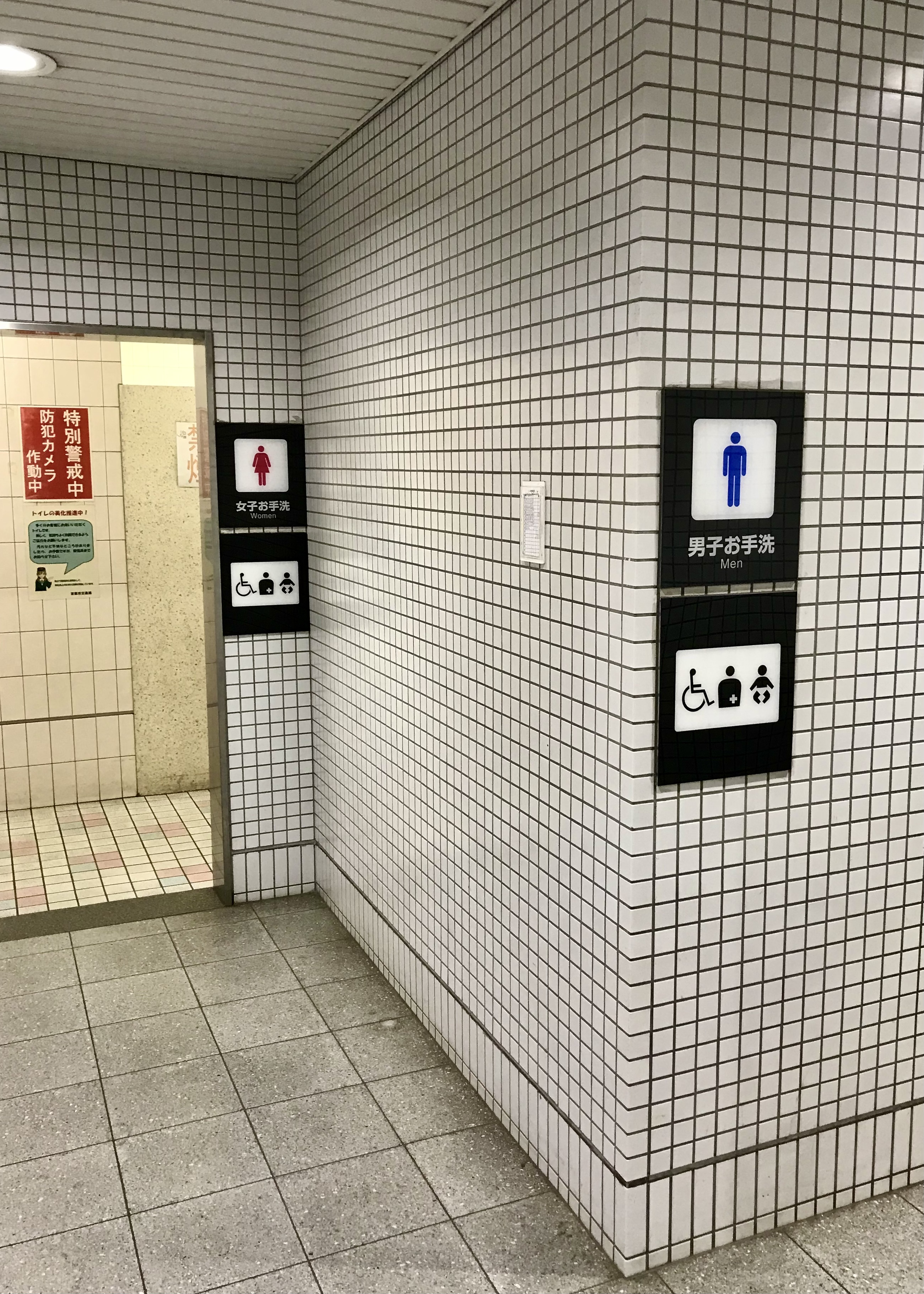
Barrier-free/Handicapped Restrooms Have Become Luxurious Uber-Universal Design... at least at this certain hotel somewhere in Tokyo
And I can tell you this certain hotel is not barrier-free by any means (with all the usual problems)... But one odd thing I had never seen before: In Japan, shampoo bottles have upraised marks on the top while conditioner bottles do not. Why? So that blind (or other various visually impaired) people can tell which is which. At this hotel the conditioner had the bumps while the shampoo did not. Is this on purpose? Or another symptom of backwards thinking?
Monday, July 22, 2019
"Reiwa Shinsengumi makes splash in Japanese election debut, giving voice to people with disabilities"
Text and photos from The Japan Times, 7/22/19.
This article is fascinating for the important issues it raises - disability, diversity, barrier-free, alternative politics... But wait a second before you read it. The story itself has been reported in many ways and with headlines like this:
"Two disabled candidates win seats in upper house election" at Japan Today, 7/22/19. URL: https://japantoday.com/category/politics/Two-disabled-candidates-win-seats-in-upper-house-election
Some headlines read "severely-disabled." The Japan Today article, although brief, is interesting because of the reader comments. Many feel a disabled person isn't qualified to be a member of the government because they are simply disabled. Some claim it will be more expensive to make the government facilities barrier-free and to make arrangements for their care-givers. Some object that the disabilities might get worse. (I think all of these are ridiculous...). Some commenters bring up the issues of electing more women and even foreigners (I think these are more valid but for the immediate time, distracting...). I hope we continue to hear about these new diet members in terms of their policies and experiences. And congratulations and good luck to them!
OK, here the TJT story:
A new anti-establishment group led by actor-turned-politician Taro Yamamoto made a surprisingly strong showing in the Upper House election Sunday, reflecting a sense of stagnation and growing public frustration with vested interests in the country.
Reiwa Shinsengumi candidates Yasuhiko Funago, 61, who has Lou Gehrig’s disease, and 54-year-old Eiko Kimura, who has cerebral palsy, won Diet seats by priority in the group’s proportional representation list.
In an unusual twist, Yamamoto, 44, won more votes than any other candidate in the proportional representation segment of the election but was unable to retain his seat in the House of Councilors because the group only won two seats.
“Taro Yamamoto may have lost his parliamentary seat, but Reiwa Shinsengumi made a huge advance,” a smiling Yamamoto said at a news conference early Monday, noting the grassroots group now qualifies as a political party eligible for subsidies as it won at least 2 percent of the votes cast nationwide.
It is the first time since the current electoral system debuted in 2001 that a group unqualified as a party has won a Diet seat via proportional representation.
Yamamoto couldn’t stay as the two seats Reiwa Shinsengumi did win went to Funago and Kimura, who were given top priority by the group under a special new candidate quota for proportional representation lists.
In the election six years ago, Yamamoto won a seat in Tokyo with 660,000 votes.
“I am full of emotions that this moment has arrived,” Funago, who uses a wheelchair, said in a statement read out by his helper. “I may appear weak, but I have more guts than others as it has been a matter of life and death for me.”
Funago, the first person with amyotrophic lateral sclerosis to be elected to the Diet, was diagnosed with the progressive neurological disease in 2000 while working at a trading house. After completely losing mobility in his limbs in 2008, he started using a special sensor that detects biting motions to control a computer to help him communicate.
Kimura has been disabled since she was 8 months old. She is a longtime activist who has called for integrating people with disabilities into society.
“Each and every vote from people with disabilities in harsh conditions has pierced my heart, and they have made me feel I must work hard,” she said from her wheelchair.
The Diet must now modify its facilities and rules to accommodate the pair, who require the help of assistants, because the chamber has never had members with disabilities so severe that they cannot press the voting buttons on their own.
In 1977, the chamber altered one of its seats to accommodate the wheelchair of new member Eita Yashiro, 82.
It has also prepared documents in Braille for lawmakers with weak eyesight.
“The people wanted someone to breathe new life into politics,” said Yamamoto, who has been described by some political analysts as “Japan’s Bernie Sanders.”
“Nothing will change unless ‘bothersome’ people join the Diet,” he said.
Making active use of social media, Yamamoto drew more than 970,000 votes — the most by an unsuccessful candidate since the new system took effect in 2001. The previous record was the 445,000 votes won by Komeito candidate Tomoko Ukishima.
Reiwa Shinsengumi drew large crowds during the campaign as Yamamoto stumped in a T-shirt and jeans, calling for abolition of the consumption tax Prime Minister Shinzo Abe’s Liberal Democratic Party plans to raise in October. He also called for increasing the minimum wage to ¥1,500 ($14) nationwide.
The group raised about ¥400 million in donations after its launch in April and at least 3,500 volunteers helped it campaign.
Advocating the creation of a “society that doesn’t cut anyone off,” it fielded candidates deemed among the overlooked in society, including sexual minorities, single parents and part-time workers.
“We will win big in the Lower House election. We aim to win the leadership,” Yamamoto said, adding that he himself would also run. “We will create a society in which no one is cut off.”
Yamamoto became known for his anti-nuclear activism after the 2011 Fukushima nuclear crisis. As an independent Upper House member in 2013, he was reprimanded for handing a letter on the Fukushima disaster to then-Emperor Akihito at a garden party, triggering criticism that he was attempting to politically exploit the monarch.
Toru Hasuike, 64, the brother of former abductee Kaoru Hasuike, who was returned from North Korea in 2002, also ran for Reiwa Shinsengumi but did not win a seat. The former employee of Tokyo Electric Power Company Holdings Inc., which manages the disaster-hit power plant, told reporters in May that he shared Yamamoto’s stance against atomic power.
Source: https://www.japantimes.co.jp/news/2019/07/22/national/politics-diplomacy/anti-establishment-group-reiwa-shinsengumi-makes-big-strides-japanese-politics/
Wednesday, July 10, 2019
"Nearly 70% of ill and disabled people have difficulties working in Japan, report finds"
From The Japan Times, July 9, 2019.
A total of 66.3 percent of people with illnesses or disabilities say they have difficulties balancing work and treatment or working with their condition, a government report showed Tuesday, indicating a lack of workplace support for them.
A labor ministry survey conducted in February last year drew responses from 1,000 such people aged between 20 and 64. Of them, 664 were working, 268 were not and 68 were on leave from work, according to the 2018 white paper on labor and welfare.
The report underlined a strong desire among people with illnesses or disabilities to be part of the workforce, with 84.5 percent of all respondents saying they want to work or continue working. Among the 268 nonworking respondents, 64.2 percent said they want to work.
For those who think they cannot work or continue working despite having the desire to do so, 50.6 percent said it is because they lack physical strength, and 36.9 percent pointed to a lack of flexible working hours and leave. Multiple answers were allowed.
A total of 30.3 percent also referred to difficulties in gaining understanding or support from their bosses or coworkers for their condition.
The ministry said it will strengthen support measures for companies that help people with illnesses and disabilities continue working.
The theme of the 2018 report is “to realize a society in which everyone can play an active role while fighting disability, illness and other hardships.”
Creating an environment where disabled people, cancer patients, those with incurable diseases and people facing other difficulties can be fully active in the workplace is important to achieving the dynamic engagement of all citizens — one of Prime Minister Shinzo Abe’s policy goals — the paper stressed.
The release of the annual white paper was originally slated for summer or autumn last year, but had been delayed due in part to the ministry’s response to a scandal over government statistics concerning the employment of people with disabilities.
The scandal, which involved central government agencies overstating the numbers of disabled workers they employed, has “severely damaged the trust of the public,” the report said.
The ministry, which is in charge of promoting the employment of people with disabilities, “deeply regrets” the incident, it said.
A total of 3,700 employees at 28 government bodies had been inappropriately counted as disabled workers as of June 1, 2017, according to a report announced by a third-party investigation panel in October 2018.
Source: https://www.japantimes.co.jp/news/2019/07/09/national/nearly-70-ill-disabled-people-difficulties-working-japan-report-finds/
Japan Today also carried this story (https://japantoday.com/category/national/nearly-70-of-ill-disabled-people-have-difficulties-working-report) and had the following reader comments:
This is typical Japan and not necessarily the companies fault. I believe the workinghours are set legally by the ministry of labor etc and the company has to abide by them but not entirely sure if that is true. ...Sadly, people with disabilities face a tough time in public (e.g. on the train) as well.
With the Japanese work force gradually shrinking, the government should at least make it more appealing for ill and disabled folks to work or else risk losing more of its work force. How about a little compassion?
I spent a week on crutches a couple of years ago and it was almost impossible for me to get to work in Tokyo during the peak hours. I got knocked over four times by butt-holes running to catch trains, none of who stopped and had to hop from one of the station to the other to get the elevator. I nearly got shoved onto the tracks twice. These knob-head law makers in Kasumigaseki need to spend a week in a wheel chair traversing the Tokyo underground during peak hour to give them an idea just how seriously lacking Tokyo is for handicapped access.
Being a disabled person in an able-bodied world will always be tough, but we have all come a long way. There is still a long way to go, but credit where it's due, I have seen tremendous change in attitude and in the environment to make life safer and more comfortable for the disabled
A total of 66.3 percent of people with illnesses or disabilities say they have difficulties balancing work and treatment or working with their condition, a government report showed Tuesday, indicating a lack of workplace support for them.
A labor ministry survey conducted in February last year drew responses from 1,000 such people aged between 20 and 64. Of them, 664 were working, 268 were not and 68 were on leave from work, according to the 2018 white paper on labor and welfare.
The report underlined a strong desire among people with illnesses or disabilities to be part of the workforce, with 84.5 percent of all respondents saying they want to work or continue working. Among the 268 nonworking respondents, 64.2 percent said they want to work.
For those who think they cannot work or continue working despite having the desire to do so, 50.6 percent said it is because they lack physical strength, and 36.9 percent pointed to a lack of flexible working hours and leave. Multiple answers were allowed.
A total of 30.3 percent also referred to difficulties in gaining understanding or support from their bosses or coworkers for their condition.
The ministry said it will strengthen support measures for companies that help people with illnesses and disabilities continue working.
The theme of the 2018 report is “to realize a society in which everyone can play an active role while fighting disability, illness and other hardships.”
Creating an environment where disabled people, cancer patients, those with incurable diseases and people facing other difficulties can be fully active in the workplace is important to achieving the dynamic engagement of all citizens — one of Prime Minister Shinzo Abe’s policy goals — the paper stressed.
The release of the annual white paper was originally slated for summer or autumn last year, but had been delayed due in part to the ministry’s response to a scandal over government statistics concerning the employment of people with disabilities.
The scandal, which involved central government agencies overstating the numbers of disabled workers they employed, has “severely damaged the trust of the public,” the report said.
The ministry, which is in charge of promoting the employment of people with disabilities, “deeply regrets” the incident, it said.
A total of 3,700 employees at 28 government bodies had been inappropriately counted as disabled workers as of June 1, 2017, according to a report announced by a third-party investigation panel in October 2018.
Source: https://www.japantimes.co.jp/news/2019/07/09/national/nearly-70-ill-disabled-people-difficulties-working-japan-report-finds/
Japan Today also carried this story (https://japantoday.com/category/national/nearly-70-of-ill-disabled-people-have-difficulties-working-report) and had the following reader comments:
This is typical Japan and not necessarily the companies fault. I believe the workinghours are set legally by the ministry of labor etc and the company has to abide by them but not entirely sure if that is true. ...Sadly, people with disabilities face a tough time in public (e.g. on the train) as well.
With the Japanese work force gradually shrinking, the government should at least make it more appealing for ill and disabled folks to work or else risk losing more of its work force. How about a little compassion?
I spent a week on crutches a couple of years ago and it was almost impossible for me to get to work in Tokyo during the peak hours. I got knocked over four times by butt-holes running to catch trains, none of who stopped and had to hop from one of the station to the other to get the elevator. I nearly got shoved onto the tracks twice. These knob-head law makers in Kasumigaseki need to spend a week in a wheel chair traversing the Tokyo underground during peak hour to give them an idea just how seriously lacking Tokyo is for handicapped access.
Being a disabled person in an able-bodied world will always be tough, but we have all come a long way. There is still a long way to go, but credit where it's due, I have seen tremendous change in attitude and in the environment to make life safer and more comfortable for the disabled
Monday, July 2, 2018
"Tokyo Legoland Discovery Center apologizes for blocking deaf patrons from theme park"
Image borrowed from unfspinnaker.com.
With eight flagship parks worldwide, Legoland is one of the top pit stops on any budding architect’s childhood wish list. Japan sports its own main Legoland in Nagoya, but there are also indoor editions of the park: “Discovery Centers”, which you can visit in Tokyo or Osaka. The park is studded with architectural attractions: there’s multiple rides, visitors can design, build and race their own Lego cars, and even leap and bound through ninja-tastic Lego backdrops.
For Niigata-based teacher Tsuyoshi Abe, who is deaf, it was the perfect place to take his son and daughter for a day out. However, he reached an unexpected blockade when he, his two children and a family friend tried to enter the park on April 21 of this year. The employee staffing the entrance called the four of them back, demanding to know if any of them could hear. Mr Abe was then informed in writing that theme park policy requires any disabled guests to have at least one accompanying, able-bodied support guest. As all four of Mr Abe’s party couldn’t hear, the staff explained, they were unable to grant them access to the park.
According to the policy written on Legoland Discovery Center Tokyo’s website, the reason they don’t permit entry is because without an accompanying guest and all-deaf party wouldn’t be able to hear the disaster alarms and so the park would not be able to guarantee their safety.
While this would be upsetting enough for anyone in this situation (the man’s children reportedly asked why all the other children could play inside when they couldn’t), Mr Abe was very qualified to tackle this injustice directly. As a teacher for the deaf, and a representative for children’s support groups at his school, he took it upon himself to reach out to the Japanese Federation of the Deaf, who took the issue straight to the government.
Thankfully this story has a happy ending: the courts found that refusing a disabled customer access to a store, park or service without a helper violates the Act for Eliminating Discrimination Against People with Disabilities. June 13 saw the Ministry of Economy, Trade and Industry formally request the company to “work hard to better understand the law and implement changes accordingly”. A formal apology from Merlin Japan Entertainment representative Peter Lee followed, so hopefully from here on out parents and children will be able to attend the park without any issues.
Click here for the apology ("We apologize for the inconvenience and inappropriate response to customers with disabilities") in Japanese.
This issue has become a hot topic on the net, with users wondering “why couldn’t a member of staff just accompany the family?” and pointing out “surely you don’t need to be able to hear to notice a disaster: if everyone around you is running, then you run too – it’s not like the park is even that big.” Many users noted that as the party were able to come to the park in the first place, there should have been no problem with them navigating the park alone.
Of course, as with any controversial topic there were people arguing the opposite as well: “Why should the company have to apologize just for guaranteeing people’s safety? This is just a modern day witch hunt.” Multiple users considered the issue of responsibility – “if something bad were to be happen, would the family take responsibility or would they push blame onto the people who permitted them, I wonder?”
Considering the rough and rocky start to business the main Legoland park has endured, you would think that the park would be eager to get as many guests through the doors as possible.
Source: https://japantoday.com/category/national/tokyo-legoland-discovery-center-apologizes-for-blocking-deaf-patrons-from-theme-park
I'm not sure this story has a happy ending. The company was chastised for breaking the law. No real penalties. And they still don't seem to get it. Check out the claims that still remain on their web sites:
FAQs: IS THE CENTRE SUITABLE FOR VISITORS WITH DISABILITIES / WHEELCHAIR USERS?
Yes, we are fully accessible for visitors with disabilities and wheelchair users.
GUESTS WITH DISABILITIES
The center has been designed with your needs in mind. We review our risk assessments and policies annually to ensure we remain as accessible as possible to all guests, including wheelchair access.
ACTIVITY JAPAN
Provided by: LEGOLAND Discovery Center Tokyo
【To people with disabilities】 We will guide you at the entrance to the facility by elevator. The aisle is flat (partially sloped) and barrier-free. Attention in the facility may require attention when using it. Please confirm before visiting for details.
They didn't and still don't seem to understand that barrier-free is not limited to structural barriers. Barrier-free also strives to improve accessibility in terms of communication barriers. Why can't there be visual emergency alarms (flashing lights, video screens)? Or pagers of some sort? (A hospital I visit has pagers that are given to everyone to help guide them in terms of when and where to go - they are equipped with ringing and vibrating alarms.) Ideally there should be a sign language interpreter available (like at Disneyland and USJ).
Many amusement parks and tourist attractions in Japan have discounts for disabled people. Legoland doesn't have such a discount per se but disabled people are admitted free as long as they are accompanied by an able-bodied family member/friend/caretaker. A little paternalistic, I think... Legoland also has a rule that "Adults must be accompanied by a child to visit." Usually such a rule is the other way around. I guess Legoland is looking out not only for the perceived safety of disabled people but children as well (no perverts or otaku allowed...). Legos are so cool and so much fun. Why do corporations have to take away from the coolness/fun?
Monday, September 11, 2017
South Korean Film 「반짝이는 박수 소리 」("Glittering Hands") Barrier-Free Release in Osaka
"Glittering Hands" (Japanese title:「きらめく拍手の音」), a 2015 film by South Korean filmmaker Lee-Kil Bora, has been released for its Japanese roadshow.
Brief English description (from Korean Film Biz Zone): Sang-guk and Kyung-hee cannot hear a thing, yet they are a happy couple. Bo-ra, their daughter, gazes at the world of her parents through the viewfinder. What we witness is not only a world of silence, but also a world of beauty where bodily gestures and facial expressions come to life. This film shows us that humanity exists with the imperfection of the body.
The filmmaker is a CODA (child of deaf adult) and portrays the life and history of her parents and family. I really like the karaoke scene in the trailer as I have experienced karaoke with my Deaf friends in Japan many times. The short film has won several awards including the Yamagata International Documentary Film Festival (2015) - New Asian Currents, Seoul International Youth Film Festival (2015) - Special Program 2, Busan International Kids&Youth Film Festival (2015) and Persons with Disabilities Film Festival (2014) - Grand Prize.
The Japanese release is emphasizing the barrier-free showings, that is open captions in Japanese (the film itself is in Korean and Korean Sign Language).
Film's Japanese web page: http://kirameku-hakusyu.com/
Osaka's Nanagei Theater web page with film info and screening times: http://www.nanagei.com/
Saturday, September 9, 2017
"Mizuko Yamaoka takes a different approach in documentary about people with disabilities"
Excerpts from article in The Japan Times, 9/7/17.
Disability presents different challenges for everyone but wheelchair users share a common dilemma: Their mode of locomotion stands out, while they often struggle with social isolation... “The Lost Coin,” [is] a 2016 short by Mizuko Yamaoka, a filmmaker who has been using a wheelchair since a 2002 bicycle accident in Brooklyn left her paralyzed from the waist down.
In contrast to Japanese documentaries that try to win viewer sympathy by portraying people with disabilities as lovable victims — if not candidates for sainthood — this 30-minute film begins with extended point-of-view sequences of the director wheeling through the night streets of Barcelona and attending a party.
Her night out isn’t different from that of anyone else’s except for one crucial difference: She experiences it sitting down. People treat her with courtesy, but she can’t jump into conversations as easily as the other guests because she can’t stand. This, she shows us clearly, if minus the usual explanations, is what life for her is like — including a semi-invisibility those who don’t use wheelchairs may find hard to imagine.
The remainder of the film is devoted to a revealing one-on-one interview with Jelena, a French woman who began using a wheelchair after a fall during a hike with her then-boyfriend. Under Yamaoka’s gentle but pointed questioning she opens up about her break-up with her lover, her sex life and her decision to leave Paris for relatively barrier-free Barcelona.
“The Lost Coin” will begin at 7 p.m. on Sept. 14 at Couzt Cafe and Shop (2-1-11 Yanaka, Taito Ward, doors open at 6:30 p.m.). Mizuko Yamaoka will be on hand to discuss the film with University of Tokyo assistant professor Daisuke Son. Admission with a drink is ¥1,300. For more details about the screening and talk event, visit “The Lost Coin” Facebook page at https://www.facebook.com/events/1990261357918340/?ti=icl.
Read the whole article: https://www.japantimes.co.jp/culture/2017/09/07/films/mizuko-yamaoka-takes-different-approach-documentary-people-disabilities/
You can find a trailer here: https://www.facebook.com/thelostcoin.film/
Thursday, March 16, 2017
"Gov't seeks installation of visible fire alarms for hearing impaired"
From Japan Today, 3/16/17.
The Japanese government has called on municipalities across the country to install visibly recognizable flashing fire alarms for deaf or hard-of-hearing people.
The Fire and Disaster Management Agency has asked local authorities to install more flashing fire alarms in public spaces such as stations, airports and welfare facilities. The introduction of such devices is still limited in Japan.
Installation of fire detection devices including emergency bells is mandatory at such places as stations, airports, nursery homes for the elderly and care facilities for the disabled above a certain size.
But meeting the needs of those who cannot hear fire alarms has been a challenge, with visible fire alarms only introduced at a limited number of places including the international terminal of Tokyo’s Haneda airport and some welfare facilities.
The flashing alarms, fitted on walls or ceilings, show blinking signs when they detect outbreaks of fire.
In its first guideline compiled last autumn, the agency also called for introduction of the devices at commercial facilities visited by many people with hearing impairments.
It also recommends setting flashing alarms less than 10 meters above floor level and using white light so that those with color perception deficiencies can easily recognize alarm signs.
Chieko Yamashita, 69-year-old chair of an association of the deaf in Tokyo’s Meguro Ward, expressed hope for further introduction of the devices.
Yamashita, who has participated in an emergency drill with a flashing alarm, said, “With strong flashing light, I immediately noticed that I needed to evacuate even though I was looking down.”
Source: https://www.japantoday.com/category/national/view/govt-seeks-installation-of-visible-fire-alarms-for-hearing-impaired
The Japanese government has called on municipalities across the country to install visibly recognizable flashing fire alarms for deaf or hard-of-hearing people.
The Fire and Disaster Management Agency has asked local authorities to install more flashing fire alarms in public spaces such as stations, airports and welfare facilities. The introduction of such devices is still limited in Japan.
Installation of fire detection devices including emergency bells is mandatory at such places as stations, airports, nursery homes for the elderly and care facilities for the disabled above a certain size.
But meeting the needs of those who cannot hear fire alarms has been a challenge, with visible fire alarms only introduced at a limited number of places including the international terminal of Tokyo’s Haneda airport and some welfare facilities.
The flashing alarms, fitted on walls or ceilings, show blinking signs when they detect outbreaks of fire.
In its first guideline compiled last autumn, the agency also called for introduction of the devices at commercial facilities visited by many people with hearing impairments.
It also recommends setting flashing alarms less than 10 meters above floor level and using white light so that those with color perception deficiencies can easily recognize alarm signs.
Chieko Yamashita, 69-year-old chair of an association of the deaf in Tokyo’s Meguro Ward, expressed hope for further introduction of the devices.
Yamashita, who has participated in an emergency drill with a flashing alarm, said, “With strong flashing light, I immediately noticed that I needed to evacuate even though I was looking down.”
Source: https://www.japantoday.com/category/national/view/govt-seeks-installation-of-visible-fire-alarms-for-hearing-impaired
Subscribe to:
Posts (Atom)