Showing posts with label matsuri. Show all posts

Thursday, January 15, 2026

Tondo Matsuri at Ubusuna Shrine scheduled for January 15, 2026 has been canceled. 2026年1月15日に予定されていた産土神社のとんど祭りは中止となりました。

Ubusuna Shrine, Shirogaki-cho, Kadoma-shi, Osaka-fu, Japan
One of two small hand-made signs at our neighborhood shrine.

The Tondo Festival (とんど祭り) is conducted annually on January 15
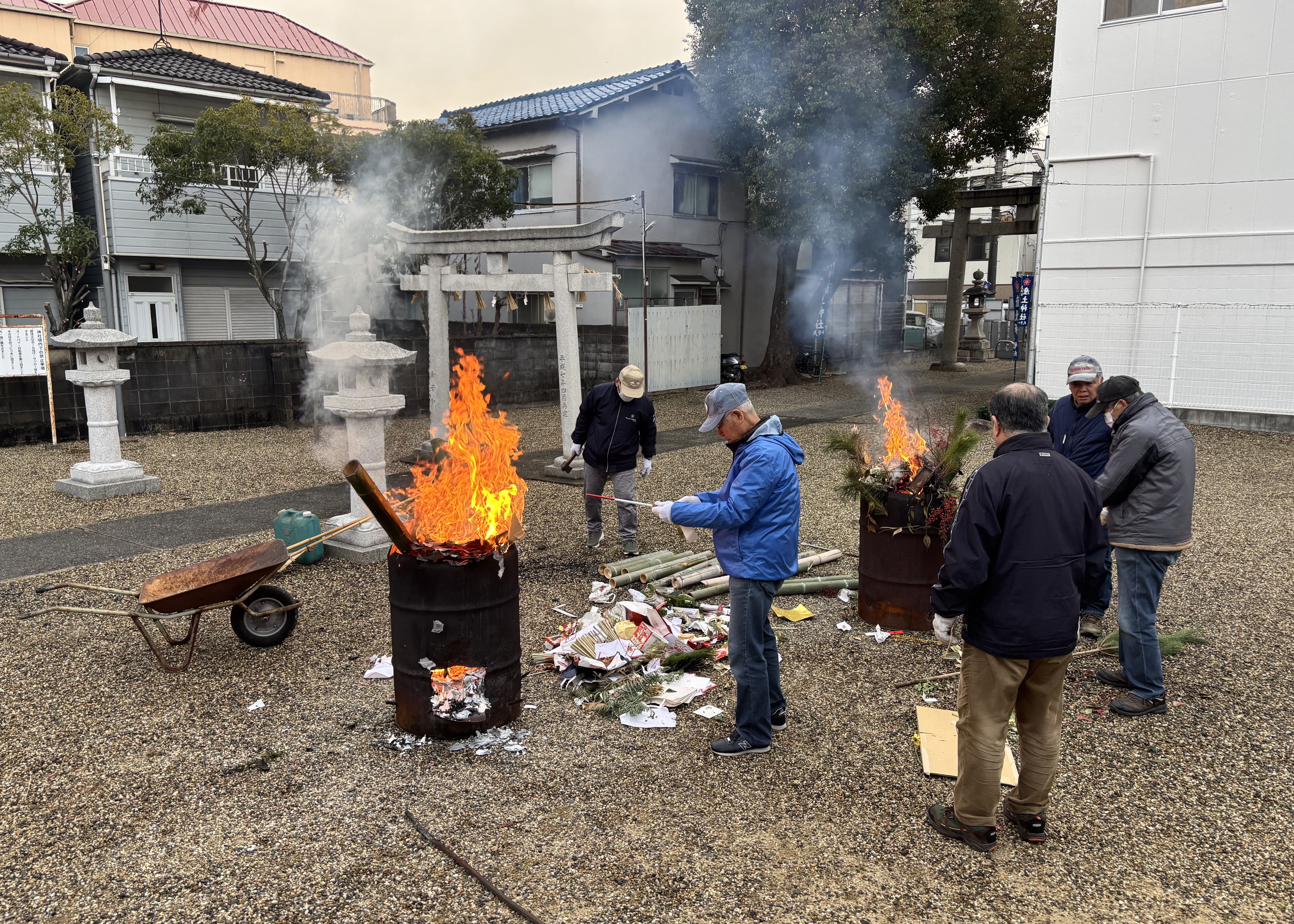
to coincide with ko-shogatsu (小正月), or "small new year." Ko-shogatsu is a holdover from the time when Japan used a lunar calendar and is acknowledges appreciation for housewives who were busy during the New Year; it also marks the "conclusion" of New Year's events. This festival has many names (Dondo yaki - どんど焼き - is a common name but there are many others) and local variations. It seems to be a large celebration in various locations across Japan. But my neighborhood version could barely be called a festival as it was practiced in a very low key manner. At the Tondo Matsuri, shimekazari (a traditional New Years decoration hanged at the entrance to a house), omamori (good luck charms), ofuda (talisman), ema (votive tablets) as well as other religious or new year's related ornaments are burned. This is in effect a sort of recycling - these various ornaments are returned after a year or so of use and new ones are purchased. This is also an important community service as many neighbors come during the morning to drop off their used New Year's or religious paraphernalia. It is actually a lot of hard work but also a chance to share New Year's greetings and scoialize with neighbors.
Tondo Matsuri at Ubusuna Shrine, January 15, 2025

But it was canceled this year, probably as fallout from the resignations of the shrine elders (as previously explained in a previous post) who conducted the Tondo Matsuri every year. I do not intend to blame the elders as many other traditional neighborhood activies have been shortened or canceled due to demographic changes and gentrification in Japanese neighborhoods like my own.

The signs at the shrine announce the cancelation and inform neighbors that a Tondo Matsuri will be conducted at the parent shrine,「島頭天満宮」Shimagashira Tenmangu Shrine, a 10-15 minute walk from「産土神社」Ubusuna Shrine, and invites people to drop off their items there (and to not bring their regular daily garbage for disposal). I usually have to work on January 15, but I was able to participate in the festival last year, not knowing that the shrine elders would resign and that it might be the last time the festival would be held. So the VAoJ post documenting the evetn becomes an important recording as salvage ethnography. View it here:

「とんど祭り @ 産土神社 2025」Tondo Matsuri @ Ubusuna Shrine 2025

https://visualanthropologyofjapan.blogspot.com/2025/01/2025tondo-matsuri-ubusuna-shrine-2025.html

I also participated in 2013:

Tondo Festival - とんど祭り (2013)

https://visualanthropologyofjapan.blogspot.com/2013/01/tondo-festival.html

It is my hope that my neighborhood can somehow reorganize to revive the shrine, its activities and other neighborhood traditions.

Bonus stuff (added 1/21/26):

January 8, 2026
Source: https://japantoday.com/category/national/elderly-woman-burned-as-clothes-catch-fire-at-new-year-bonfire-in-hokkaido

Dondo-yaki: Japan’s Fiery Farewell to the New Year (a simple explanantion found on GaijinPotBlog): https://blog.gaijinpot.com/dondo-yaki-japans-fiery-farewell-to-the-new-year/

Monday, April 7, 2025

Announcement: New JAWS Newsletter released (and check out the cover! AGAIN!)

Congratulations and many thanks to the co-editors, Jennifer McGuire and Christopher Tso, on putting together and releasing the Japan Anthropology Workshop Newsletter (#53) "...continuing with our refreshed newsletter design and second cover photo by visual anthropologist and JAWS member Steven C. Fedorowicz..."

Available at:

https://japananthropologyworkshop.org/wp-content/uploads/2025/04/JAWS-Newsletter-2023.pdf

「Push-Pulling the Danjiri」

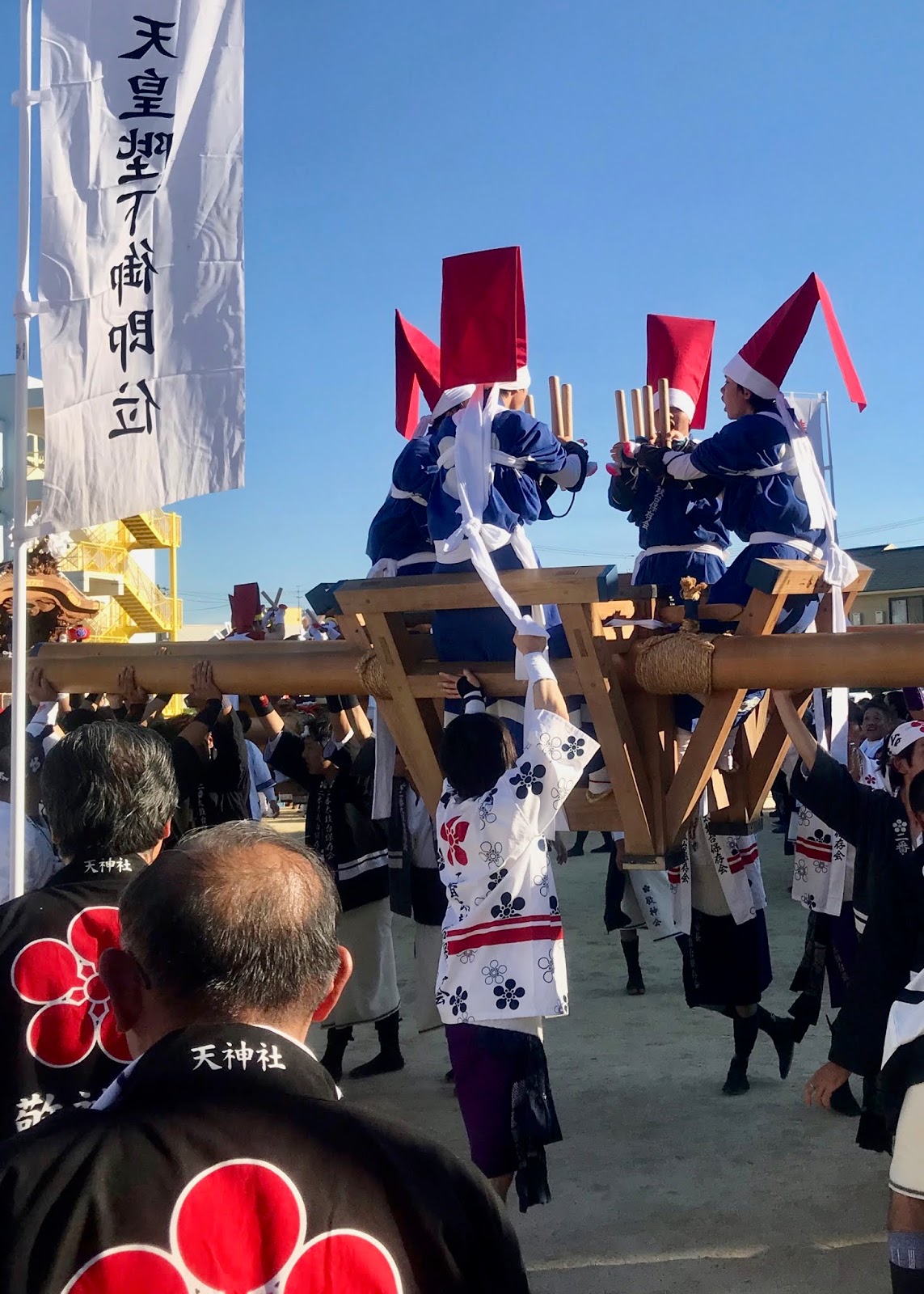
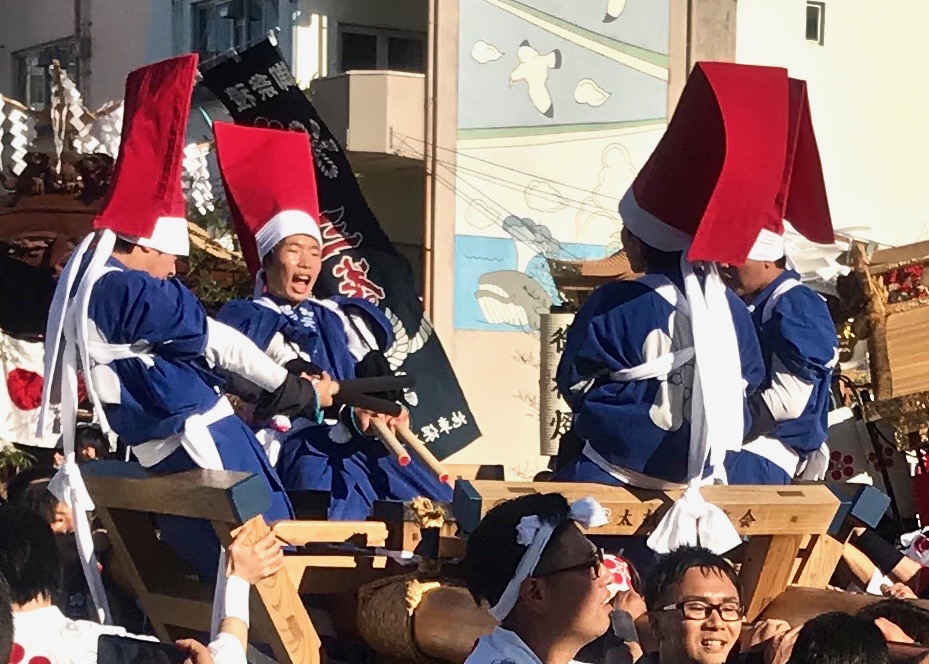
Residents of Shirogaki-cho in Kadoma-shi, Osaka push and pull a large wooden cart called a danjiri through the district’s streets as a part of the annual Fall Festival (October) and Kadoma-shi 60th Anniversary Culture Festival (November) in 2023. Navigating the danjiri is hard work, because the cart is heavy and awkward to steer through the narrow and winding streets. Shirogaki-cho’s danjiri, parts of which were made in the Edo period, is over 7 meters long, 4 meters high at its tallest point and weighs over 3.2 tons. Even before the COVID-19 pandemic, participation by neighbors in these events has been decreasing over the years because of demographic changes: Japan’s aging society, the falling birthrate, and gentrification as traditional homes are torn down and replaced with apartments making the area into a bed-town of strangers. But a core of diehard and friendly residents take part every year to parade the danjiri with the temporarily installed deity from the local shrine throughout the parish to bestow its blessings to the neighbors, encourage cooperation, and promote continued good community relations. Ihave been photographing, researching, and pushing in the fall festival for over 15 years.

Friday, January 17, 2025

「とんど祭り @ 産土神社 2025」Tondo Matsuri @ Ubusuna Shrine 2025

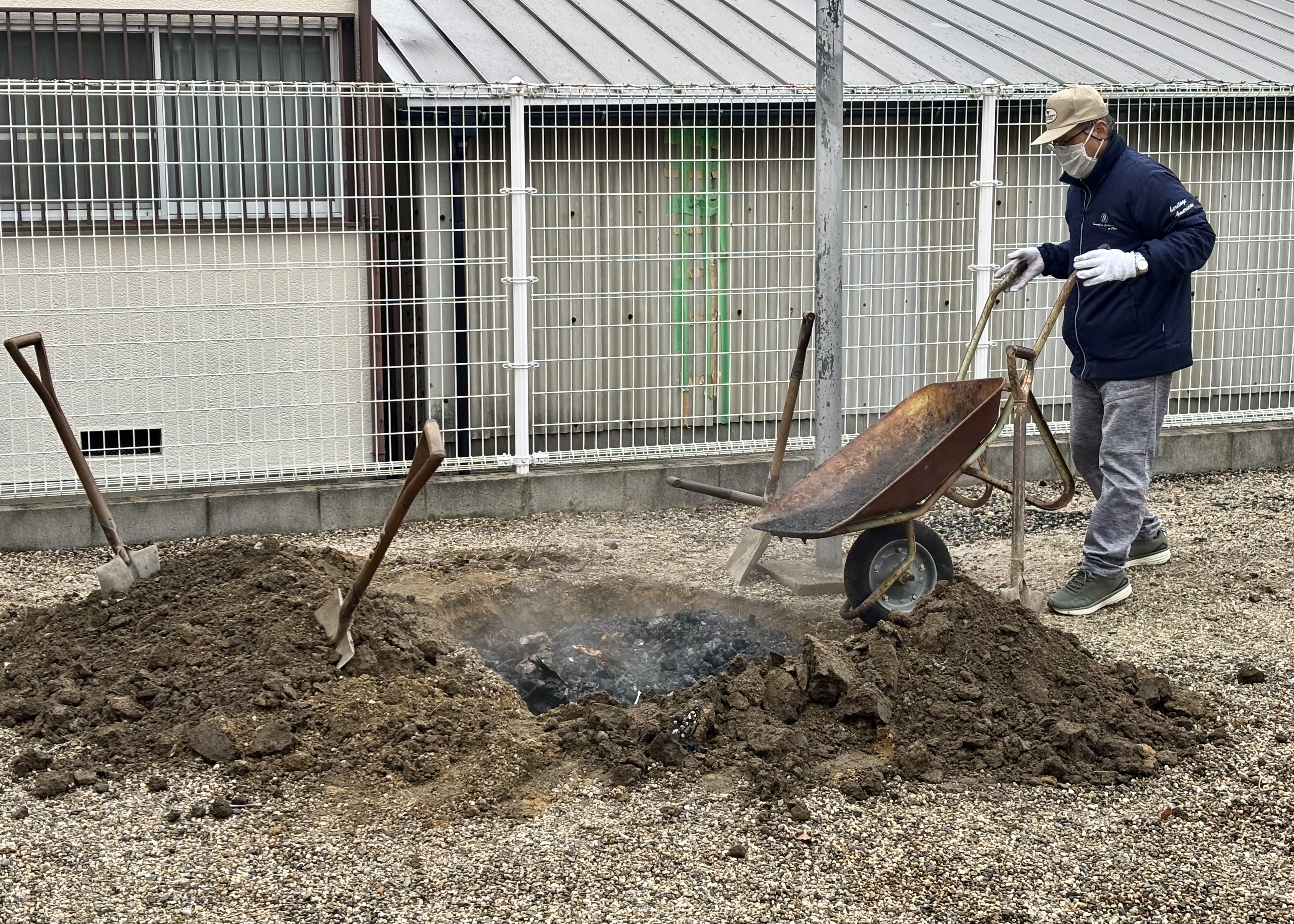
On January 15, 2025, from 8:00 - 10:00 AM, we (the shrine elders and the recruited volutnteer/visual anthropologist) held the Tondo Matsuri at our local shrine, Ubusuna Jinja, in Shirogaki-cho, Kadoma-shi, Osaka-fu. This low key community based event is a chance for neighbors to bring their religious amulets from the previous year and new year's decorations to the shrine to be burned. Like Shinto itself, one might argue that this festival is more tradtional/cultural than religious in nature. I documented this same event at the shrine in 2013. Aside from a few changes, (fewer participants, older participants, no tobacco smokers or beer), this year's event was the same as it was in 2013 (as a good ritual should be...). Check out the 2013 post for more specifics about the Tondo Matsuri.

Tondo Festival - とんど祭り (1/15/13): https://visualanthropologyofjapan.blogspot.com/2013/01/tondo-festival.html

See also:
Remains of the 2018 Kayashima Shrine Tondo Festival (1/15/18): https://visualanthropologyofjapan.blogspot.com/2018/01/remains-of-2018-kayashima-shrine-tondo.html

Let's get back to Ubusuna Jinja in 2025...

Friday, February 9, 2024

明日から写真展始まります! Photo Exhibition Starts Tomorrow!

Matsuri
Through Multi-sighted Photographies」

A Photo Exhibition by Lucile Druet and Steven C. Fedorowicz

祭り
多視点からの写真を通して」

ルシル ドルーエとスティーブン C. フェドロウィツによる写真展

2024 February 10 (Sat) ~ 13 (Tues)
2024年2月10日(土) ~ 13日(火)
11:00 - 18:00
(last day / 最終日は 11:00 - 16:00)

JARFO Art Square
Kyoto, Japan

Gallery Info: https://jarfo.jp/jarfo

Accessibility/barrier-free information: http://visualanthropologyofjapan.blogspot.com/2024/02/matsuri-photo-exhibition-accessibility.html

This project is a collaboration that explores Japanese matsuri through the intersections of social science research and visual representation. Fedorowicz’s field sites are autumn danjiri festivals in his own neighborhood in Osaka. His research-based art is long-term, community-based, participatory, reflexive and informed by sensory ethnography and multimodality. Druet’s field sites are Kyoto’s Gion Matsuri and Jidai Matsuri. Her art-based research examines vernacular photography, spectacle, iconicity and the performative presence of the Kyoto geisha as dancers and models. Meshing their visions and what they captured together, the photographers want the images they took in these clearly separate loci to be features in a duo exhibition, juxtaposing 40 photos of the Kyoto and Osaka matsuri they engaged in with their cameras and embodied positions as researchers. The photographers hope that the visitors to this exhibition will participate in the research by supplying ideas and opinions through surveys, interview and informal discussions.

このプロジェクトは、社会科学研究とビジュアル表現の交わり (intersections) を通して日本の祭りを探求する共同プロジェクトである。 フェドロウィツの研究対象は、彼が住む大阪の秋のだんじり祭りで、彼のリサーチに基づくアートは、長期的、地域密着型、参加型、再帰的で、感覚エスノグラフィーとマルチモダリティの影響を受けている。一方、ドルーエの研究対象は、京都で最も祇園祭と時代祭である。彼女の芸術をベースとした研究では、ヴァナキュラー写真、壮観、アイコン性、そして、ダンサー・モデルとしての京都芸者のパフォーマティブな存在について考察している。自分たちのそれぞれのビジョンとカメラで撮影したものを融合させることで、明らかに別々の場所で撮影した写真を、今回の「デュオ展」の目玉として、京都・大阪で撮りためた写真40枚を展示する。来場者にはアンケートやインタビュー、非公式なディスカッションを通じて、アイデアや意見を共有してほしい。

Lucile Druet is Associate Professor of Japanese Arts and Culture at Kansai Gaidai University, Osaka. Her teaching covers literature, painting traditions, theatrical performances, film and Japanese fashion. Interested in the visual and aesthetical intersection of clothing and embodiment, she researches how kimono is practiced nowadays in Kyoto and how it appears in works of fiction and poetry. See more of her photographic work at: https://somosomo.co

Steven C. Fedorowicz is a cultural anthropologist, visual anthropologist and Associate Professor of Anthropology in the Asian Studies Program at Kansai Gaidai University in Osaka. He has lived in Japan for over 25 years. His research interests include deaf communities, sign language, religion, ritual, performance, B-kyu gourmet, drinking establishments and ethnographic photography. See more of his work at: https://visualanthropologyofjapan.blogspot.com/

ルシル ドルーエは、大阪にある関西外国語大学の日本芸術文化准教授。文学、絵画の伝統、演劇、映画、日本のファッション等、多岐にわたって教鞭をとっている。衣服と体現の視覚的、美的交差に興味を持ち、現在京都でどのように着物が着られているのか、小説や詩の中で着物がどのように表現されるのか、研究を重ねている。ドルーエの写真作品は下記のサイトで閲覧可能である: https://somosomo.co

スティーブン C. フェドロウィツは、文化人類学者、ビジュアル人類学者であり、彼もまた大阪にある関西外国語大学留学生別科の准教授でもある。日本に住んで25年、研究テーマは多岐にわたり、ろう者コミュニティ、手話、宗教、儀式、パフォーマンス、B級グルメ、飲み屋、民族写真などが含まれる。フェドロウィツの作品は下記のサイト閲覧可能である: https://visualanthropologyofjapan.blogspot.com/