Showing posts with label Tondo. Show all posts

Thursday, January 15, 2026

Tondo Matsuri at Ubusuna Shrine scheduled for January 15, 2026 has been canceled. 2026年1月15日に予定されていた産土神社のとんど祭りは中止となりました。

Ubusuna Shrine, Shirogaki-cho, Kadoma-shi, Osaka-fu, Japan
One of two small hand-made signs at our neighborhood shrine.

The Tondo Festival (とんど祭り) is conducted annually on January 15
to coincide with ko-shogatsu (小正月), or "small new year." Ko-shogatsu is a holdover from the time when Japan used a lunar calendar and is acknowledges appreciation for housewives who were busy during the New Year; it also marks the "conclusion" of New Year's events. This festival has many names (Dondo yaki - どんど焼き - is a common name but there are many others) and local variations. It seems to be a large celebration in various locations across Japan. But my neighborhood version could barely be called a festival as it was practiced in a very low key manner. At the Tondo Matsuri, shimekazari (a traditional New Years decoration hanged at the entrance to a house), omamori (good luck charms), ofuda (talisman), ema (votive tablets) as well as other religious or new year's related ornaments are burned. This is in effect a sort of recycling - these various ornaments are returned after a year or so of use and new ones are purchased. This is also an important community service as many neighbors come during the morning to drop off their used New Year's or religious paraphernalia. It is actually a lot of hard work but also a chance to share New Year's greetings and scoialize with neighbors.
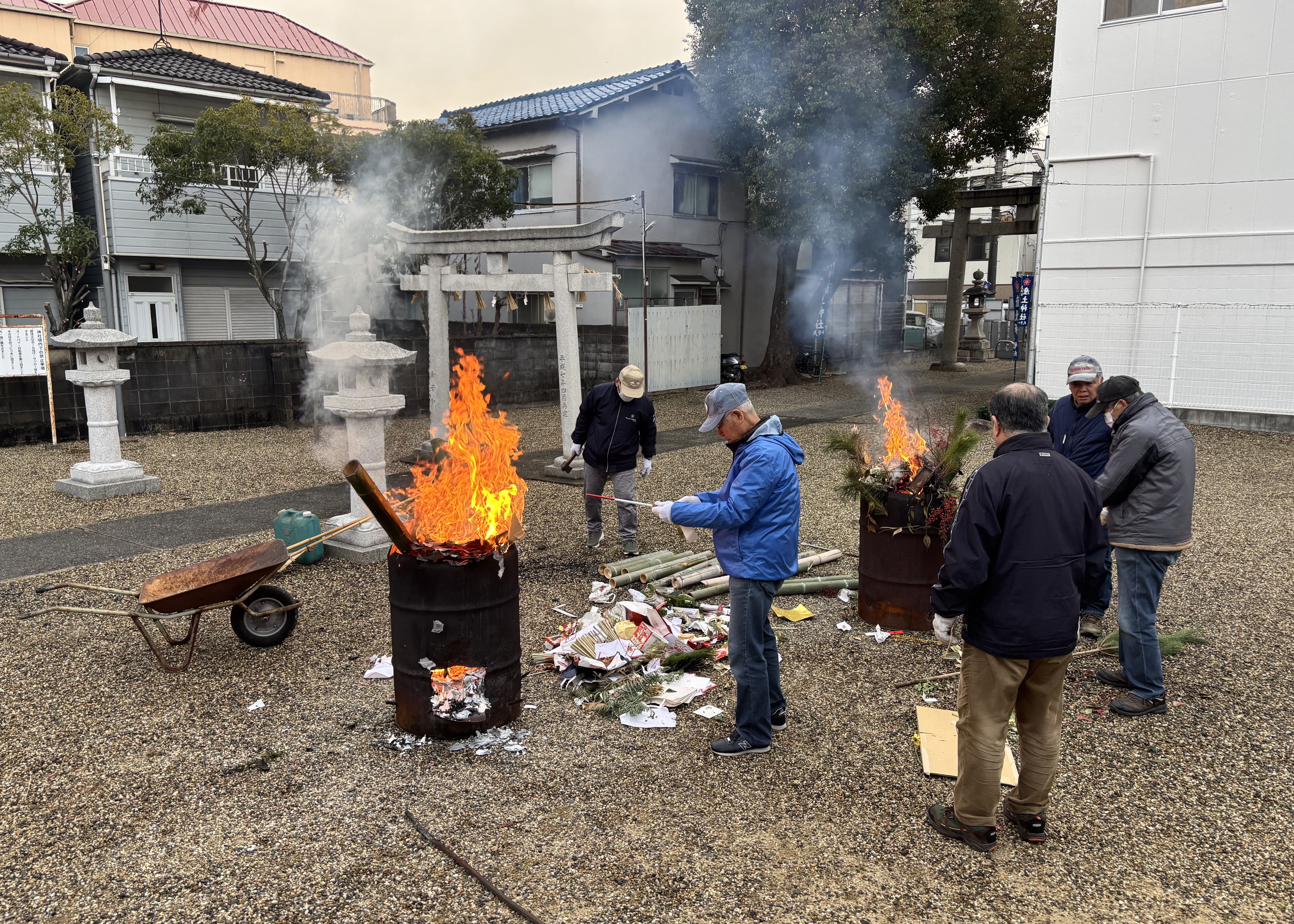
Tondo Matsuri at Ubusuna Shrine, January 15, 2025

But it was canceled this year, probably as fallout from the resignations of the shrine elders (as previously explained in a previous post) who conducted the Tondo Matsuri every year. I do not intend to blame the elders as many other traditional neighborhood activies have been shortened or canceled due to demographic changes and gentrification in Japanese neighborhoods like my own.

The signs at the shrine announce the cancelation and inform neighbors that a Tondo Matsuri will be conducted at the parent shrine,「島頭天満宮」Shimagashira Tenmangu Shrine, a 10-15 minute walk from「産土神社」Ubusuna Shrine, and invites people to drop off their items there (and to not bring their regular daily garbage for disposal). I usually have to work on January 15, but I was able to participate in the festival last year, not knowing that the shrine elders would resign and that it might be the last time the festival would be held. So the VAoJ post documenting the evetn becomes an important recording as salvage ethnography. View it here:

「とんど祭り @ 産土神社 2025」Tondo Matsuri @ Ubusuna Shrine 2025

https://visualanthropologyofjapan.blogspot.com/2025/01/2025tondo-matsuri-ubusuna-shrine-2025.html

I also participated in 2013:

Tondo Festival - とんど祭り (2013)

https://visualanthropologyofjapan.blogspot.com/2013/01/tondo-festival.html

It is my hope that my neighborhood can somehow reorganize to revive the shrine, its activities and other neighborhood traditions.

Bonus stuff (added 1/21/26):

January 8, 2026
Source: https://japantoday.com/category/national/elderly-woman-burned-as-clothes-catch-fire-at-new-year-bonfire-in-hokkaido

Dondo-yaki: Japan’s Fiery Farewell to the New Year (a simple explanantion found on GaijinPotBlog): https://blog.gaijinpot.com/dondo-yaki-japans-fiery-farewell-to-the-new-year/

Friday, January 17, 2025

「とんど祭り @ 産土神社 2025」Tondo Matsuri @ Ubusuna Shrine 2025

On January 15, 2025, from 8:00 - 10:00 AM, we (the shrine elders and the recruited volutnteer/visual anthropologist) held the Tondo Matsuri at our local shrine, Ubusuna Jinja, in Shirogaki-cho, Kadoma-shi, Osaka-fu. This low key community based event is a chance for neighbors to bring their religious amulets from the previous year and new year's decorations to the shrine to be burned. Like Shinto itself, one might argue that this festival is more tradtional/cultural than religious in nature. I documented this same event at the shrine in 2013. Aside from a few changes, (fewer participants, older participants, no tobacco smokers or beer), this year's event was the same as it was in 2013 (as a good ritual should be...). Check out the 2013 post for more specifics about the Tondo Matsuri.

Tondo Festival - とんど祭り (1/15/13): https://visualanthropologyofjapan.blogspot.com/2013/01/tondo-festival.html

See also:
Remains of the 2018 Kayashima Shrine Tondo Festival (1/15/18): https://visualanthropologyofjapan.blogspot.com/2018/01/remains-of-2018-kayashima-shrine-tondo.html

Let's get back to Ubusuna Jinja in 2025...

Monday, January 15, 2018

Remains of the 2018 Kayashima Shrine Tondo Festival


Kayashima Shrine (萱島神社) conducted its Tondo Festival (とんど祭り) on January 15, to coincide with ko-shogatsu (小正月), or "small new year" - ko-shogatsu is a holdover from the time when Japan used a lunar calendar. This festival has many names (Dondo yaki - どんど焼き - is a common name but there are many others) and local variations. At the Tondo festival, shimekazari (a traditional New Years decoration hanged at the entrance to a house), omamori (good luck charms), ofuda (talisman), ema (votive tablets) as well as other religious or new year's related ornaments are burned. This is in effect a sort of recycling - these various ornaments are returned after a year or so of use and new ones are purchased.

I have previously written about the Tondo festival at the Shinto shrine in my neighborhood. (It is actually one of my favorite VAOJ posts - check it out!)

Visual Anthropology of Japan, Tondo Festival - とんど祭り, posted January 16, 2013.


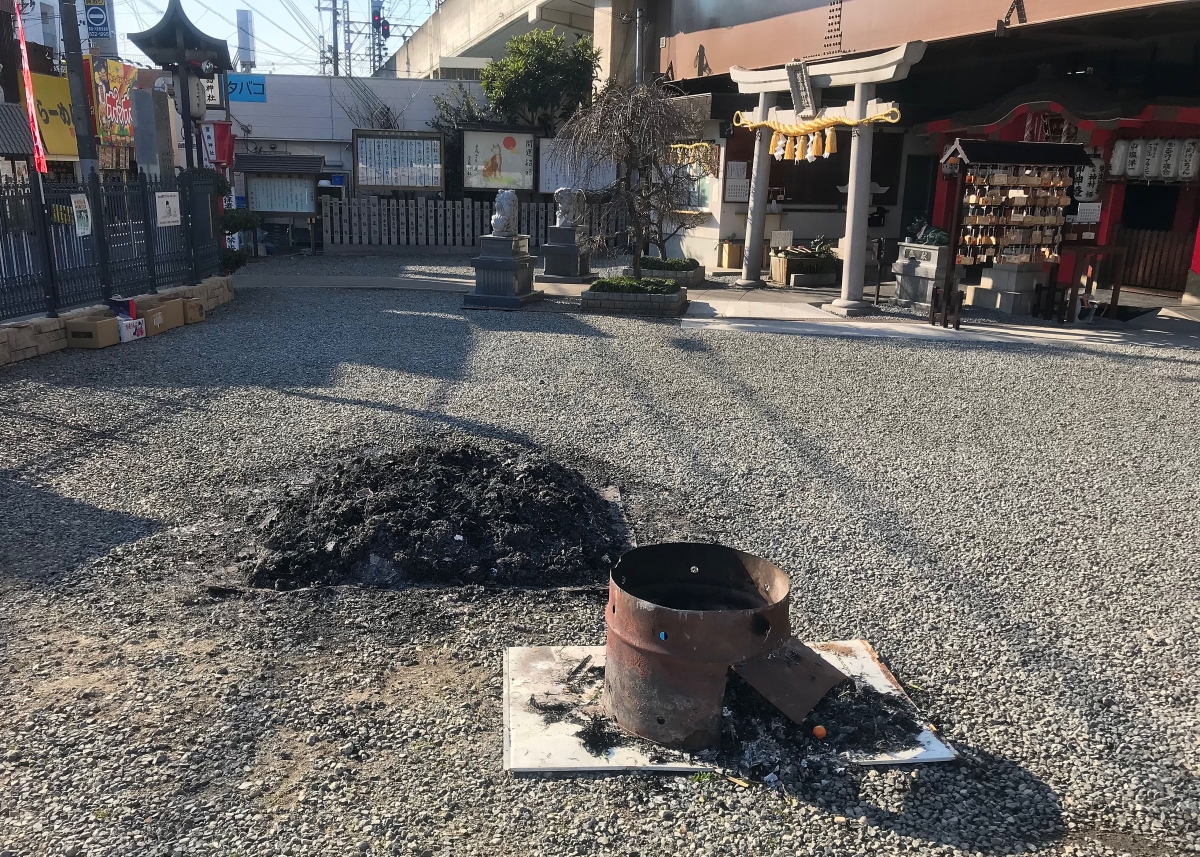
I missed the actual burning this morning but I was able to see the ashes/remains when I visited the shrine in the afternoon. The religious paraphernalia were burned in the metal barrel and she ashes were occasionally dumped when needed. It seems that from the size of the ash heap many items were burned.


Here is a close-up of the remains in the barrel. A couple items seems to have been deposited after the burning ended.


These boxes placed by the entrance are for non-burnable items.


You can see some of the items deposited in the boxes. The mikan oranges were most likely a part of the shimekazari.


The Kayashima shrine is famous because there is a train station right above it. The kami-deity associated with the shrine resides in a large 700 year old Camphor tree. When the train station was being built, the tree could not simply be cut down. Thus the station was built around it.


The tree/kami is seen as especially powerful. Many people claim their wishes have come true after praying and giving a small cash offering. The shrine is small but contains a lot of interesting sights.


2018 is the Year of the Dog so it seems appropriate that the shrine would have this public service request: Please take your dog's poop home.

Previous VAOJ posts on the summer festival at the Kayashima shrine:

Visual Anthropology of Japan, Local Matsuri I: The Mikoshi, posted July 30, 2013.

Visual Anthropology of Japan, Local Matsuri II: Evening Activities, posted July 31, 2013.

Visual Anthropology of Japan, Local Matsuri III: Tamago Senbei, posted August 1, 2013.

Visual Anthropology of Japan, Local Matsuri IV: People, posted August 2, 2013.

Visual Anthropology of Japan, Local Matsuri V: くわしく, posted August 3, 2013.

Visual Anthropology of Japan, Local Matsuri, 2014 Edition, posted August 17, 2014.

Wednesday, January 16, 2013

Tondo Festival - とんど祭り


I arrived at my neighborhood Shinto shrine at 8:30 AM and was warmly greeted by the older men who had already started the fire. I chatted with them, asked questions and took several photographs. For the next two hours my senses were ablaze and abuzz: the heat of the fire and the burning sensation on my fingers as I struggled with the yaki imo (baked sweet potato); the taste of the hot sweet potato and cold beer served in a paper cup; the sound of the crackling fire especially when the dry leaves were placed upon it; the various smells of wood, leaves and plastic bags; and the sight of beautiful charms and talisman being engulfed by the flames created a sensory ethnography experienced bodily.


My neighborhood shrine, Ubusuna Jinja (産土神社) in Kadoma-shi, Osaka, conducted its Tondo Festival (とんど祭り) on January 15, to coincide with ko-shogatsu (小正月), or "small new year" -  ko-shogatsu is a holdover from the time when Japan used a lunar calendar. This festival has many names (Dondo yaki - どんど焼き - is a common name but there are many others) and local variations. It seems to be a large celebration in Hiroshima and other locations across Japan. But my neighborhood version could barely be called a festival as it was practiced in a very low key manner. At the Tondo festival, shimekazari (a traditional New Years decoration hanged at the entrance to a house), omamori (good luck charms), ofuda (talisman), ema (votive tablets) as well as other religious or new year's related ornaments are burned. This is in effect a sort of recycling - these various ornaments are returned after a year or so of use and new ones are purchased. During my hatsumode to Hozanji temple in Ikoma every January, I return ofuda that I purchased the previous year in a special container and buy new ones. I have understood that these old ornaments were to be burned but I have never seen the ceremony itself at Hozanji.


In my neighborhood version, a group of older men from the community, members of the shrine's board of directors, started and tended the fire in the grounds in front of the shrine building itself. Housewives and other neighbors came one at a time or in small groups to drop off their talisman and charms to be burned. The men accepted the ornaments, (they separated the orange from the shimekazari as the near rotten fruit were to be thrown away rather than burned) and tossed them into the fire. Most people went to the shrine to offer a prayer. Some exchanged new year's greeting and stayed a few minutes to visit. It seemed for for most of the people that came it was the same as throwing out garbage. There was never a large crowd during the time of the event.


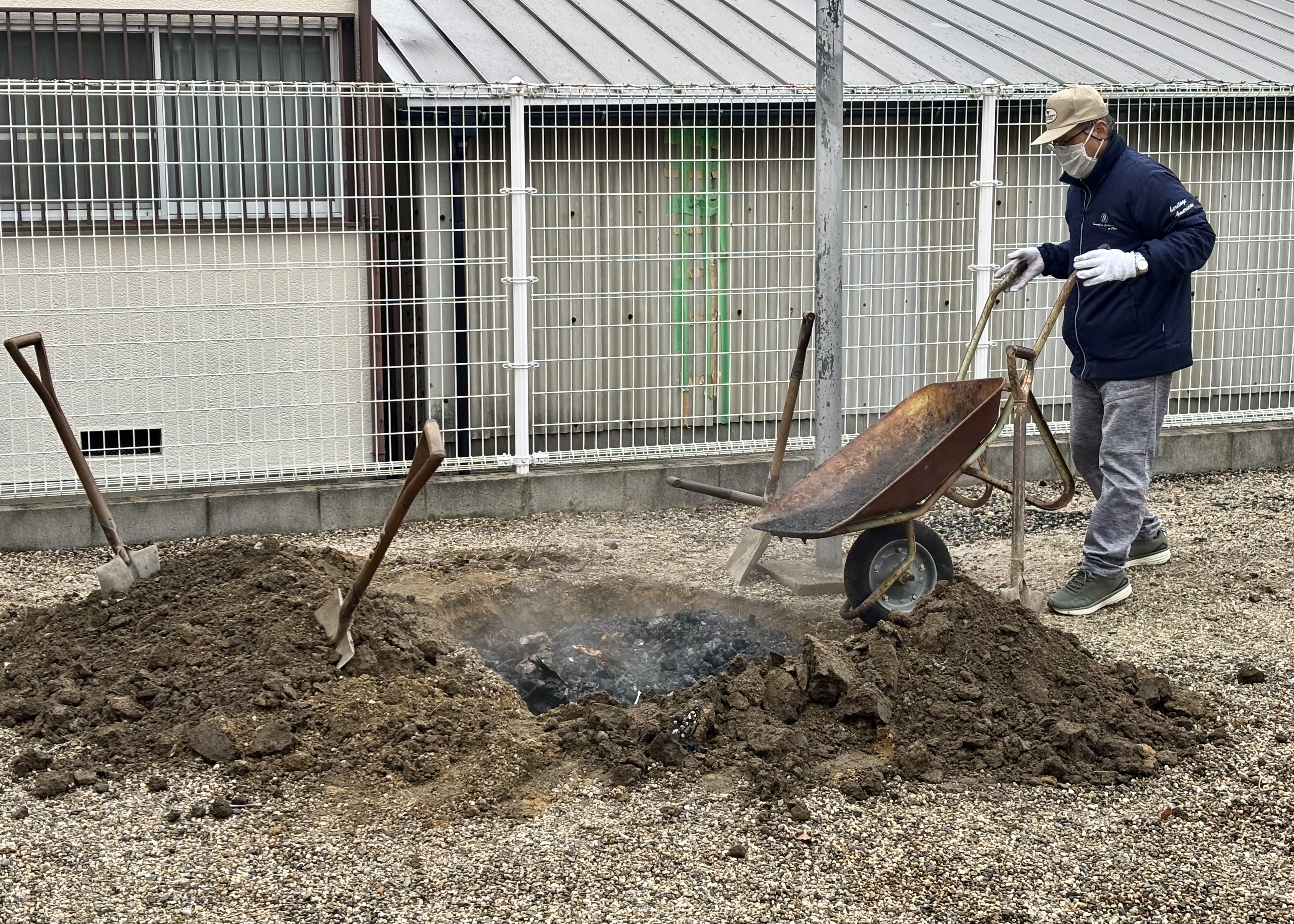
The men placed a few sweet potatoes in tin foil and then into the fire for roasting. After a half hour or so a couple of the men braved the extremely hot fire to retrieve the potatoes and they were shared by all. One of the men went around with paper cups and offered tea and later beer. The men chatted until 10:00 and then dug a hole in the ground, doused the fire and moved the still hot coals into the hole and buried them. By 10:30 one would not have known the event took place.


I was struck by the lack of religiosity. There was no Shinto priest officiating. Some say the Tondo  smoke is purifying and is supposed to protect people from bad luck and illness. By I wondered if this were true when plastic bags, paper cups and cigarette butts were tossed into the fire. Rather than a grand festival, this was a community service event. The Tondo Festival, no matter what it is called or how it is practiced is another good example of Shinto and Japanese culture hardly being homogenous.