Sunday, June 26, 2022

A sad farewell to an old friend and a warm welcome to a new one...

My Nikon D-700 (purchased in 2010) is officially retiring. We shared so many adventures together. The small pins in the memory card slot got bent in March, 2020, just moments before we were to go out and shoot during the final week of Tenbun. I was finally able to purchase a replacement, the Nikon D-850, this month. I hope it serves me just as well. As the D-700 was purchased with research funds from the university and is officially their property (as is the D-850), I must return it to the university after purchasing a replacement. Since it can't be used again, I wish I could keep it on my shelf so it can look down on me and grant its photo-blessings... D-700, ごくらさまでした! D-850, どうぞよろしくお願いします!
The family is sorry to see you leave...

Friday, June 17, 2022

"Tokyo station trials sound visualization for deaf and hard of hearing"

Photo from Japan Today, June 16, 2022.

Text from The Japan Times, June 16, 2022.

A train station in Tokyo on Wednesday started reproducing platform announcements and the sounds of train arrivals and departures onto a screen in the form of text and sign language to help deaf and hard-of-hearing travelers.

In the trial project that began at Ueno Station and will run through Dec. 14, East Japan Railway aims to provide such travelers with a safer and more convenient travel experience.

In the service developed in conjunction with Fujitsu, station announcements and train sounds collected by microphones are converted into text and onomatopoeic descriptions in real-time using artificial intelligence.

They are then displayed on a screen positioned above a vending machine, with the roar of trains represented by cartoonish fonts and with different sizes to add to the detail provided, with the text changing to represent volume levels, for example. The screen will also show station staff signing commonly used announcements.

On Wednesday morning, the whooshing sound of an approaching Yamanote Line train was expressed with Japanese onomatopoeia. A sign language video was shown to inform passengers that the doors were closing ahead of the train’s departure.

Called Ekimatopeia, a portmanteau of the Japanese word for “station” and the English word “onomatopoeia,” the service is based on ideas that came out of a workshop conducted at a school for deaf and hard-of-hearing students last summer in Kawasaki.

“We thought it would be helpful if we could understand what was going on around us through written words. It feels amazing that our idea became a reality. I want it to be displayed in more stations,” said Sora Konno, 18, a student at the school.


Source: https://www.japantimes.co.jp/news/2022/06/15/national/station-sounds-visualized/?utm_medium=Social&utm_source=Twitter#Echobox=1655286685

Short video of the Ekimatopeia: https://www.youtube.com/watch?v=Yz_LgzSuqYs&t=4s

Tuesday, June 14, 2022

VAoJ is going to Lithuania (at least virtually) with「Tenbun: The Intersections of Performance, Place and Ethnographer in a Japanese Standing Bar」

Abstract:

Gerald Berreman describes a dilemma within ethnography: “how to be scientific and at the same time retain the humanistic insights—the human relevance—without which no account of human beings makes sense” (1966: 346). He suggests that, rather than choosing one or the other, ethnographers should develop a methodology that is both insightful and scientific. How to accomplish this in practice is still a question for ethnographers today.

This presentation is a visual ethnography of a tachinomiya (standing drink bar) in Osaka, Japan, called Tenbun. The bar features many kinds of food and drink in a “grimy” (Farrer 2019) and lively atmosphere, populated with an array of colorful characters. Following the recent work of Kajimaru et al. on the concept of ba (place, space), this research describes Tenbun as more than a location. Rather, it is “a co-emergence of performance, place and peoples” (2021: x). The ethnographer plays a dual role as an immersed participant at Tenbun and later as a distanced cultural analyst. My attempt to describe Tenbun in both insightful and scientific ways uses multimodality (Collins et al. 2017), sensory ethnography (Pink 2009) and photography.


Conference Information:

Old Discipline, New Trajectories: Theories, Methods and Practices in Anthropology
Hosted by Faculty of Philosophy at Vilnius University
Vilnius, Lithuania June 16-18, 2022
Webpage: https://www.sasciconf2021.fsf.vu.lt/

My paper is in Panel session no.2, ANTHROPOLOGICAL EXPLORATION OF ART AND PERFORMATIVE PRACTICES.
JUNE 16, 2022 (Thursday), 13:00-15:00 local time.
Japan time: JUNE 16, 2022 (Thursday), 19:00.

Special Bonus Photo:

Saturday, June 4, 2022

“A new wave of hard-boiled eggs has arrived.”

Text and image from Japan Today, June 4, 2022.

Imitation octopus balls are Japan’s newest pseudo-gourmet recipe for boiled eggs

Takoyaki are one of Japan’s best snack foods. The savory spherical seafood dumplings are inexpensive, tasty, and filling, which is pretty much the holy triumvirate of good munchie criteria.

There is, however, one potential drawback to takoyaki. The tako part means “octopus,” and while the oceanic octopod is commonly eaten in Japan, it might not be something you’re accustomed to, or even able to easily find at the supermarket, depending on what part of the world you’re living in.

But we recently came across a way to get most of the takoyaki flavor without any tako, thanks to a recipe for takoyaki-style eggs.

The recipe comes from the Japan Agricultural Cooperatives Group’s National Federation of Agricultural Cooperative Associations, which, thankfully, abbreviates down to Zen-Noh due to how those terms are rendered in Japanese. The recipe is incredibly simple, and has only a handful of necessary ingredients:

Eggs, Takoyaki sauce, Mayonnaise, Aonori (powdered seaweed), Katsuobushi (bonito flakes)

And as short as the ingredient list is, the number of cooking steps is even smaller.

Step 1: Boil the eggs.

Step 2: Pour on the takoyaki sauce and mayo.

Step 3: Sprinkle on the aonori and katsuobushi.

That’s all there is to it. Zen-Noh recommends whipping up some takoyaki-style eggs when you’re feeling like you could use just one more side dish for a fully satisfying dinner, and if you happen to be in the habit of keeping a batch of hard-boiled eggs in your fridge, the rest of the prep work only takes a few seconds.

Taste-testing duties/privileges fell to our Japanese-language reporter Ahiru Neko, and he says if you’ve ever eaten takoyaki, the takoyaki-style eggs will taste exactly like you’d imagine they would: a mix of sweet and savory flavors, with a dash of tartness from the mayo and a bit of mature bitterness from the aonori.

Zen-Noh’s tweet about the takoyaki-style eggs, in which they declare “A new wave of hard-boiled eggs has arrived.”


Source: https://japantoday.com/category/features/food/imitation-octopus-balls-are-japan%E2%80%99s-newest-pseudo-gourmet-recipe-for-boiled-eggs-2

Friday, May 27, 2022

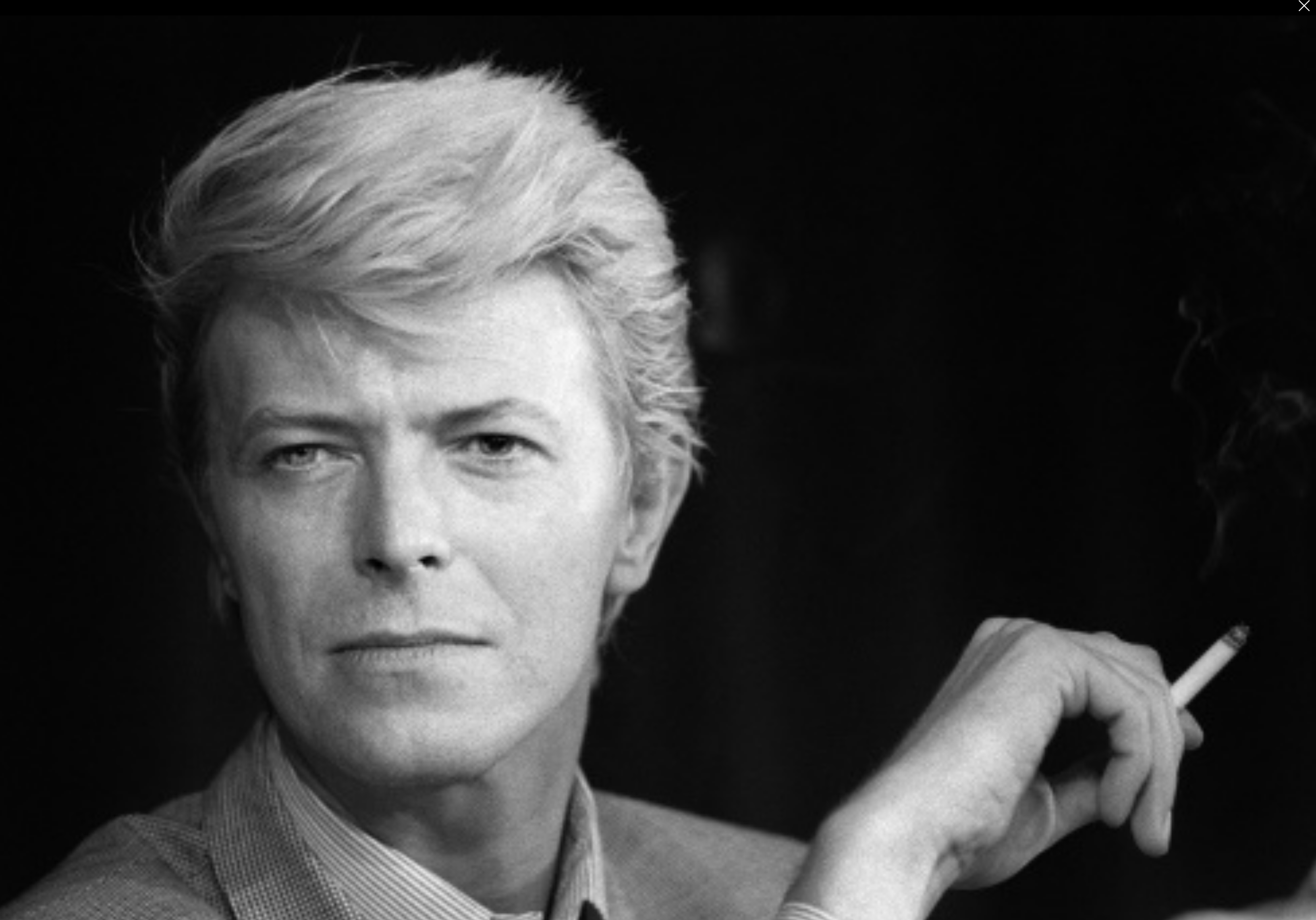
"Bowie documentary blasts off at Cannes film fest"

Photos and text from Japan Today, May 26, 2022.

A high-octane documentary on David Bowie has delighted fans at the Cannes Film Festival which is having a vintage year for music lovers.

"Moonage Daydream" by American documentary maker Brett Morgen is a tour de force through the daring creativity of the pop icon who influenced rock music like few others.

It is not the only music doc at the festival, which also premiered "Jerry Lee Lewis: Trouble in Mind" about the legendary rock'n'roller.

The film was made by Ethan Coen, one half of the Coen brothers film-making duo.

Both docs eschew expert talking heads in favor of a more immersive experience.

"I don't care what experts say," Coen told AFP at the festival. "Jerry Lee is a performer so I want to see the performance -- not what some expert thinks about it."

By the time he died in 2016, Bowie had sold more than 100 million records, from his first hit single "Space Oddity" to his final album "Blackstar", released just days before his death.

There was a massive wealth of clips, recordings, interviews, writings, movie performances and art by the artist -- five million items in all -- that Morgen went through to produce a mesmerising patchwork of sounds and images.

"It's not a biography," Morgen told AFP. "The film is meant to be sublime, and kaleidoscopic, and kind of wash over you."

Having seen "nearly every image in existence of David Bowie, I am more in awe of him today than at any point", Morgen said.

There was a temptation to simply call his film "Bowie", but he resisted, because "there's no definitive Bowie".

Critics gushed, with The Telegraph calling Moonage Daydream "wildly creative" and The Guardian, in a five-star review, saying it was "a shapeshifting epiphany-slash-freakout... a glorious celebratory montage".

That's not all the music to come at Cannes, which is also bracing for the world premiere on Wednesday of "Elvis", the new biopic from Australia's technicolour maestro Baz Luhrmann.

The film stars newcomer Austin Butler in the lead role, with Tom Hanks as his infamous manager, Colonel Tom Parker.

Last year's edition was also packed with music, opening with the eccentric musical "Annette" by LA pop duo Sparks, and featuring a lauded documentary about The Velvet Underground by cult director Todd Haynes, and a biopic about Celine Dion.

Cannes was also the launchpad for "Amy" about the tragically short life of singer Amy Winehouse, which premiered in 2015 to enthusiastic reviews.

More broadly, this is something of a golden age for music documentaries as the genre moves away from the sort of simplistic, hero-worshipping films of old towards more innovative pieces of work.

Coen said he had been blown away by some recent documentaries -- especially "Get Back", the painstaking reconstruction of footage from The Beatles' last-ever gig by "Lord of the Rings" director Peter Jackson.

"The Beatles one was fantastic. I could not get enough of it even though it was seven hours long," Coen said. "But it's like anything -- books or movies -- there's some good ones and a lot of bad ones."


Source: https://japantoday.com/category/entertainment/floating-in-a-tin-cannes-bowie-doc-blasts-off-at-film-fest
Movie trailer: https://www.youtube.com/watch?v=GSbbDCV45OI

Monday, May 2, 2022

"Osaka Expo mascot needs name; organizers ask for suggestions"

Image and story from Japan Today, 5/2/22.

The organizers of the 2025 Osaka World Expo have decided to once more enlist the help of the public, this time to help them come up with a new name for their mascot.

You may remember the mascot was making waves online when it was first announced, as unlike normal character mascots, it looked like something straight out of a horror movie.

As one of the mottos of the event is designing a future society of shining lives, the monstrosity of a mascot has already been given an unofficial name by netizens — Inochi no Kagayaki-kun (Shining Life-kun). However, organizers have recently commented: “We aren’t considering that as the official name at this point.”

...

Instead, the organizers have decided to ask the public for suggestions for a name. Seeing as the mascot will be used for promotional activities and official merchandise, this is a great opportunity to really be a lasting part of the 2025 World Expo.

Before you go rushing to suggest the mascot be named Sleep Paralysis Demon, be aware that the person who suggests the winning name will net themselves a cool 300,000 yen. The entry form also requires you to write your reasons for coming up with your suggested name, so “I’m suggesting ‘AGGGGGH-kun because just look at it,” probably won’t do you any favors.

Although you definitely won’t be alone in suggesting horror-based names, if comments by Japanese netizens are anything to go by. Those who had recovered from the shock of learning it was not in fact called Inochi no Kagayaki-kun were quick to come up with some gruesome suggestions of their own.

“I’m gonna suggest Death Bringer.”

“I think Curse from the Abyss would be a good choice.”

“What about End of the World-kun?”

“I’ve seen a lot of suggestions for Kill Me-kun, haha.”

Anyone can submit a name for consideration, and two suggestions are allowed per person. The name must be written in either hiragana or katakana, and names that are gender based will not be considered, as the mascot is genderless. Unfortunately, only Japanese nationals or people with Japanese residency are eligible to enter, but anyone who meets those requirements can send their suggestions here. Entries will be open until May 16.


Be sure to check out the reader comments as well...

Source: https://japantoday.com/category/national/Osaka-Expo-mascot-needs-name-organizers-ask-for-suggestions

Wednesday, April 27, 2022

We studied kinship in my「Intro to Cultural Anthropology」class today...

Pictured (left to right): Dad, Aunt Ruth, Sugar, Mom, The Anthropologist, Hydrox,
Uncle Jim. Photo by Charles K. Fedorowicz. Lowell, Michigan, USA, 1977.