Explorations and experiments in visual representations - multimodality, sensory ethnography, reflexivity, autoethnographic vignettes, ethnographic photography and ba...
Saturday, April 19, 2025
Friday, April 18, 2025
Friday, April 11, 2025
Announcement: KG+ Photo Exhibition in Kyoto April 12 ~ May 11
“KG+” is a public art festival that first started in 2013 with the aim of discovering and supporting upcoming photographers and curators with 2025 being the 13th anniversary of this festival. We strive to present the state-of-the-art skills of upcoming photographers widely enlisted here in Kyoto to around the globe.
In cooperation with “KYOTOGRAPHIE Kyoto International Photography Festival”, we give upcoming photographers and curators participating in KG+ opportunities to talk and collaborate with world-renowned curators and gallerists from Japan and around the world.
“KG+ SELECT” is another exhibition, where 10 artists out of the participants of “KG+” are selected to exhibit their work by judges working at an international degree. KG+SELECT Award 2025 Winner is held between the selected 10 artists, with the winner given the invitation to exhibit their work in the official KYOTOGRAPHIE program next year in 2026.
For more information: https://kgplus.kyotographie.jp/
“KG+ SELECT” is another exhibition, where 10 artists out of the participants of “KG+” are selected to exhibit their work by judges working at an international degree. KG+SELECT Award 2025 Winner is held between the selected 10 artists, with the winner given the invitation to exhibit their work in the official KYOTOGRAPHIE program next year in 2026.
For more information: https://kgplus.kyotographie.jp/
Thursday, April 10, 2025
2025お花見菜の花の関係子と: Na no hana relations...
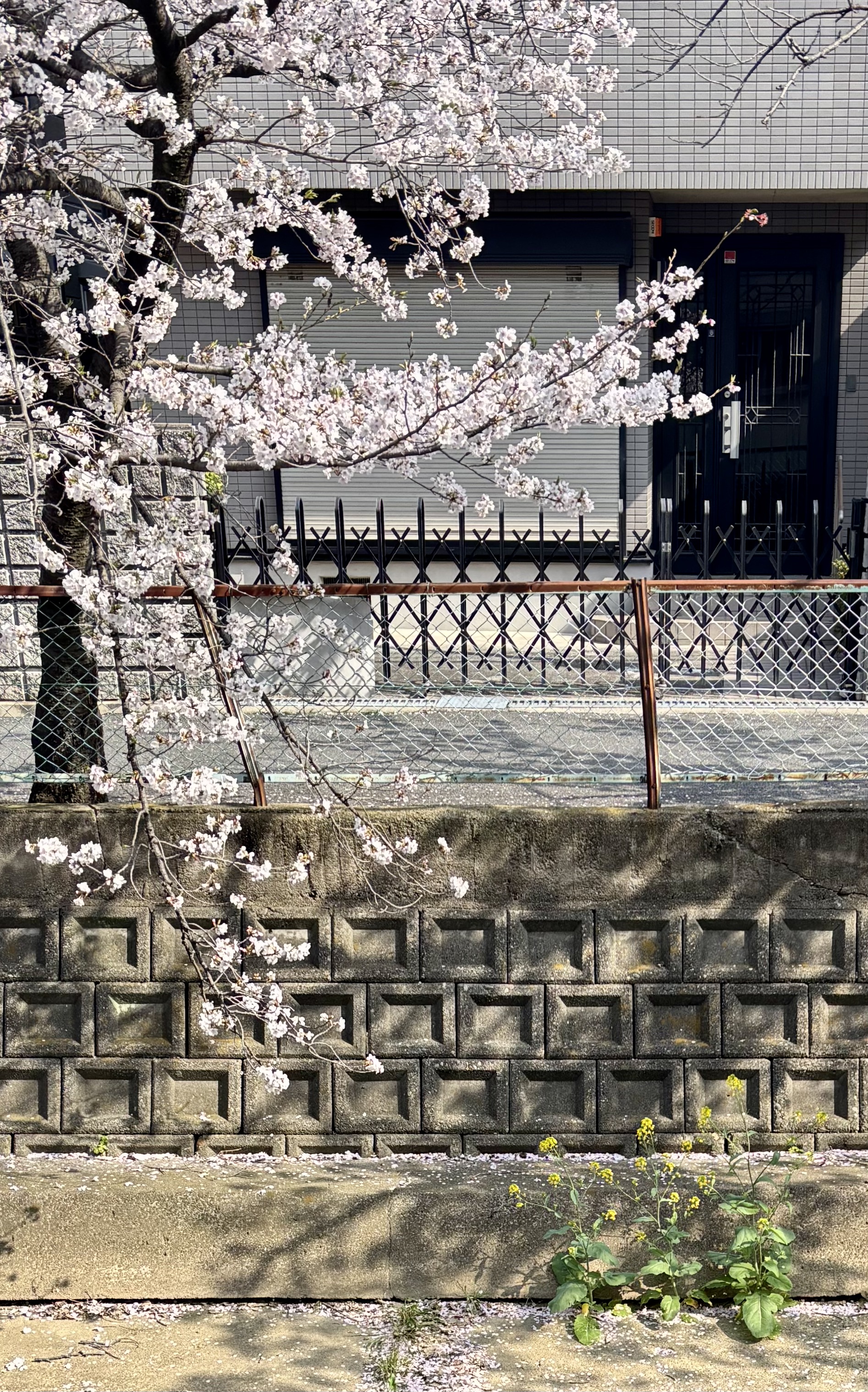
Three plamts behind the family of three, all enjoying the cherry blossoms...
See also: https://visualanthropologyofjapan.blogspot.com/2025/04/2025-expected-beauty-and-awe-of-cherry.html
Tuesday, April 8, 2025
Monday, April 7, 2025
Announcement: New JAWS Newsletter released (and check out the cover! AGAIN!)
Congratulations and many thanks to the co-editors, Jennifer McGuire and Christopher Tso, on putting together and releasing the Japan Anthropology Workshop Newsletter (#53) "...continuing with our refreshed newsletter design and second cover photo by visual anthropologist and JAWS member Steven C. Fedorowicz..."
Available at:
https://japananthropologyworkshop.org/wp-content/uploads/2025/04/JAWS-Newsletter-2023.pdf
「Push-Pulling the Danjiri」
Residents of Shirogaki-cho in Kadoma-shi, Osaka push and pull a large wooden cart called a danjiri through the district’s streets as a part of the annual Fall Festival (October) and Kadoma-shi 60th Anniversary Culture Festival (November) in 2023. Navigating the danjiri is hard work, because the cart is heavy and awkward to steer through the narrow and winding streets. Shirogaki-cho’s danjiri, parts of which were made in the Edo period, is over 7 meters long, 4 meters high at its tallest point and weighs over 3.2 tons. Even before the COVID-19 pandemic, participation by neighbors in these events has been decreasing over the years because of demographic changes: Japan’s aging society, the falling birthrate, and gentrification as traditional homes are torn down and replaced with apartments making the area into a bed-town of strangers. But a core of diehard and friendly residents take part every year to parade the danjiri with the temporarily installed deity from the local shrine throughout the parish to bestow its blessings to the neighbors, encourage cooperation, and promote continued good community relations. Ihave been photographing, researching, and pushing in the fall festival for over 15 years.
Available at:
https://japananthropologyworkshop.org/wp-content/uploads/2025/04/JAWS-Newsletter-2023.pdf
「Push-Pulling the Danjiri」
Residents of Shirogaki-cho in Kadoma-shi, Osaka push and pull a large wooden cart called a danjiri through the district’s streets as a part of the annual Fall Festival (October) and Kadoma-shi 60th Anniversary Culture Festival (November) in 2023. Navigating the danjiri is hard work, because the cart is heavy and awkward to steer through the narrow and winding streets. Shirogaki-cho’s danjiri, parts of which were made in the Edo period, is over 7 meters long, 4 meters high at its tallest point and weighs over 3.2 tons. Even before the COVID-19 pandemic, participation by neighbors in these events has been decreasing over the years because of demographic changes: Japan’s aging society, the falling birthrate, and gentrification as traditional homes are torn down and replaced with apartments making the area into a bed-town of strangers. But a core of diehard and friendly residents take part every year to parade the danjiri with the temporarily installed deity from the local shrine throughout the parish to bestow its blessings to the neighbors, encourage cooperation, and promote continued good community relations. Ihave been photographing, researching, and pushing in the fall festival for over 15 years.
Thursday, April 3, 2025
The Visual Anthropology of Japan: In and Outside the Classroom, Revisited
JAWS / AJJ Joint Conference 2025
Session 14 - Reflecting and Revisiting「Teaching Japan」
University of Hyogo - Kobe Campus for Commerce
Building 5
April 5, 2025, 15:40 - 17:10
Campus access: https://www.u-hyogo.ac.jp/english/access/#id01
Campus map: https://www.u-hyogo.ac.jp/about/access/kobeshoka/
Paper 4: The Visual Anthropology of Japan: In and Outside the Classroom, Revisited
Steven C. Fedorowicz, Professor, Kansai Gaidai University
Abstract: My chapter describes teaching a class comprised of international exchange students from many different countries alongside local students preparing for their study-abroad programs called “Visual Anthropology of Japan” at a Japanese university from 2006 to 2014. Topically, the course was about the presentation and representation of culture through film, photography, and other visual communication arts within the shifting anthropological ecologies of media, methods, and theory. Teaching “Japan” in this context required several balances of instruction and guidance for students of different academic levels, backgrounds, language skills and expectations studying together in the same class. Because of my training and background in cultural anthropology and visual anthropology, I do not consider my text as a theoretical treatise on pedagogy per se. Rather it is closer to an ethnographic—sometimes autoethnographic—account based on the fieldwork of teaching this course under certain conditions at a global educational setting. In my presentation, I will revisit this setting through the reflexive lens of ba (Kajimaru, Coker and Kazuma 2021), specifically, the convergence of players, place and performance during the period of the multimodal turn in visual anthropology that coincided with the class. This reminiscent revisit reaffirms the potential and possibility for a more active student learning environment and further course development to make a new and improved version of the course.
For more details about the conference and panel: https://visualanthropologyofjapan.blogspot.com/2025/02/announcement-jawsajj-joint-conference.html
Session 14 - Reflecting and Revisiting「Teaching Japan」
University of Hyogo - Kobe Campus for Commerce
Building 5
April 5, 2025, 15:40 - 17:10
Campus access: https://www.u-hyogo.ac.jp/english/access/#id01
Campus map: https://www.u-hyogo.ac.jp/about/access/kobeshoka/
Paper 4: The Visual Anthropology of Japan: In and Outside the Classroom, Revisited
Steven C. Fedorowicz, Professor, Kansai Gaidai University
Abstract: My chapter describes teaching a class comprised of international exchange students from many different countries alongside local students preparing for their study-abroad programs called “Visual Anthropology of Japan” at a Japanese university from 2006 to 2014. Topically, the course was about the presentation and representation of culture through film, photography, and other visual communication arts within the shifting anthropological ecologies of media, methods, and theory. Teaching “Japan” in this context required several balances of instruction and guidance for students of different academic levels, backgrounds, language skills and expectations studying together in the same class. Because of my training and background in cultural anthropology and visual anthropology, I do not consider my text as a theoretical treatise on pedagogy per se. Rather it is closer to an ethnographic—sometimes autoethnographic—account based on the fieldwork of teaching this course under certain conditions at a global educational setting. In my presentation, I will revisit this setting through the reflexive lens of ba (Kajimaru, Coker and Kazuma 2021), specifically, the convergence of players, place and performance during the period of the multimodal turn in visual anthropology that coincided with the class. This reminiscent revisit reaffirms the potential and possibility for a more active student learning environment and further course development to make a new and improved version of the course.
For more details about the conference and panel: https://visualanthropologyofjapan.blogspot.com/2025/02/announcement-jawsajj-joint-conference.html
Tuesday, April 1, 2025
Wednesday, March 19, 2025
Wednesday, March 12, 2025
Saito Harumichi's Photo Exhibition, "Myth 7th Year -- Humanity Begins" at the Ojo Building in Kabukicho, Shinjuku, Tokyo, March 27 - March 30
Saito-san, known as perhaps the most popular deaf photographer in Japan, has been keeping a diary about his feelings about the upcoming exhibition. In one post he wrote:
I want to show children the unchanging sea, the green that surrounds us, the joy of the sunlight that pours down everywhere. I'm stupid. I can't express it to children in words. My words are photographs, so I want to convey them through photographs. I want to leave something behind.
Diary: https://note.com/saitoharumichi/n/n10ff1b560a67?magazine_key=md0209091393d
Exhibition Information
Saito Harumichi "Myth 7th Year - Humanity Begins"
Period: Thursday, March 27, 2025 to Sunday, March 30, 2025
Time: 12:00-20:00 (last entrance 19:30)
Venue: Ojo Building 2nd and 3rd floors
Address: 1-13-2 Kabukicho, Shinjuku-ku, Tokyo
Admission fee: 1,000 yen
Exhibition Announcement: https://photoandculture-tokyo.com/contents.php?i=4959
I want to show children the unchanging sea, the green that surrounds us, the joy of the sunlight that pours down everywhere. I'm stupid. I can't express it to children in words. My words are photographs, so I want to convey them through photographs. I want to leave something behind.
Diary: https://note.com/saitoharumichi/n/n10ff1b560a67?magazine_key=md0209091393d
Exhibition Information
Saito Harumichi "Myth 7th Year - Humanity Begins"
Period: Thursday, March 27, 2025 to Sunday, March 30, 2025
Time: 12:00-20:00 (last entrance 19:30)
Venue: Ojo Building 2nd and 3rd floors
Address: 1-13-2 Kabukicho, Shinjuku-ku, Tokyo
Admission fee: 1,000 yen
Exhibition Announcement: https://photoandculture-tokyo.com/contents.php?i=4959
Subscribe to:
Posts (Atom)


