Explorations and experiments in visual representations - multimodality, sensory ethnography, reflexivity, autoethnographic vignettes, ethnographic photography and ba...
Showing posts sorted by relevance for query kayashima shrine. Sort by date Show all posts
Monday, January 15, 2018
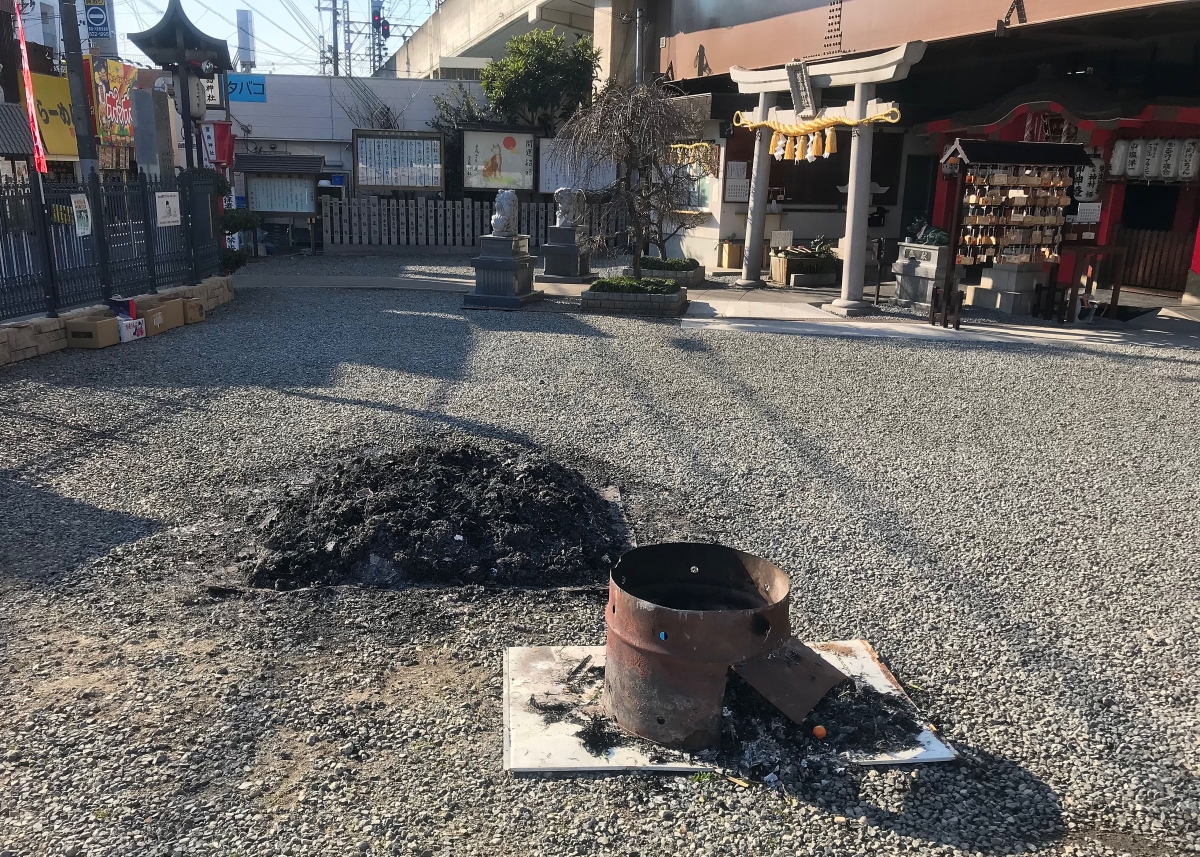
Remains of the 2018 Kayashima Shrine Tondo Festival
Kayashima Shrine (萱島神社) conducted its Tondo Festival (とんど祭り) on January 15, to coincide with ko-shogatsu (小正月), or "small new year" - ko-shogatsu is a holdover from the time when Japan used a lunar calendar. This festival has many names (Dondo yaki - どんど焼き - is a common name but there are many others) and local variations. At the Tondo festival, shimekazari (a traditional New Years decoration hanged at the entrance to a house), omamori (good luck charms), ofuda (talisman), ema (votive tablets) as well as other religious or new year's related ornaments are burned. This is in effect a sort of recycling - these various ornaments are returned after a year or so of use and new ones are purchased.
I have previously written about the Tondo festival at the Shinto shrine in my neighborhood. (It is actually one of my favorite VAOJ posts - check it out!)
Visual Anthropology of Japan, Tondo Festival - とんど祭り, posted January 16, 2013.
I missed the actual burning this morning but I was able to see the ashes/remains when I visited the shrine in the afternoon. The religious paraphernalia were burned in the metal barrel and she ashes were occasionally dumped when needed. It seems that from the size of the ash heap many items were burned.
Here is a close-up of the remains in the barrel. A couple items seems to have been deposited after the burning ended.
These boxes placed by the entrance are for non-burnable items.
You can see some of the items deposited in the boxes. The mikan oranges were most likely a part of the shimekazari.
The Kayashima shrine is famous because there is a train station right above it. The kami-deity associated with the shrine resides in a large 700 year old Camphor tree. When the train station was being built, the tree could not simply be cut down. Thus the station was built around it.
The tree/kami is seen as especially powerful. Many people claim their wishes have come true after praying and giving a small cash offering. The shrine is small but contains a lot of interesting sights.
2018 is the Year of the Dog so it seems appropriate that the shrine would have this public service request: Please take your dog's poop home.
Previous VAOJ posts on the summer festival at the Kayashima shrine:
Visual Anthropology of Japan, Local Matsuri I: The Mikoshi, posted July 30, 2013.
Visual Anthropology of Japan, Local Matsuri II: Evening Activities, posted July 31, 2013.
Visual Anthropology of Japan, Local Matsuri III: Tamago Senbei, posted August 1, 2013.
Visual Anthropology of Japan, Local Matsuri IV: People, posted August 2, 2013.
Visual Anthropology of Japan, Local Matsuri V: くわしく, posted August 3, 2013.
Visual Anthropology of Japan, Local Matsuri, 2014 Edition, posted August 17, 2014.
Sunday, January 4, 2026
Kayashima Shrine 萱島神社 After the New Year's Rush
Kayashima Shrine is close to my house and famous because there is a train station right above it. The kami-deity associated with the shrine resides in a large 700 year old Camphor tree. When the train station was being built, the tree could not simply be cut down. (There were many signs and messages directing that the tree not be cut including illnesses and the sighting of an auspicious white snake.) Thus the station was built around it. The tree/kami is seen as especially powerful. Many people claim their wishes have come true after praying and giving a small cash offering. The shrine is small but contains a lot of interesting sights and has many events through the year.
I have taken a lot of photographs at this shrine over the years. You can see some of them here:
https://visualanthropologyofjapan.blogspot.com/search?q=kayashima+shrine
Special Bonus Ethno-Photo-Art
https://visualanthropologyofjapan.blogspot.com/search?q=kayashima+shrine
Special Bonus Ethno-Photo-Art
Sunday, February 3, 2019
Local Setsubun Celebration at Kayashima Shrine, Osaka, Japan, Feb. 3, 2019
More neighborhood shots at the close-by Kayashima Shrine to observe setsubun. This is another community event to celebrate the (traditional) beginning of spring, catch some soy beans and drink some warm amazake. You can find a lot about setsubun on-line, especially the big celebrations at major temples and shrines. Setsubun is another great example of the variations of "traditional" Japanese festivals even in close proximity. Scroll down to see Kayashima last year, a celebration from a relatively close by (and large) temple near the Korien train station in Osaka and a not so far away shrine in Yawata-shi, Kyoto (all accessible on the same Keihan train line within 30 minutes or so).
See the celebration at Kayashima last year.
2018 Setsubun Shots @ Kayashima Jinjya
https://visualanthropologyofjapan.blogspot.com/2018/02/2018-setsubun-shots-kayashima-jinjya.html
See another celebration at a big temple in Osaka.
Setsubun @ Naritasan-fudoson Temple in Osaka, 2013
http://visualanthropologyofjapan.blogspot.com/2013/02/setsubun-naritasan-fudoson-temple-in.html
See another celebration at a big shrine in Kyoto.
Setsubun festival at Iwashimizu Shrine in Yawata, Kyoto, Japan. February 3, 2019. Video by my colleague Mark Hollstein (Great job with the new camera!)
Friday, January 17, 2025
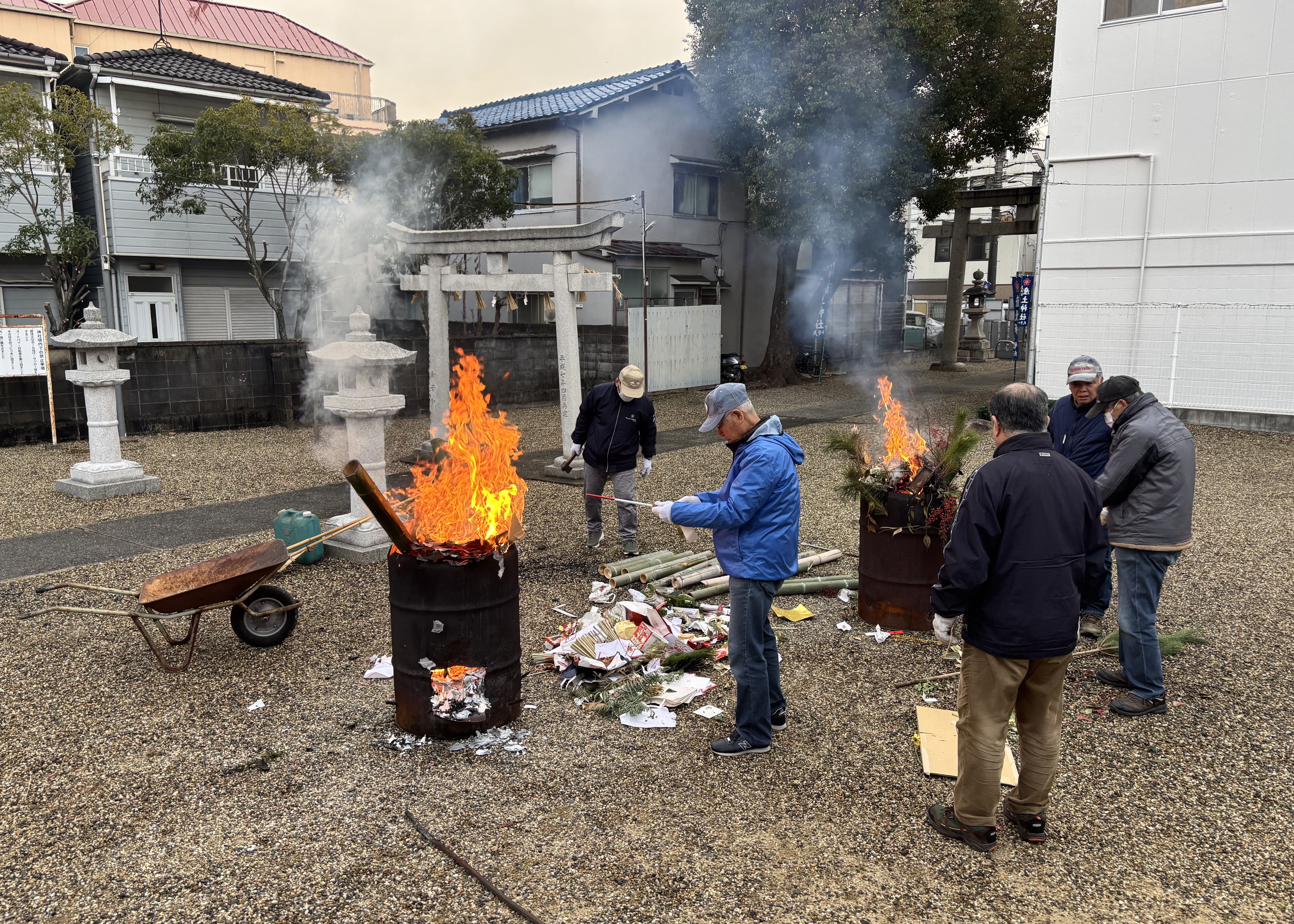
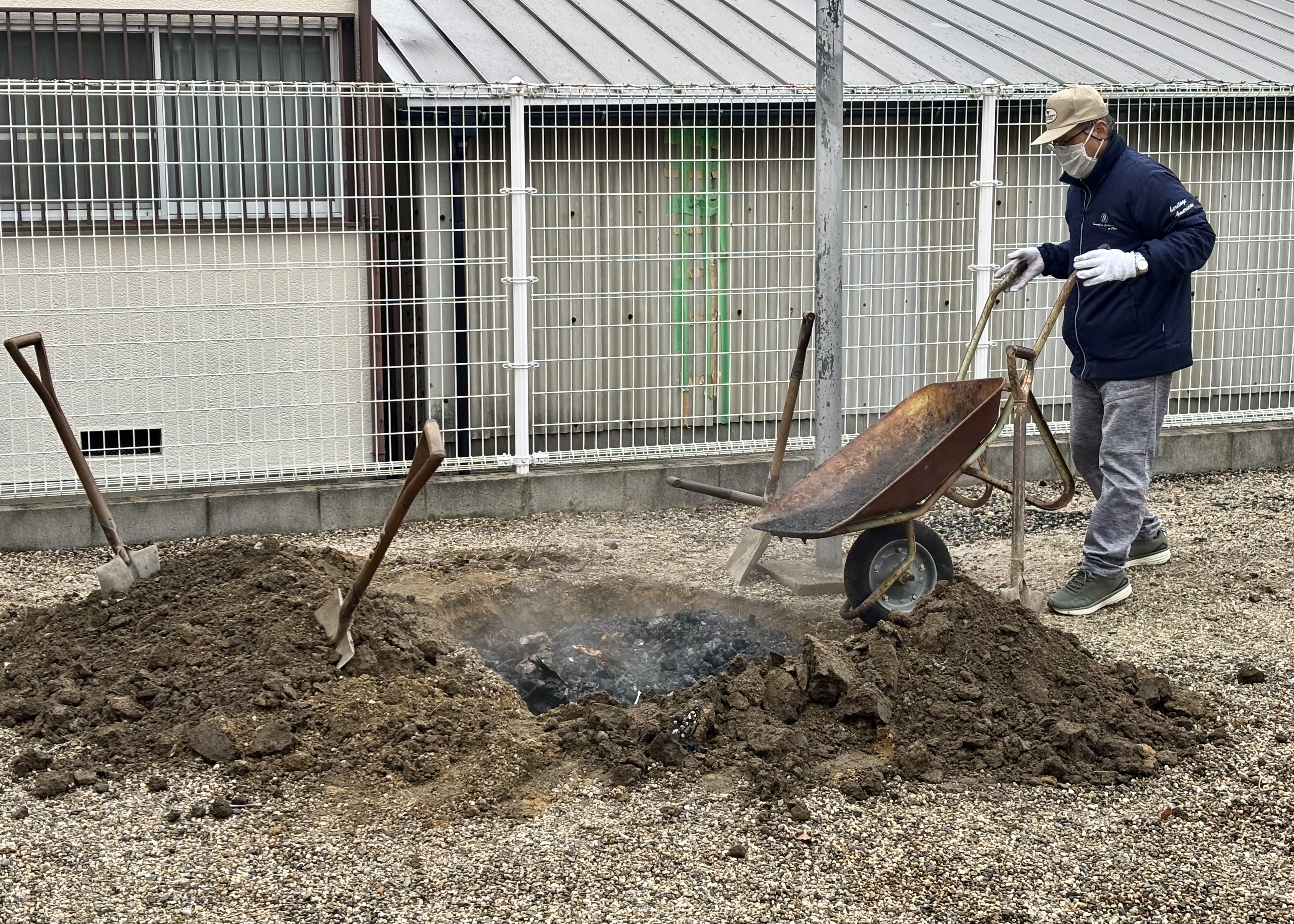
「とんど祭り @ 産土神社 2025」Tondo Matsuri @ Ubusuna Shrine 2025
On January 15, 2025, from 8:00 - 10:00 AM, we (the shrine elders and the recruited volutnteer/visual anthropologist) held the Tondo Matsuri at our local shrine, Ubusuna Jinja, in Shirogaki-cho, Kadoma-shi, Osaka-fu. This low key community based event is a chance for neighbors to bring their religious amulets from the previous year and new year's decorations to the shrine to be burned. Like Shinto itself, one might argue that this festival is more tradtional/cultural than religious in nature. I documented this same event at the shrine in 2013. Aside from a few changes, (fewer participants, older participants, no tobacco smokers or beer), this year's event was the same as it was in 2013 (as a good ritual should be...). Check out the 2013 post for more specifics about the Tondo Matsuri.
Tondo Festival - とんど祭り (1/15/13): https://visualanthropologyofjapan.blogspot.com/2013/01/tondo-festival.html
See also:
Remains of the 2018 Kayashima Shrine Tondo Festival (1/15/18): https://visualanthropologyofjapan.blogspot.com/2018/01/remains-of-2018-kayashima-shrine-tondo.html
Let's get back to Ubusuna Jinja in 2025...
Tondo Festival - とんど祭り (1/15/13): https://visualanthropologyofjapan.blogspot.com/2013/01/tondo-festival.html
See also:
Remains of the 2018 Kayashima Shrine Tondo Festival (1/15/18): https://visualanthropologyofjapan.blogspot.com/2018/01/remains-of-2018-kayashima-shrine-tondo.html
Let's get back to Ubusuna Jinja in 2025...
Subscribe to:
Posts (Atom)