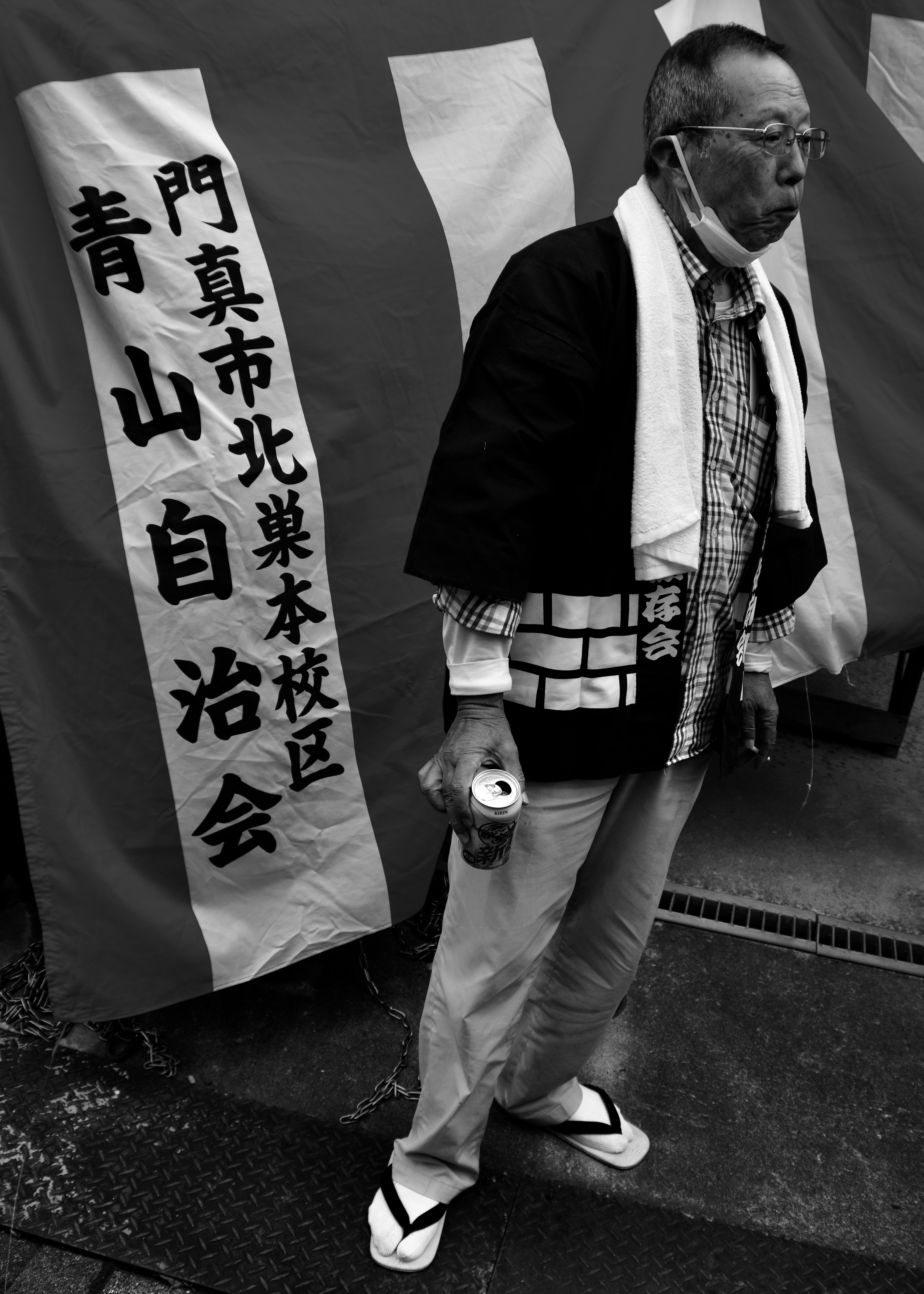

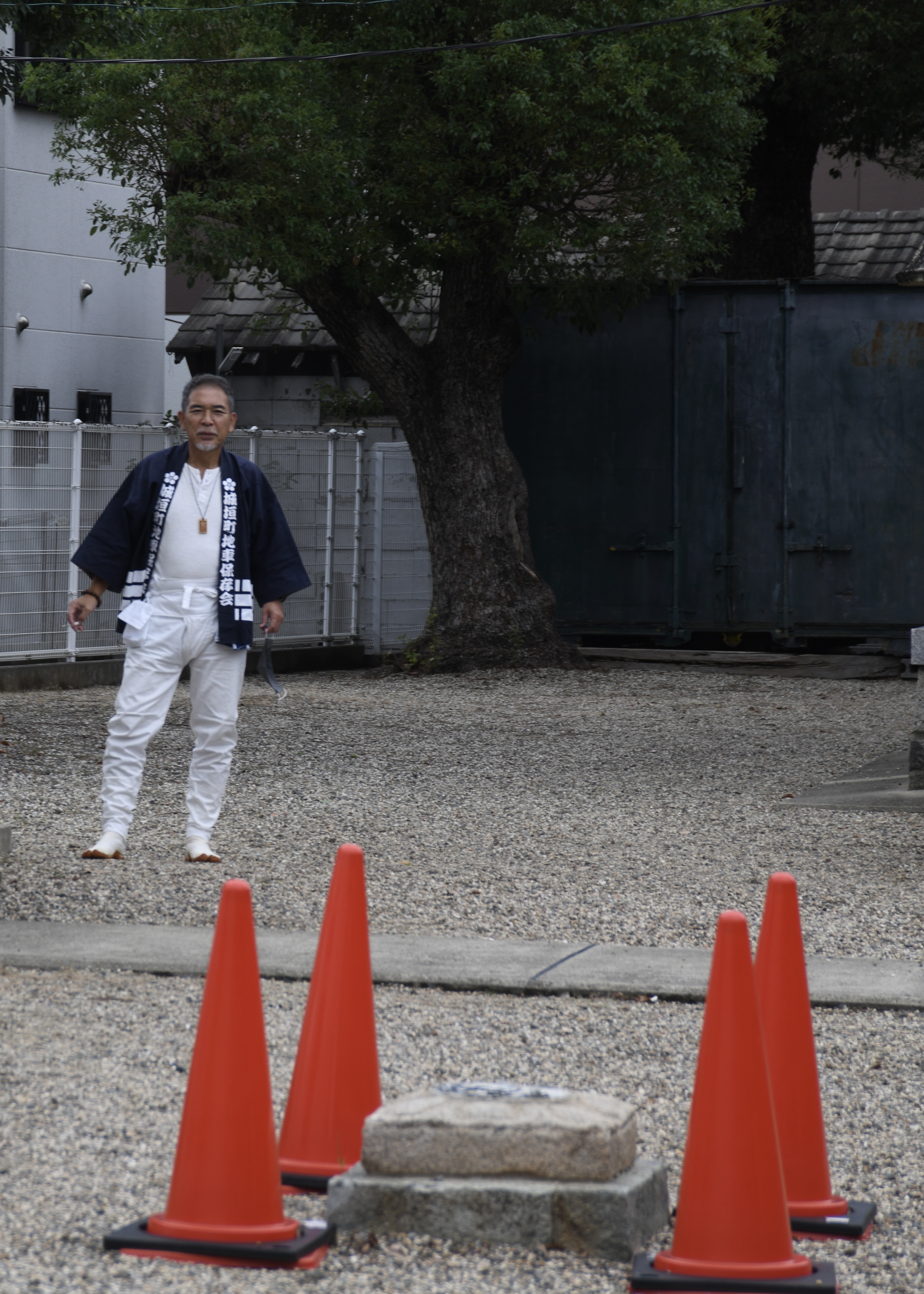
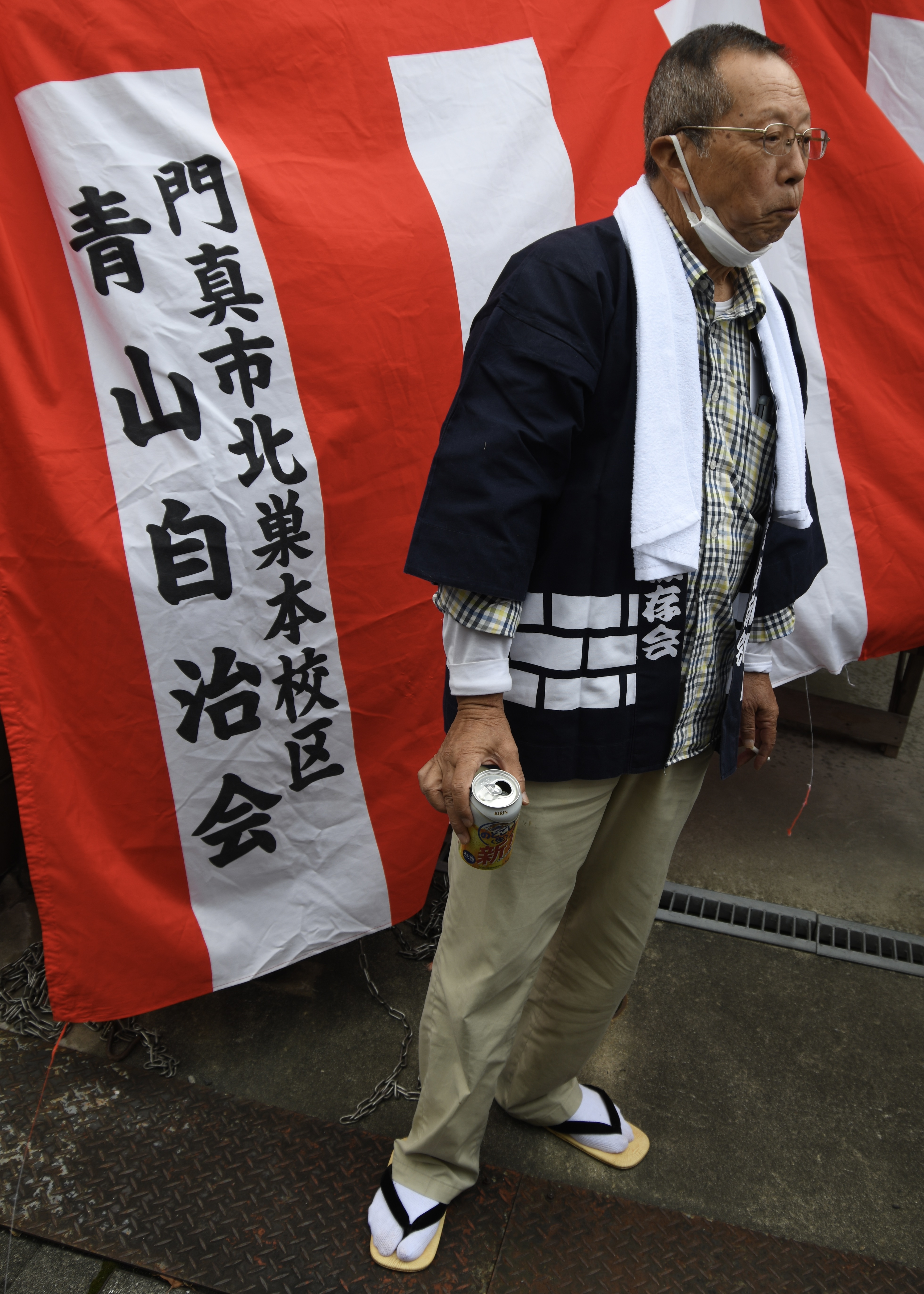
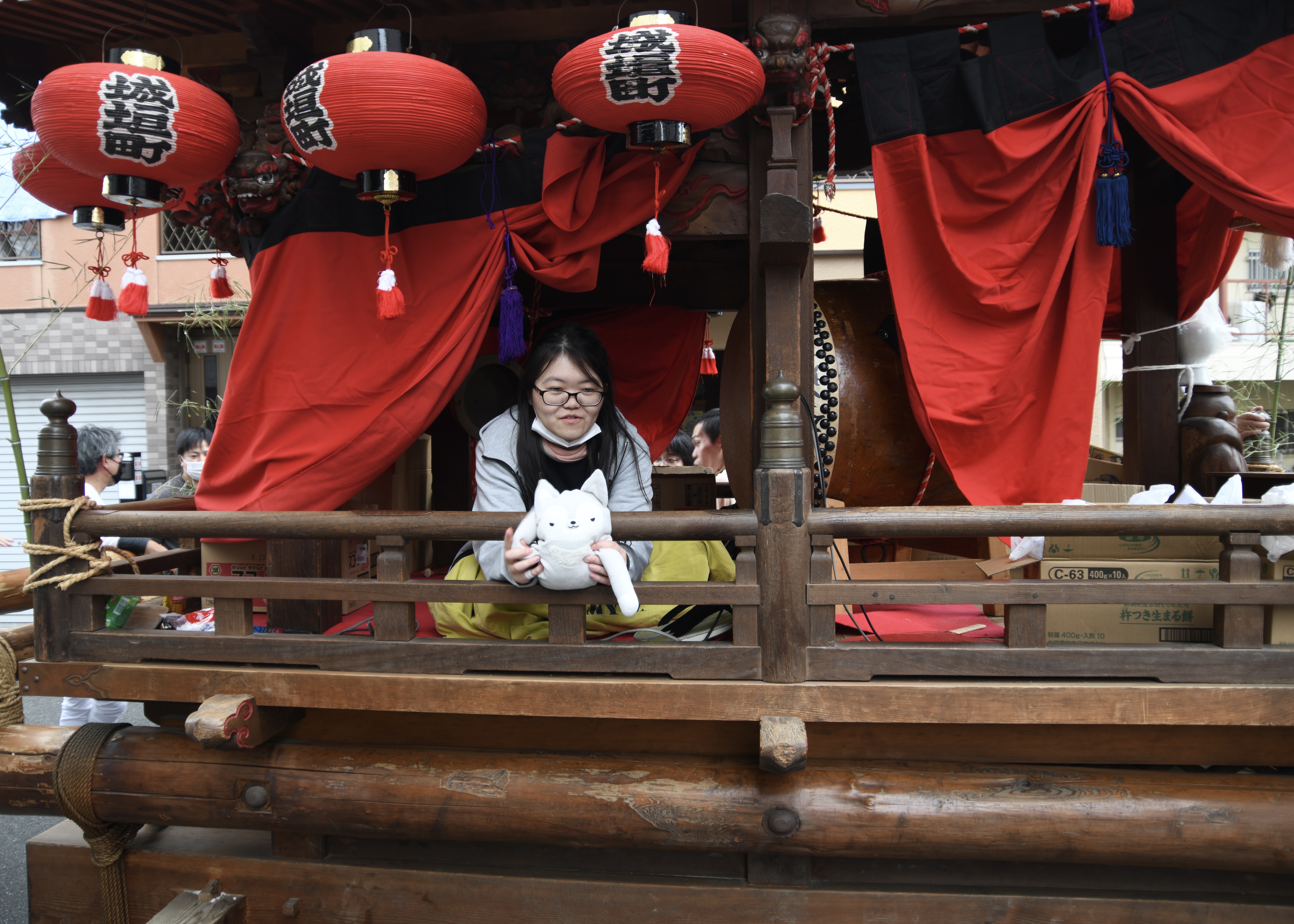
After two long years of COVID-19 restrictions, we were finally able to hold our neighborhood fall festival this year. The program was cut back a bit - no night festival or mochi maki and an abbreviated course. Rain hampered things on the second day no we couldn't have our usual yaki niku barbeque. But still, it was great to see my friends after so long and push-pull the danjiri throughout the neighborhood. My activities were cut back as well due to injury. I went back to being the event photographer rather than a danjiri pusher. But we were lucky to have a group of student volunteers from a nearby college - we really couldn't have done it without them. So, here are the Day One Photo Offerings...
For (a lot) more information about the fall festival:
「Neighborhood Autumn Festival in Japan: A Multimodal Visual Ethnography and Performance」
Abstract: Boyer et al. (2016) ask “What should the anthropological research article of the future look and sound and feel like (emphasis mine)?” This research project is a visual ethnography of a forty-year-old tachinomiya (standing drink bar) in Osaka called Tenbun. Tenbun features many kinds of food and drink, a lively and relaxed atmosphere and plenty of colorful characters. The study is based upon long-term patronage, focused participant-observation and photography, a photo exhibition and other post-fieldwork encounters. My current analysis re-positions the research in wider social and academic contexts including multimodality, sensory ethnography, food anthropology and media studies. My work is informed by, first, Collins et al. who reflect on the “changes in the media ecologies” (2017), and, second, Pink’s multisensoriality (2009). I explore how to use new technologies, engagements and collaborations in methodology and dissemination of findings to create a new sensory narrative about the standing drink bar, Tenbun.
This bright red machine suddenly appeared in my neighborhood, so I had to try it! I was hoping the gyoza would come out cooked, but alas it was frozen...
The National Tax Agency (NTA) has a problem with the youth of today: They simply aren’t drinking enough alcohol anymore. According to an independent study, roughly half of young adults in Japan do not — I repeat NOT — even have a daily drinking habit.
Some people might consider this a good thing in that it results in healthier and more productive people less likely to yell at me on a train station platform for no reason. But these are all matters handled by other government agencies. The NTA is all about getting those taxes, of which alcoholic product sales are a rich source.
However, “Drink more, so we can get your money!” is not a great promotional slogan, so the NTA has opened up marketing ideas to the general public in their Sake Viva! contest. Until 9 September anyone between the ages of 20 and 39 can participate alone or in groups of two or three to come up with new sales strategies that would appeal to young adults. Anything is open for consideration, but the NTA mentioned that they’re expecting an emphasis on home drinking and utilizing the metaverse for sales among the ideas.
Behind the Camera is an open-source website that creates new critical directions on the history of photography, feminist art history, and the history of modern Japan. It is a pedagogical tool for the growing global investment in diverse and expanded histories of photography and gender studies.
Part database, part teaching module, the website’s primary resource is a series of short lecture videos created by experts in the field, each re-examining an aspect of the history of photography from a feminist lens. The videos are a part of exploration modules that include translated primary source materials, annotated bibliographies, and high-resolution images that make research opportunities available to a wider audience. These resources are linked to an interactive timeline that charts the activities and accomplishments of women photographers alongside major events in Japanese and photo history. The result of five years of collaborative information gathering from libraries around the world, these resources bring together disparate information on women and photography in Japan, so that scholars and students can use it to draw connections and produce new scholarship on this important, understudied subject.
Cushman, Carrie and Kelly McCormick, eds. Behind the Camera 1.0: Gender, Power, and Politics in the History of Japanese Photography. 2022. https://behindthecamerajapan.arts.ubc.ca/. Accessed August 11, 2022.