Wednesday, January 16, 2013

Tondo Festival - とんど祭り


I arrived at my neighborhood Shinto shrine at 8:30 AM and was warmly greeted by the older men who had already started the fire. I chatted with them, asked questions and took several photographs. For the next two hours my senses were ablaze and abuzz: the heat of the fire and the burning sensation on my fingers as I struggled with the yaki imo (baked sweet potato); the taste of the hot sweet potato and cold beer served in a paper cup; the sound of the crackling fire especially when the dry leaves were placed upon it; the various smells of wood, leaves and plastic bags; and the sight of beautiful charms and talisman being engulfed by the flames created a sensory ethnography experienced bodily.


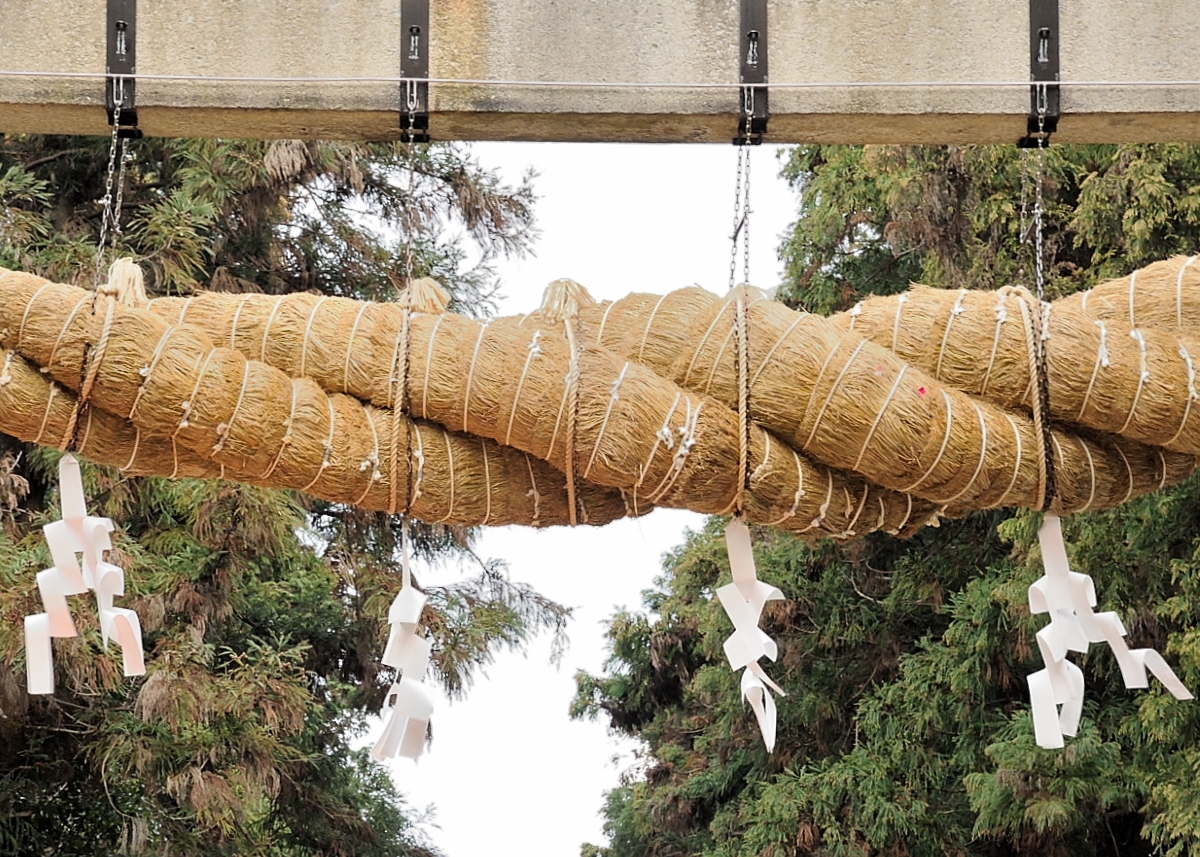
My neighborhood shrine, Ubusuna Jinja (産土神社) in Kadoma-shi, Osaka, conducted its Tondo Festival (とんど祭り) on January 15, to coincide with ko-shogatsu (小正月), or "small new year" -  ko-shogatsu is a holdover from the time when Japan used a lunar calendar. This festival has many names (Dondo yaki - どんど焼き - is a common name but there are many others) and local variations. It seems to be a large celebration in Hiroshima and other locations across Japan. But my neighborhood version could barely be called a festival as it was practiced in a very low key manner. At the Tondo festival, shimekazari (a traditional New Years decoration hanged at the entrance to a house), omamori (good luck charms), ofuda (talisman), ema (votive tablets) as well as other religious or new year's related ornaments are burned. This is in effect a sort of recycling - these various ornaments are returned after a year or so of use and new ones are purchased. During my hatsumode to Hozanji temple in Ikoma every January, I return ofuda that I purchased the previous year in a special container and buy new ones. I have understood that these old ornaments were to be burned but I have never seen the ceremony itself at Hozanji.


In my neighborhood version, a group of older men from the community, members of the shrine's board of directors, started and tended the fire in the grounds in front of the shrine building itself. Housewives and other neighbors came one at a time or in small groups to drop off their talisman and charms to be burned. The men accepted the ornaments, (they separated the orange from the shimekazari as the near rotten fruit were to be thrown away rather than burned) and tossed them into the fire. Most people went to the shrine to offer a prayer. Some exchanged new year's greeting and stayed a few minutes to visit. It seemed for for most of the people that came it was the same as throwing out garbage. There was never a large crowd during the time of the event.


The men placed a few sweet potatoes in tin foil and then into the fire for roasting. After a half hour or so a couple of the men braved the extremely hot fire to retrieve the potatoes and they were shared by all. One of the men went around with paper cups and offered tea and later beer. The men chatted until 10:00 and then dug a hole in the ground, doused the fire and moved the still hot coals into the hole and buried them. By 10:30 one would not have known the event took place.


I was struck by the lack of religiosity. There was no Shinto priest officiating. Some say the Tondo  smoke is purifying and is supposed to protect people from bad luck and illness. By I wondered if this were true when plastic bags, paper cups and cigarette butts were tossed into the fire. Rather than a grand festival, this was a community service event. The Tondo Festival, no matter what it is called or how it is practiced is another good example of Shinto and Japanese culture hardly being homogenous.

Monday, January 14, 2013

"Belgium allows euthanasia for deaf twins"

Text borrowed from Independent.ie, 1/14/13:  

Identical twins have been killed by Belgian doctors in a unique case under the country's euthanasia laws. 

The 45-year-old brothers from the Antwerp region were born deaf and sought euthanasia after finding that they would also soon go blind. They told doctors they were unable to bear the thought of not being able to see each other again. 

The twins, who have not been named but have been pictured on Belgian TV, had spent their entire lives together, sharing a flat and working as cobblers. 

Belgium's 'Het Laatste Nieuws' newspaper reported at the weekend that doctors at Brussels University Hospital in Jette "euthanised" the two men by lethal injection last month. 

Under Belgian law, euthanasia is allowed if those wishing to end their lives are able to make their wishes clear and a doctor judges that they are suffering unbearable pain. 

David Dufour, the doctor who presided over the euthanasia, said the twins had died together and had taken the decision in "full conscience". 

"They were very happy. It was a relief to see the end of their suffering," he said. "They had a cup of coffee in the hall, it went well and a rich conversation. Then the separation from their parents and brother was very serene. At the last there was a little wave of their hands and then they were gone." 

The case is unusual because neither of the men was terminally ill or suffering extreme physical pain.

Link: http://www.independent.ie/world-news/europe/belgium-allows-euthanasia-for-deaf-twins-3350658.html

More text from Flandersnews.be, 1/12/13:

The fact that they were born deaf never formed an obstacle to them enjoying a fulfilling life. However, when a few years ago their sight also started to deteriorate they faced losing any way of communicating with each other. The idea that they wouldn’t be able to see each other was unbearable for the two brothers.

Under Belgian law euthanasia is allowed if the person wishing to end his/her life has made their wishes clear and a doctor has ruled that his/her patient is suffering unbearable pain.  

However, in the case of the two brothers neither was terminally ill, nor suffering any physical pain. Despite this, doctors at Brussels University Hospital in Jette agreed to their request to be euthanised.

The double euthanasia on the two brothers was carried out almost a month ago on 14 December.

Link: http://www.deredactie.be/cm/vrtnieuws.english/news/130112_Double_euthanasia

Personally, I find this to be very troubling. This would seem to suggest that being blind or deaf-blind is akin to a terminal unbearably painful condition. It is also troubling that this euthanasia was state sanctioned and carried out in a hospital setting. I would like to learn more about this particular case and about the ideas behind euthanasia in general. Any relation to eugenics or Social Darwinism here?

Tuesday, January 8, 2013

"4 congresswomen Photoshopped into official group photo"

Can a photoshopped image be considered an accurate and official government historical record? Check out the story linked below for an interesting case study. What is real? And do we really expect the government to present us with 100% reality?

Link: http://todaynews.today.com/_news/2013/01/04/16352790-4-congresswomen-photoshopped-into-official-group-photo?lite

Monday, January 7, 2013

New Year 2013 Hozanji Pilgrimage


明けましておめでとうございます。今年もよろしくお願いします。Happy New Year 2013 from VAOJ! For the last few years my hatsumode (first visit to a shrine or temple at new year's time) has been to my local shinto shrine - New Year's greetings to my neighbors have become increasingly important as I have become more active in my local community. Equally important spiritually and anthropologically is my annual new year's pilgrimage to Hozanji temple in Ikoma, Nara. I have probably been to this temple over 100 times and have taken thousands of photos there. But there is always something that captures my eye and needs to be recorded. Here is the latest batch.


Here's hoping for a peaceful, happy and successful 2013.

Monday, December 31, 2012

Last Day of the Year: Toshikoshi Soba


I learned my lesson in 2011 and went to the local soba shop early this year and there were plenty of noodles left to buy (I also brought my D-700 rather than my now 1 year old iPhone.). The shop is next to a train station and so there is a lot of foot traffic. It seemed that nobody could resist stopping and buying some soba to ring out 2012 and welcome the new year 2013.


Another end of the year tradition is oosouji (大掃除) - this is akin to spring cleaning in the west. People clean and tend to every dirty detail in their homes and shops. The picture below is a man cleaning the top of a small shrine next to the train station. The photo was taken through a window as I was riding an escalator up to the train platform. 


The last picture below is of a shop window in dire need of oosouji... A good reminder that not all Japanese people follow all traditions...


2012 was a great year. The fall semester ended on a good note; the last several days have been spent at Christmas parties and end-of-the-year parties. A neighbor gave us a big crab, a highly desirable winter delicacy. Thanks to all of my students, colleagues and VAOJ readers for all of their efforts this last year. 良いお年を!