Showing posts with label sensory ethnography. Show all posts

Thursday, April 3, 2025

The Visual Anthropology of Japan: In and Outside the Classroom, Revisited

JAWS / AJJ Joint Conference 2025
Session 14 - Reflecting and Revisiting「Teaching Japan」
University of Hyogo - Kobe Campus for Commerce
Building 5
April 5, 2025, 15:40 - 17:10

Campus access: https://www.u-hyogo.ac.jp/english/access/#id01

Campus map: https://www.u-hyogo.ac.jp/about/access/kobeshoka/

Paper 4: The Visual Anthropology of Japan: In and Outside the Classroom, Revisited
Steven C. Fedorowicz, Professor, Kansai Gaidai University

Abstract: My chapter describes teaching a class comprised of international exchange students from many different countries alongside local students preparing for their study-abroad programs called “Visual Anthropology of Japan” at a Japanese university from 2006 to 2014. Topically, the course was about the presentation and representation of culture through film, photography, and other visual communication arts within the shifting anthropological ecologies of media, methods, and theory. Teaching “Japan” in this context required several balances of instruction and guidance for students of different academic levels, backgrounds, language skills and expectations studying together in the same class. Because of my training and background in cultural anthropology and visual anthropology, I do not consider my text as a theoretical treatise on pedagogy per se. Rather it is closer to an ethnographic—sometimes autoethnographic—account based on the fieldwork of teaching this course under certain conditions at a global educational setting. In my presentation, I will revisit this setting through the reflexive lens of ba (Kajimaru, Coker and Kazuma 2021), specifically, the convergence of players, place and performance during the period of the multimodal turn in visual anthropology that coincided with the class. This reminiscent revisit reaffirms the potential and possibility for a more active student learning environment and further course development to make a new and improved version of the course.

For more details about the conference and panel: https://visualanthropologyofjapan.blogspot.com/2025/02/announcement-jawsajj-joint-conference.html

Friday, January 17, 2025

「とんど祭り @ 産土神社 2025」Tondo Matsuri @ Ubusuna Shrine 2025

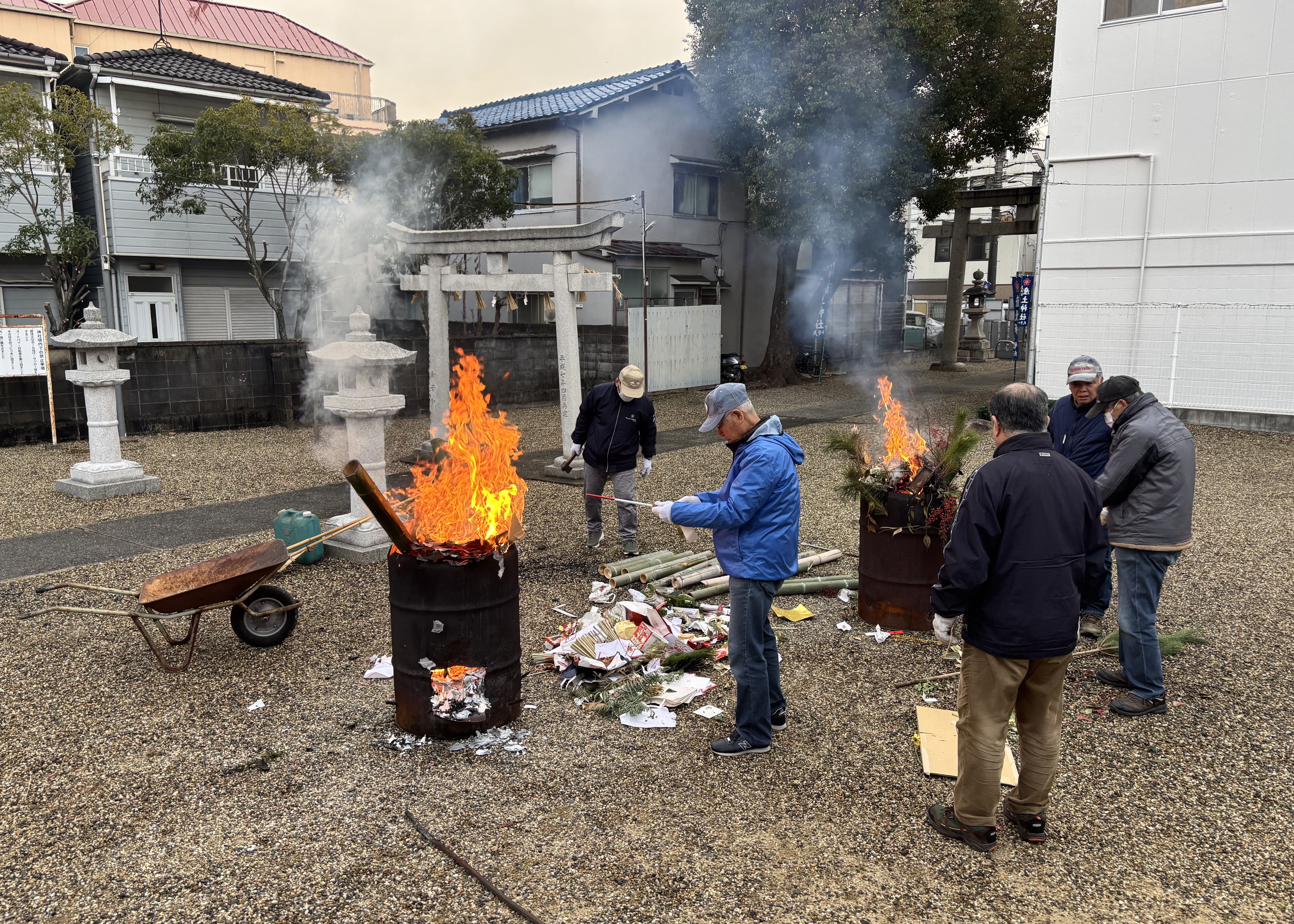
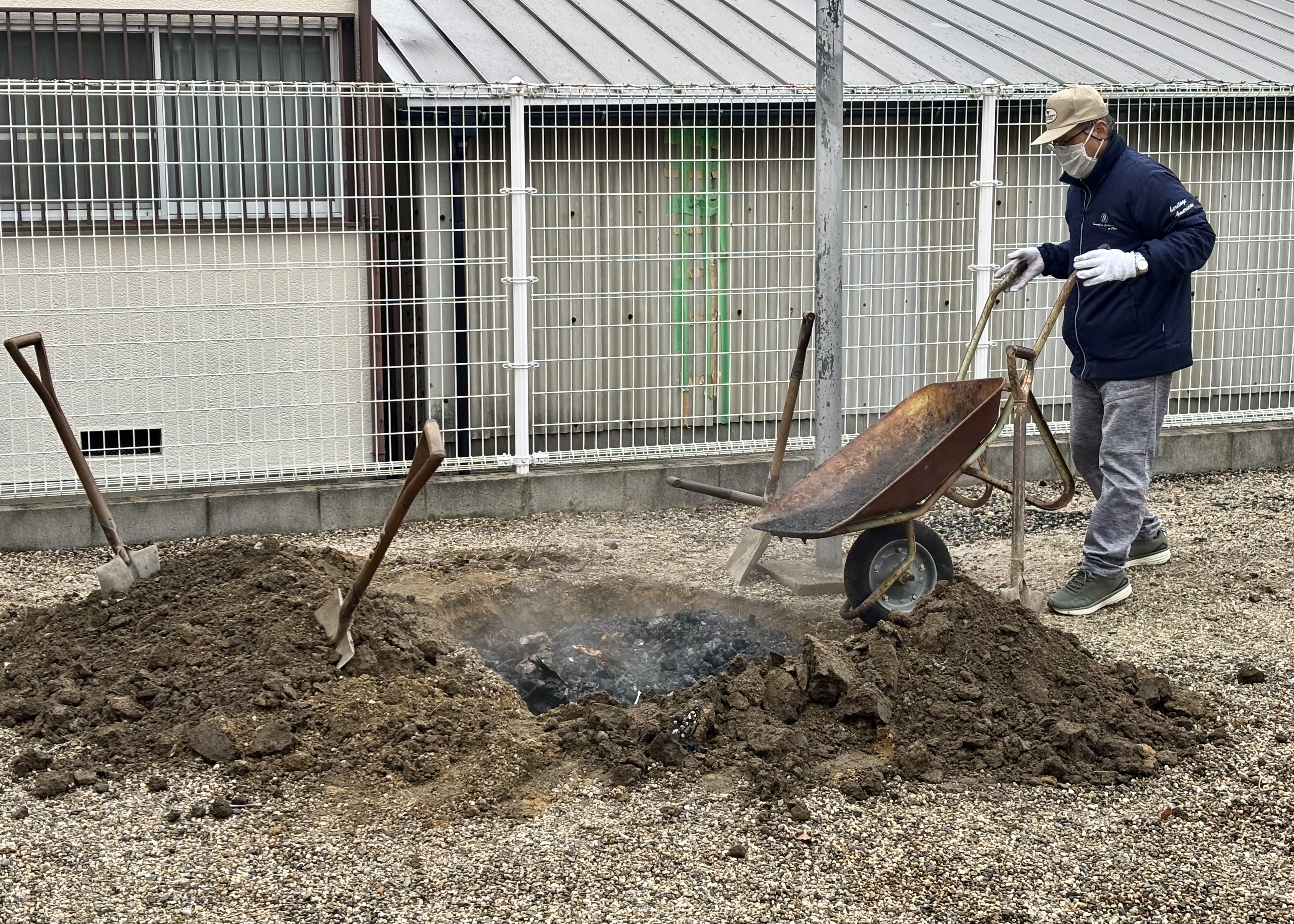
On January 15, 2025, from 8:00 - 10:00 AM, we (the shrine elders and the recruited volutnteer/visual anthropologist) held the Tondo Matsuri at our local shrine, Ubusuna Jinja, in Shirogaki-cho, Kadoma-shi, Osaka-fu. This low key community based event is a chance for neighbors to bring their religious amulets from the previous year and new year's decorations to the shrine to be burned. Like Shinto itself, one might argue that this festival is more tradtional/cultural than religious in nature. I documented this same event at the shrine in 2013. Aside from a few changes, (fewer participants, older participants, no tobacco smokers or beer), this year's event was the same as it was in 2013 (as a good ritual should be...). Check out the 2013 post for more specifics about the Tondo Matsuri.

Tondo Festival - とんど祭り (1/15/13): https://visualanthropologyofjapan.blogspot.com/2013/01/tondo-festival.html

See also:
Remains of the 2018 Kayashima Shrine Tondo Festival (1/15/18): https://visualanthropologyofjapan.blogspot.com/2018/01/remains-of-2018-kayashima-shrine-tondo.html

Let's get back to Ubusuna Jinja in 2025...

Wednesday, July 10, 2024

A call out to my friends and colleagues, visual and multimodal anthropologists, cultural anthropologists, photographers & sake and tachinomiya lovers in Tokyo and the surrounding area; VAoJ is making a rare appearance in Tokyo for a special lecture:「The Intersections of the Sensory, Multimodal and Ba: The Tachinomi Project」Please share and spread the word...

Check it out!

July 17, 2024, 18:00-19:30
Room 402, 4F, Building 2
Sophia University, Tokyo


Abstract:「The Tachinomi Project」is a visual ethnography based upon the con- vergence of social science research and contemporary art. The project began with long-term participant-observation and a photographic exhibition featuring a 40-year-old tachinomiya (standing drink bar) in Osaka called Tenbun. The study sought to explore photography in public spaces, privacy and image ethics while showcasing a “grimy” (Farrer 2019) and stimulating atmosphere with colorful characters including the shop owner, employees and regular customers. The interactions with Tenbun collaborators and gallery audience at the exhibition became the first of several post-fieldwork encounters, leading to the re-positioning of the research into wider social and academic contexts during and after the COVID 19 pandemic. This present account utilizes reflexivity, autoethnographic vignettes (Stevens 2013) and photography to explore the intersections of the sensory (Pink 2013 [2009], multimodal (Collins et al. 2017), and ba (Kajimaru et al. 2021) of Tenbun and other eating and drinking establishments.

Click here for some background on the project.

Yoroshiku onegai shimasu.

Sunday, July 7, 2024

Standing Drink Bar「Tenbun」Old Boys Reunion 立ち呑みの居酒屋「天文」O.B. 会

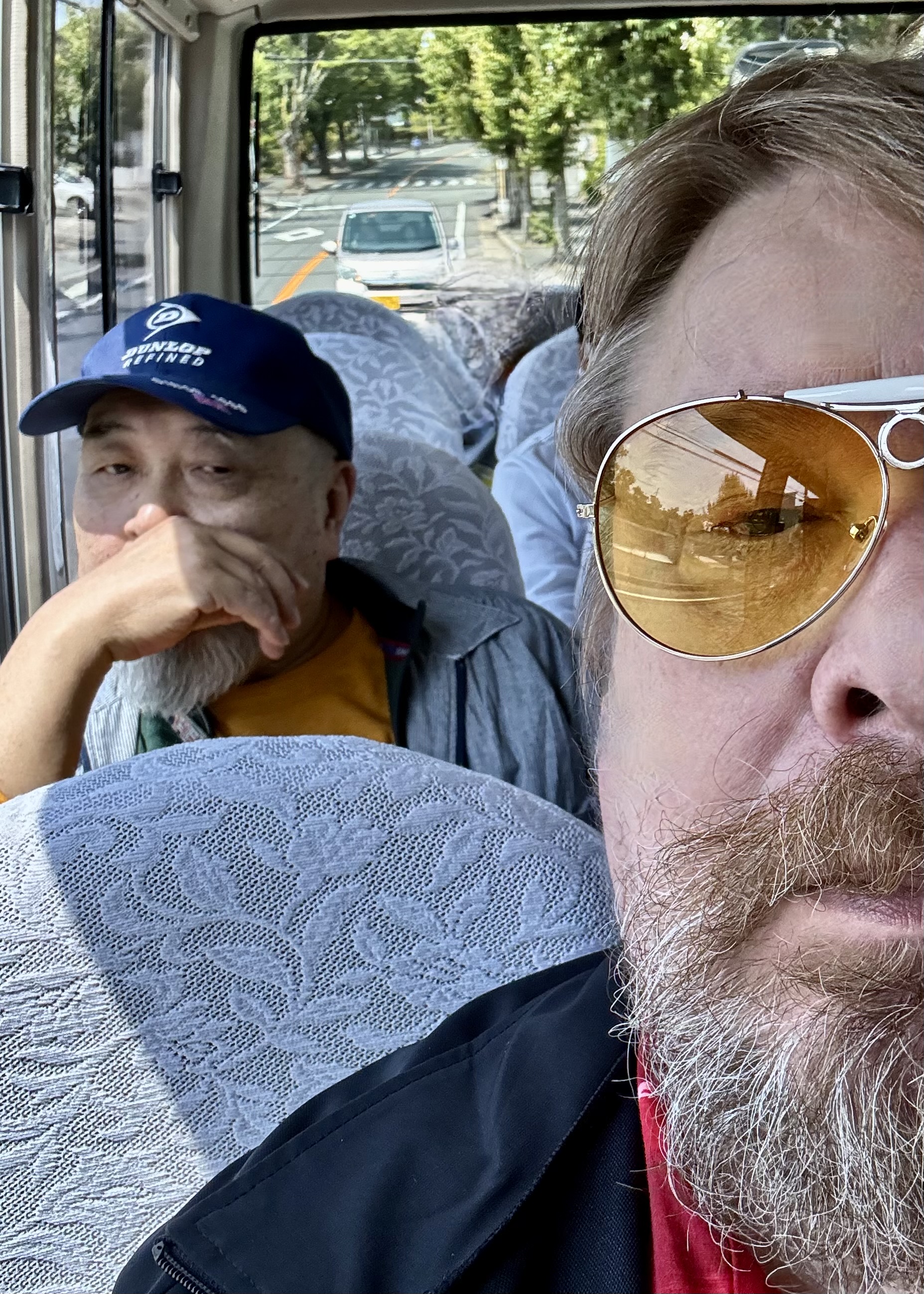
We were on the bus, traveling through the borderlands between Osaka and Kyoto Prefectures when the imojōchū began to kick in.

We had just finished an hour-and-a-half of “all you can eat/all you can drink” at a traditional izakaya banquet. This kind of gluttonous binging and imbibing pushes participants, especially those on a pensioner’s budget with little left over after pachinko and horse race betting activities, to extremes, to make sure they get their money’s worth. Since the food turned out to be only standard fare, we concentrated on the drinking: beer, sake (nihonshu) and sweet potato distilled liquor (imojōchū; usually 25-35% alcohol).
A half hour in we were getting livelier and louder, and receiving dirty looks and disapproving frowns from the shop staff and other customers. Our severs were stingy, only allowing us to order a new drink after giving up the empty vessel from the previous beverage. Some of us countered this policy by pouring alcohol into PET bottles and plastic bags for secret take-out. We drank steadily until the last order. Somehow, we all were able to stand, pay our portions of the bill, use the toilet and stumble to the return bus without too much trouble.
What started out as a gathering of long-lost friends taking a short trip on a privately rented bus with quiet small talk of recent illnesses, hospitalizations and deceased drinking companions, was now a drunken cacophony of laughing, shouting, quiz games and attempts at singing enka. We exited the bus at the Keihan Kuzuha train station, took a memorial photo and made our way to the shopping arcade, formerly the aged, everyman Norengai (“Noren Street”), home to several traditional eating and drinking establishments. Recently this arcade was gentrified and renamed “El Kuzuha.” The older shops, many of which closed due to COVID-19, were conveniently replaced with fashionable chain restaurants. We wandered through the corridors until deciding on an acceptable pub for our continued revelry.
This post-fieldwork encounter chronicles a reunion of the owner and regular customers (the O.B.s or Old Boys) of a 40-year-old tachinomiya (“standing drink bar”) in Osaka called Tenbun, that closed in 2020.

Imojōchū has a strong taste and pungent smell, even when mixed with ice and water. For me, drinking it results in a contemplative body buzz; but when combined with beer and sake, the odoriferous contemplation turns into a gregarious stupidity. Nonetheless, this can be fun with the right people at the right time.

The Tenbun O.B. reunion was such a righteous group and occasion.
After all, we were trying to resurrect something. Not a specific time, place, feeling, memory or dream. Something more, perhaps a sort of fluid liminal communitas (and I do not use these terms lightly) that, in the past, we could enter at will, or at least between Tenbun’s usual business hours Monday through Saturday. The hour of day (or night), people, circumstances, jokes, arguments, daily specials and drinks always varied and at the same time enmeshed to create this familiar something. Looking back, I can see how we took it for granted, the longest-term customers for as long as 40 years. But now we missed it. And we wanted it back, even if only for this one day.
Of course, none of the O.B.s explained the reunion in these terms, except for the over-analyzing anthropologist with a camera, soaking in another post-fieldwork experience. Ba…


To be continued…

Monday, October 3, 2022

Announcement and Preview: “What the Future of Anthropological Research Should Look/Sound/Feel Like: A Visual Ethnography of a Standing Drink Bar in Japan”


SouthWest Conference on Asian Studies
University of Central Arkansas, USA
Session 7.1 (Virtual)
October 8, 2022
9:30-10:45 AM (Central Daylight Time)
11:30 PM-12:45 AM (Japan Standard Time)

Abstract: Boyer et al. (2016) ask “What should the anthropological research article of the future look and sound and feel like (emphasis mine)?” This research project is a visual ethnography of a forty-year-old tachinomiya (standing drink bar) in Osaka called Tenbun. Tenbun features many kinds of food and drink, a lively and relaxed atmosphere and plenty of colorful characters. The study is based upon long-term patronage, focused participant-observation and photography, a photo exhibition and other post-fieldwork encounters. My current analysis re-positions the research in wider social and academic contexts including multimodality, sensory ethnography, food anthropology and media studies. My work is informed by, first, Collins et al. who reflect on the “changes in the media ecologies” (2017), and, second, Pink’s multisensoriality (2009). I explore how to use new technologies, engagements and collaborations in methodology and dissemination of findings to create a new sensory narrative about the standing drink bar, Tenbun.

For more information and full conference schedule: https://www.swcas.net/