Matthew Demaio, in his recent article, Lenticular Research and the Possibilities of Digital Archival Methods, writes, "There is a mode of producing dual holographic images that give a viewer the impression of depth and movement called “lenticular printing.” To make lenticular images, you must first capture two images with a special lens and then print each on a sheet of plastic that has a series of lenses on the reverse..."
"I start with lenticular printing as a way to think about the possibilities and limits of anthropological research in contexts of instability and uncertainty. What does an anthropological inquiry look like when it is suddenly and unexpectedly bifurcated by a period of enforced distance and isolation?"
DeMaio, Matthew. 2021. “Lenticular Research and the Possibilities of Digital Archival Methods.” Anthropology News website, July 30, 2021.
url: https://www.anthropology-news.org/articles/lenticular-research-and-the-possibilities-of-digital-archival-methods/
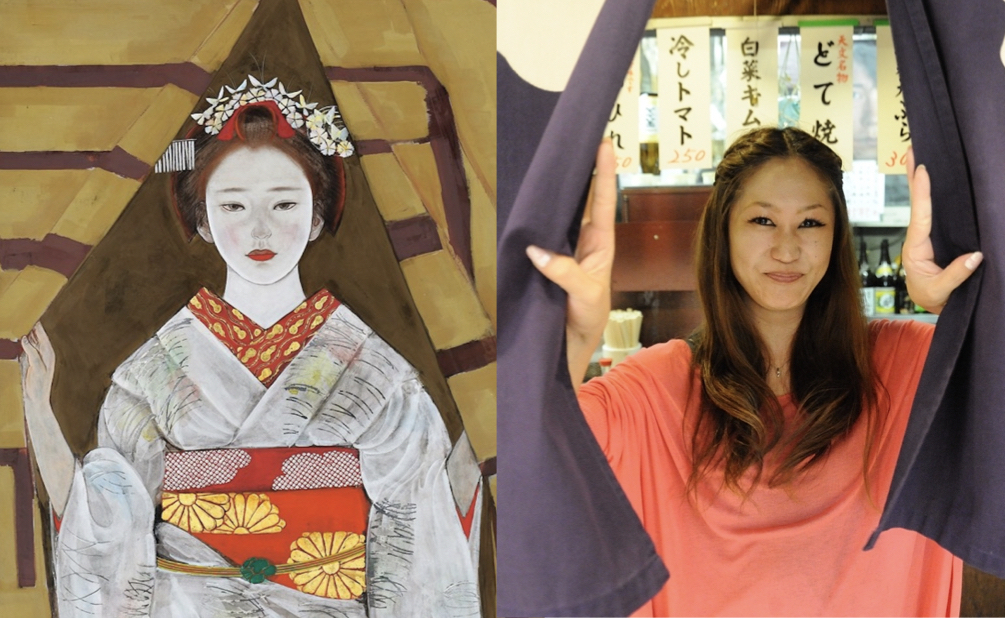
Those of us who are not so high tech might come up with stuff like this...
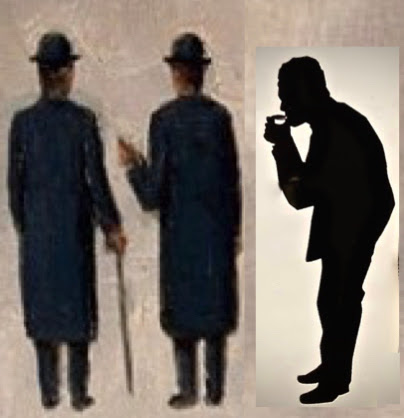
In the spirit of fair use and creative commons, I am borrowing the image on the left ("The Art of Conversation" - original title "L’Art de la Conversation" 1963 by Belgian surrealist artist René Magritte) from the following source:
url: https://www.facebook.com/JadedInJapan/posts/3737914866308621
The image on the right is the (flipped) logo for the sign at 立ち呑み 庶民 (Tachi nomi shomin), "Tachinomi for common people."
url: http://tachinomishomin.com/index.html
As seen on a recent post on 大阪立ち呑み研究会 (Osaka Tachinomi Study Group on Facebook).
This VAoJ post is related to the Tenbun/tachinomiya project.
url: http://visualanthropologyofjapan.blogspot.com/2016/01/photo-exhibition-and-visual-ethnography.html
More on the project: https://visualanthropologyofjapan.blogspot.com/2020/12/behind-scenestenbun-closingpresentation.html
Special preview: I will be presenting more about the Tenbun/tachinomiya project at the upcoming 12th International Convention of Asia Scholars, August 24-28. More details to follow...
Explorations and experiments in visual representations - multimodality, sensory ethnography, reflexivity, autoethnographic vignettes, ethnographic photography and ba...
Showing posts with label noren. Show all posts
Friday, August 13, 2021
Wednesday, August 11, 2021
"When anthropological fieldwork is interrupted by a pandemic, what new opportunities arise from other avenues of inquiry?" (part 2) -and- Tachinomiya and noren for the common people...
Matthew Demaio, in his recent article, Lenticular Research and the Possibilities of Digital Archival Methods, writes, "There is a mode of producing dual holographic images that give a viewer the impression of depth and movement called “lenticular printing.” To make lenticular images, you must first capture two images with a special lens and then print each on a sheet of plastic that has a series of lenses on the reverse..."
"I start with lenticular printing as a way to think about the possibilities and limits of anthropological research in contexts of instability and uncertainty. What does an anthropological inquiry look like when it is suddenly and unexpectedly bifurcated by a period of enforced distance and isolation?"
DeMaio, Matthew. 2021. “Lenticular Research and the Possibilities of Digital Archival Methods.” Anthropology News website, July 30, 2021.
url: https://www.anthropology-news.org/articles/lenticular-research-and-the-possibilities-of-digital-archival-methods/
Those of us who are not so high tech might come up with stuff like this...
In the spirit of fair use and creative commons, I am borrowing the image on the right (Ishimoto Sho "Noren" Showa 45 [1970]) from the following source:
Sekisho Art Museum: 100th Anniversary Retrospective Exhibition Sho Ishimoto
url: http://www.sekisho-art-museum.jp/seitan100ishimoto?fbclid=IwAR0cfCMgukwkt3VDTPdGRewNalnxeejvf41FEiPx1Ui3HUba1uud81h0fFo
Flyer for the exhibition: http://www.sekisho-art-museum.jp/wp-content/uploads/2020/11/%E7%94%9F%E8%AA%95100%E5%B9%B4%E7%9F%B3%E6%9C%AC%E6%AD%A3%E4%BA%88%E5%91%8A%E3%83%81%E3%83%A9%E3%82%B7.pdf
The image on the left is the logo for the sign at 立ち呑み 庶民 (Tachi nomi shomin), "Tachinomi for common people."
url: http://tachinomishomin.com/index.html
As seen on a recent post on 大阪立ち呑み研究会 (Osaka Tachinomi Study Group on Facebook).
This VAoJ post is related to the Tenbun/tachinomiya project.
url: http://visualanthropologyofjapan.blogspot.com/2016/01/photo-exhibition-and-visual-ethnography.html
More on the project: https://visualanthropologyofjapan.blogspot.com/2020/12/behind-scenestenbun-closingpresentation.html
Special preview: I will be presenting more about the Tenbun/tachinomiya project at the upcoming 12th International Convention of Asia Scholars, August 24-28. More details to follow...
"I start with lenticular printing as a way to think about the possibilities and limits of anthropological research in contexts of instability and uncertainty. What does an anthropological inquiry look like when it is suddenly and unexpectedly bifurcated by a period of enforced distance and isolation?"
DeMaio, Matthew. 2021. “Lenticular Research and the Possibilities of Digital Archival Methods.” Anthropology News website, July 30, 2021.
url: https://www.anthropology-news.org/articles/lenticular-research-and-the-possibilities-of-digital-archival-methods/
Those of us who are not so high tech might come up with stuff like this...
In the spirit of fair use and creative commons, I am borrowing the image on the right (Ishimoto Sho "Noren" Showa 45 [1970]) from the following source:
Sekisho Art Museum: 100th Anniversary Retrospective Exhibition Sho Ishimoto
url: http://www.sekisho-art-museum.jp/seitan100ishimoto?fbclid=IwAR0cfCMgukwkt3VDTPdGRewNalnxeejvf41FEiPx1Ui3HUba1uud81h0fFo
Flyer for the exhibition: http://www.sekisho-art-museum.jp/wp-content/uploads/2020/11/%E7%94%9F%E8%AA%95100%E5%B9%B4%E7%9F%B3%E6%9C%AC%E6%AD%A3%E4%BA%88%E5%91%8A%E3%83%81%E3%83%A9%E3%82%B7.pdf
The image on the left is the logo for the sign at 立ち呑み 庶民 (Tachi nomi shomin), "Tachinomi for common people."
url: http://tachinomishomin.com/index.html
As seen on a recent post on 大阪立ち呑み研究会 (Osaka Tachinomi Study Group on Facebook).
This VAoJ post is related to the Tenbun/tachinomiya project.
url: http://visualanthropologyofjapan.blogspot.com/2016/01/photo-exhibition-and-visual-ethnography.html
More on the project: https://visualanthropologyofjapan.blogspot.com/2020/12/behind-scenestenbun-closingpresentation.html
Special preview: I will be presenting more about the Tenbun/tachinomiya project at the upcoming 12th International Convention of Asia Scholars, August 24-28. More details to follow...
Tuesday, August 3, 2021
"When anthropological fieldwork is interrupted by a pandemic, what new opportunities arise from other avenues of inquiry?" (part 1) -and- Through the noren, then and now...
Matthew Demaio, in his recent article, Lenticular Research and the Possibilities of Digital Archival Methods, writes, "There is a mode of producing dual holographic images that give a viewer the impression of depth and movement called “lenticular printing.” To make lenticular images, you must first capture two images with a special lens and then print each on a sheet of plastic that has a series of lenses on the reverse..."
"I start with lenticular printing as a way to think about the possibilities and limits of anthropological research in contexts of instability and uncertainty. What does an anthropological inquiry look like when it is suddenly and unexpectedly bifurcated by a period of enforced distance and isolation?"
DeMaio, Matthew. 2021. “Lenticular Research and the Possibilities of Digital Archival Methods.” Anthropology News website, July 30, 2021.
url: https://www.anthropology-news.org/articles/lenticular-research-and-the-possibilities-of-digital-archival-methods/
Those of us who are not so high tech might come up with something like this...
In the spirit of fair use and creative commons, I am borrowing the image on the left (Ishimoto Sho "Noren" Showa 45 [1970]) from the following source:
Sekisho Art Museum: 100th Anniversary Retrospective Exhibition Sho Ishimoto
url: http://www.sekisho-art-museum.jp/seitan100ishimoto?fbclid=IwAR0cfCMgukwkt3VDTPdGRewNalnxeejvf41FEiPx1Ui3HUba1uud81h0fFo
Flyer for the exhibition: http://www.sekisho-art-museum.jp/wp-content/uploads/2020/11/%E7%94%9F%E8%AA%95100%E5%B9%B4%E7%9F%B3%E6%9C%AC%E6%AD%A3%E4%BA%88%E5%91%8A%E3%83%81%E3%83%A9%E3%82%B7.pdf
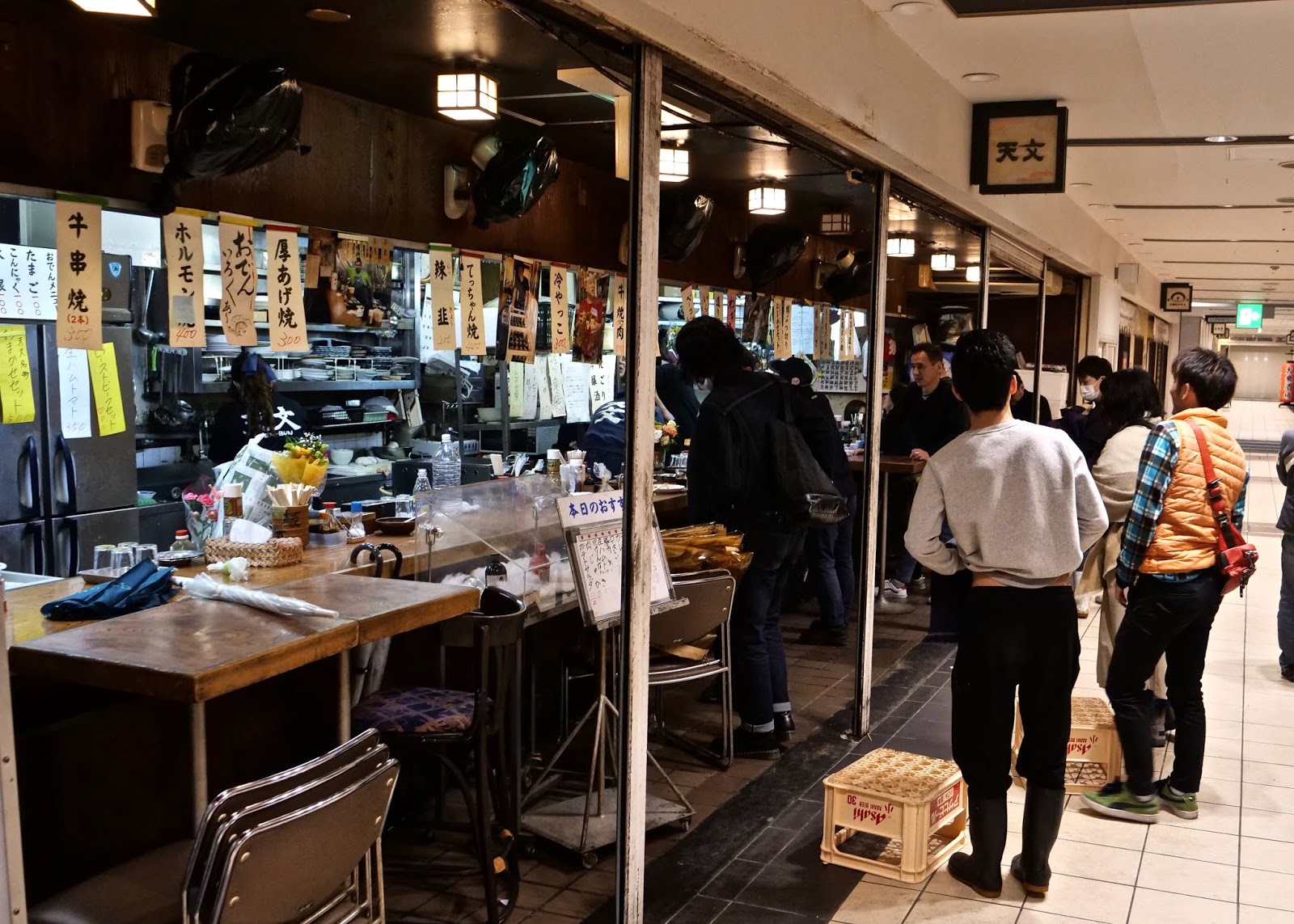
The image from the right (appearing for the first time online) is my own photograph from the Tenbun/tachinomiya project.
url: http://visualanthropologyofjapan.blogspot.com/2016/01/photo-exhibition-and-visual-ethnography.html
More on the project: https://visualanthropologyofjapan.blogspot.com/2020/12/behind-scenestenbun-closingpresentation.html
Special preview: I will be presenting more about the Tenbun/tachinomiya project at the upcoming 12th International Convention of Asia Scholars, August 24-28. More details to follow...
"I start with lenticular printing as a way to think about the possibilities and limits of anthropological research in contexts of instability and uncertainty. What does an anthropological inquiry look like when it is suddenly and unexpectedly bifurcated by a period of enforced distance and isolation?"
DeMaio, Matthew. 2021. “Lenticular Research and the Possibilities of Digital Archival Methods.” Anthropology News website, July 30, 2021.
url: https://www.anthropology-news.org/articles/lenticular-research-and-the-possibilities-of-digital-archival-methods/
Those of us who are not so high tech might come up with something like this...
In the spirit of fair use and creative commons, I am borrowing the image on the left (Ishimoto Sho "Noren" Showa 45 [1970]) from the following source:
Sekisho Art Museum: 100th Anniversary Retrospective Exhibition Sho Ishimoto
url: http://www.sekisho-art-museum.jp/seitan100ishimoto?fbclid=IwAR0cfCMgukwkt3VDTPdGRewNalnxeejvf41FEiPx1Ui3HUba1uud81h0fFo
Flyer for the exhibition: http://www.sekisho-art-museum.jp/wp-content/uploads/2020/11/%E7%94%9F%E8%AA%95100%E5%B9%B4%E7%9F%B3%E6%9C%AC%E6%AD%A3%E4%BA%88%E5%91%8A%E3%83%81%E3%83%A9%E3%82%B7.pdf
The image from the right (appearing for the first time online) is my own photograph from the Tenbun/tachinomiya project.
url: http://visualanthropologyofjapan.blogspot.com/2016/01/photo-exhibition-and-visual-ethnography.html
More on the project: https://visualanthropologyofjapan.blogspot.com/2020/12/behind-scenestenbun-closingpresentation.html
Special preview: I will be presenting more about the Tenbun/tachinomiya project at the upcoming 12th International Convention of Asia Scholars, August 24-28. More details to follow...
Wednesday, December 9, 2020
Behind the Scenes:「Tenbun Closing」Presentation @ Anthropology of Japan in Japan Annual Meeting 2020
A Multimodal Special Bonus
Here's some more information about this post-fieldwork event: behind the scenes secrets, out-takes, bonus photos and dissemination of data.
I. The Performance
I have received some good feedback after the presentation. One colleague wrote, "I enjoyed also the performative moment when you drank "sake"—not sure whether everyone noticed."
Oh that was real sake I tell you. Gonzo Anthropology. I bought a small bottle just for the session. Tasty. I also hung the piece of the noren I received after Tenbun closed behind me but it didn't look so great in the background onscreen. So I used a virtual picture instead. But soon the room smelled like grease and tobacco as the noren hadn't been washed in well over a year. So with those smells, the grease remaining on my fingers and the taste of the sake, it was real sensory ethnography during this post-fieldwork event...
There were also comments about the emotion of the presentation. I am really glad that people felt it. I have presented "The End" segment a few times at conferences and classes and I always get choked up.
II. Cut For Time - Methodology
I usually went to Tenbun without much stuff, just my trusty Nikon D700 and its 24-120 VR lens kit. When I wasn't shooting I left it on the bar. I wanted people to get used to me and the camera. The first night of the final week I brought only my camera but the battery died very quickly. So I had to use my back-up: the camera on my iPhone 7 plus. The next night I decided I needed to be better prepared, so I brought a big bag full of equipment (pictured above). Luckily there was room in my bag for the big bottle of sake and glasses Tencho gave me.
The morning of the last night I tried to replace the SD card in my Nikon. But some of the small pins in the narrow slot were bent and I couldn't fix it. So for the final night I used my new(er) Panosonic Lumix G9 Pro. I am still not so used to using it but it is very light due to being mirrorless and got the job done. Still, I am sad at the passing of my D700...
III. Cut For Time - COVID-19 and Social Distance Concerns
Tenbun's last week was after my university suspended face-to-face classes and went remote but before the Japanese government called for the country-wide state of emergency. You can see from the photos and video that there were few masks at Tenbun and no social distancing. People were shaking hands, putting their arms around one another, hugging... On the last night I was at the crowded bar standing next to a regular customer of over 20 years who is a medical doctor. I commented to him that we were probbaly being very stupid and careless. He agreed, but then said that no matter what, he had to be there. "If I get sick and die, so be it. I have to be here now." He explained when he graduated from medical school he had trouble finding a job and was very depressed. The only support he got was from going to Tenbun and Tencho. He said he would always be grateful to Tencho and referred to him as his onjin (roughly translated, benefactor). I haven't heard this term for a long time. I wonder if people still use the term.
IV. Project Links - General
Click on the links below for more on the Tachinomiya Project.
Photo Exhibition and Visual Ethnography - "Tachinomiya: There Are Two Sides to Every Noren"
"Tachinomiya" Photo Exhibition and Visual Ethnography: The First Week
"Tachinomiya" - A Successful and Memorable Photo Exhibition/Event/Research Method
Happy Tachinomiya Halloween - and - (Pre-)Announcement: AJJ Presentation in December: "Tachinomiya: Photo Exhibition as Research Method"
AJJ Presentation - Tachinomiya: Photo Exhibition as Research Method
ANNOUNCEMENT:「Tachinomiya: Photo Exhibition as Post-Fieldwork Encounter」- Society for East Asian Anthropology Regional Conference 2019 in Tokyo
Tenbun Closing 「天文のれんを下ろす」Paper/Presentation at 2020 AJJ Annual Meeting
V. Project Links -「Tenbun Closing」
Click on the links below for more on 「Tenbun Closing」.
Sad News for VAOJ and Many Others: Tenbun Closing - Leading to a Week of Intensive Photography and Salvage Ethnography
「Tenbun Closing」- Leading to a Week of Intensive Photography and Salvage Ethnography pt.2 - posing for pictures, sharing drinks with the staff, farewell handshakes and hugs, reminiscing with old photos and having your favorite sake for the last time...
「Tenbun Closing」- Leading to a Week of Intensive Photography and Salvage Ethnography pt.3 - "...and how do you feel about Tenbun closing, Tani-san?"
「Tenbun Closing」- Leading to a Week of Intensive Photography and Salvage Ethnography pt.4 - What's in my bag?
「Tenbun Closing」- Leading to a Week of Intensive Photography and Salvage Ethnography pt.5 - Raw Data of the Last Night
「Tenbun Closing」- Leading to a Week of Intensive Photography and Salvage Ethnography pt.6 - The Shutters Are Drawn And The Noren Is Taken Down
VI. Future Tenbun Projects
Well, I can't give it all away. Stay tuned to VAOJ for more!
Tenbun Lives! Post-Producing Forever!
Here's some more information about this post-fieldwork event: behind the scenes secrets, out-takes, bonus photos and dissemination of data.
I. The Performance
I have received some good feedback after the presentation. One colleague wrote, "I enjoyed also the performative moment when you drank "sake"—not sure whether everyone noticed."
Oh that was real sake I tell you. Gonzo Anthropology. I bought a small bottle just for the session. Tasty. I also hung the piece of the noren I received after Tenbun closed behind me but it didn't look so great in the background onscreen. So I used a virtual picture instead. But soon the room smelled like grease and tobacco as the noren hadn't been washed in well over a year. So with those smells, the grease remaining on my fingers and the taste of the sake, it was real sensory ethnography during this post-fieldwork event...
There were also comments about the emotion of the presentation. I am really glad that people felt it. I have presented "The End" segment a few times at conferences and classes and I always get choked up.
II. Cut For Time - Methodology
I usually went to Tenbun without much stuff, just my trusty Nikon D700 and its 24-120 VR lens kit. When I wasn't shooting I left it on the bar. I wanted people to get used to me and the camera. The first night of the final week I brought only my camera but the battery died very quickly. So I had to use my back-up: the camera on my iPhone 7 plus. The next night I decided I needed to be better prepared, so I brought a big bag full of equipment (pictured above). Luckily there was room in my bag for the big bottle of sake and glasses Tencho gave me.
The morning of the last night I tried to replace the SD card in my Nikon. But some of the small pins in the narrow slot were bent and I couldn't fix it. So for the final night I used my new(er) Panosonic Lumix G9 Pro. I am still not so used to using it but it is very light due to being mirrorless and got the job done. Still, I am sad at the passing of my D700...
III. Cut For Time - COVID-19 and Social Distance Concerns
Tenbun's last week was after my university suspended face-to-face classes and went remote but before the Japanese government called for the country-wide state of emergency. You can see from the photos and video that there were few masks at Tenbun and no social distancing. People were shaking hands, putting their arms around one another, hugging... On the last night I was at the crowded bar standing next to a regular customer of over 20 years who is a medical doctor. I commented to him that we were probbaly being very stupid and careless. He agreed, but then said that no matter what, he had to be there. "If I get sick and die, so be it. I have to be here now." He explained when he graduated from medical school he had trouble finding a job and was very depressed. The only support he got was from going to Tenbun and Tencho. He said he would always be grateful to Tencho and referred to him as his onjin (roughly translated, benefactor). I haven't heard this term for a long time. I wonder if people still use the term.
IV. Project Links - General
Click on the links below for more on the Tachinomiya Project.
Photo Exhibition and Visual Ethnography - "Tachinomiya: There Are Two Sides to Every Noren"
"Tachinomiya" Photo Exhibition and Visual Ethnography: The First Week
"Tachinomiya" - A Successful and Memorable Photo Exhibition/Event/Research Method
Happy Tachinomiya Halloween - and - (Pre-)Announcement: AJJ Presentation in December: "Tachinomiya: Photo Exhibition as Research Method"
AJJ Presentation - Tachinomiya: Photo Exhibition as Research Method
ANNOUNCEMENT:「Tachinomiya: Photo Exhibition as Post-Fieldwork Encounter」- Society for East Asian Anthropology Regional Conference 2019 in Tokyo
Tenbun Closing 「天文のれんを下ろす」Paper/Presentation at 2020 AJJ Annual Meeting
V. Project Links -「Tenbun Closing」
Click on the links below for more on 「Tenbun Closing」.
Sad News for VAOJ and Many Others: Tenbun Closing - Leading to a Week of Intensive Photography and Salvage Ethnography
「Tenbun Closing」- Leading to a Week of Intensive Photography and Salvage Ethnography pt.2 - posing for pictures, sharing drinks with the staff, farewell handshakes and hugs, reminiscing with old photos and having your favorite sake for the last time...
「Tenbun Closing」- Leading to a Week of Intensive Photography and Salvage Ethnography pt.3 - "...and how do you feel about Tenbun closing, Tani-san?"
「Tenbun Closing」- Leading to a Week of Intensive Photography and Salvage Ethnography pt.4 - What's in my bag?
「Tenbun Closing」- Leading to a Week of Intensive Photography and Salvage Ethnography pt.5 - Raw Data of the Last Night
「Tenbun Closing」- Leading to a Week of Intensive Photography and Salvage Ethnography pt.6 - The Shutters Are Drawn And The Noren Is Taken Down
VI. Future Tenbun Projects
Well, I can't give it all away. Stay tuned to VAOJ for more!
Tenbun Lives! Post-Producing Forever!
Thursday, December 3, 2020
Tenbun Closing 「天文のれんを下ろす」Paper/Presentation at 2020 AJJ Annual Meeting
「Tenbun Closing」
「天文のれんを下ろす」
Abstract:
This visual-ethnography presentation is the latest chapter of the saga of Tenbun, a tachinomiya (“standing bar”) in Osaka, Japan; the focus will be the shop’s final days. Tenbun, with its long counter and blue noren curtains, has a lively atmosphere and plenty of colorful characters, including the owner, employees and regular customers. Based on my years of patronage, nearly two years of dedicated participant-observation and photography, a photo exhibition and other post-fieldwork encounters, the project has examined in the Japanese context the complexities of personal privacy in public spaces, and the intersection of food anthropology, multimodal research methods, recent research on drinking establishments and the plethora of “foodie” media productions.
In March 2020, Tenbun’s noren came down for the final time, after 40 years of business (for reasons unrelated to coronavirus). During Tenbun’s last week, customers rushed to visit the bar, taking a break from earlier attempts at social distancing. For me, it was a period of intense photography and salvage ethnography. I could not unobtrusively capture the natural setting, or rely upon the serendipity of street photography (Luvaas 2017), as I had previously. The owner called me his personal photographer, and he and others wanted posed photos. Margaret Mead wrote about the importance of salvage ethnography through visual anthropology methodology (1967). Out of necessity, eating and drinking behavior has changed and many izakaya, tachinomiya and restaurants have been forced to close. My photographs not only preserve Tenbun but also document the eating, drinking and socializing habits of Japan before the COVID-19 pandemic.
AJJ (Anthropology of Japan in Japan) 2020 Annual Meeting
Sunday, December 6, 2020 @ 10:00 AM (Japan time)
The conference is online and free. Participants must register. For registration, schedule and more information:
https://tinyurl.com/AJJ2020
This visual-ethnography presentation is the latest chapter of the saga of Tenbun, a tachinomiya (“standing bar”) in Osaka, Japan; the focus will be the shop’s final days. Tenbun, with its long counter and blue noren curtains, has a lively atmosphere and plenty of colorful characters, including the owner, employees and regular customers. Based on my years of patronage, nearly two years of dedicated participant-observation and photography, a photo exhibition and other post-fieldwork encounters, the project has examined in the Japanese context the complexities of personal privacy in public spaces, and the intersection of food anthropology, multimodal research methods, recent research on drinking establishments and the plethora of “foodie” media productions.
In March 2020, Tenbun’s noren came down for the final time, after 40 years of business (for reasons unrelated to coronavirus). During Tenbun’s last week, customers rushed to visit the bar, taking a break from earlier attempts at social distancing. For me, it was a period of intense photography and salvage ethnography. I could not unobtrusively capture the natural setting, or rely upon the serendipity of street photography (Luvaas 2017), as I had previously. The owner called me his personal photographer, and he and others wanted posed photos. Margaret Mead wrote about the importance of salvage ethnography through visual anthropology methodology (1967). Out of necessity, eating and drinking behavior has changed and many izakaya, tachinomiya and restaurants have been forced to close. My photographs not only preserve Tenbun but also document the eating, drinking and socializing habits of Japan before the COVID-19 pandemic.
AJJ (Anthropology of Japan in Japan) 2020 Annual Meeting
Sunday, December 6, 2020 @ 10:00 AM (Japan time)
The conference is online and free. Participants must register. For registration, schedule and more information:
https://tinyurl.com/AJJ2020
See also:
Photo Exhibition and Visual Ethnography - "Tachinomiya: There Are Two Sides to Every Noren"
AJJ Presentation - Tachinomiya: Photo Exhibition as Research Method
「Tachinomiya: Photo Exhibition as Post-Fieldwork Encounter」- Society for East Asian Anthropology Regional Conference 2019 in Tokyo
Tuesday, May 5, 2020
Sunday, May 3, 2020
「Tenbun Closing」- Leading to a Week of Intensive Photography and Salvage Ethnography pt.5 - Raw Data of the Last Night
Tenbun's business hours were 2:00 PM to 10:00 PM. However Tencho was very flexible. There were many times when I showed up a little early and left a little late. Tenbun was very busy during its last week. But the last night was absolutely crazy with customers spilling out into the corridor. It was as though everyone had to say their farewells and drink up every last bit of alcohol at the shop before it closed. The following two short videos - raw data - show the scene at 11:20 PM...
Wednesday, April 29, 2020
「Tenbun Closing」- Leading to a Week of Intensive Photography and Salvage Ethnography pt.4 - What's in my bag?
Compare with:
What’s in your fieldwork bag? https://savageminds.org/2007/08/13/whats-in-your-fieldwork-bag/
What's in Your Bag? https://anthrosource.onlinelibrary.wiley.com/doi/10.1111/AN.600
What's in Your Bag, Anthropologists? https://anthrosource.onlinelibrary.wiley.com/doi/abs/10.1111/AN.929
What’s in Your Bag? 2019 Edition https://www.anthropology-news.org/index.php/2019/07/23/whats-in-your-bag-2019-edition/
Tuesday, April 28, 2020
Monday, April 20, 2020
Saturday, April 18, 2020
Sad News for VAOJ and Many Others: Tenbun Closing - Leading to a Week of Intensive Photography and Salvage Ethnography
The tachinomiya Tenbun has closed. Tenbun has been an important research subject and site for me for the last several years. And my personal history with the shop goes back over 22 years. I can't thank Tencho, shop employees and regular customers enough for their service, friendship and teaching me so much about Japanese culture.
For more background:
Photo Exhibition and Visual Ethnography - "Tachinomiya: There Are Two Sides to Every Noren"
"Tachinomiya" Photo Exhibition and Visual Ethnography: The First Week
"Tachinomiya" - A Successful and Memorable Photo Exhibition/Event/Research Method
AJJ Presentation - Tachinomiya: Photo Exhibition as Research Method
「Tachinomiya: Photo Exhibition as Post-Fieldwork Encounter」- Society for East Asian Anthropology Regional Conference 2019 in Tokyo
For now, here are a few shots from the last few days as I continue to deal with my shock and sorrow. More to come in the near future.
"Tencho I."
Notification of closing (rough translation from the Japanese):
Thank you for visiting us regularly. We feel sorry to announce this but we are closing the shop on March 28th, 2020. For 40 years we have really appreciated your support. We hope you understand it was a really difficult decision for us. Until then, our shop will be open as usual. It will be a short time until then but we hope you can visit us.
"Tencho II."
Messages of thanks and gratitude from customers.
One of the first shots I took a couple of years ago for the photo exhibition. It seems appropriate here...
Tuesday, July 30, 2019
ANNOUNCEMENT:「Tachinomiya: Photo Exhibition as Post-Fieldwork Encounter」- Society for East Asian Anthropology Regional Conference 2019 in Tokyo
If you happen to be in Tokyo this weekend please check out my presentation and other fine papers at the Society for East Asian Anthropology Regional Conference at Waseda University.
Tachinomiya: Photo Exhibition as Post-Fieldwork Encounter
Thesis: The “Tachinomiya: There are Two Sides to Every Noren” research project is a visual ethnography based upon one year of fieldwork at a local drinking establishment in Japan examining photography in public, privacy issues and image rights. The intended final product was a photo exhibition with prints illustrating the atmosphere of the shop along with portraits of the owner, employees and regular customers. But rather than a final product I found the exhibition and interactions with the gallery audience to be a source of important data about the photographs, the subjects and spectators. Viewers were doing more than merely looking at my photographs, they were analyzing, scrutinizing, reacting and providing various interpretations and valuable feedback, shedding light in terms of heuristic processes, meaning-creation, evocation and multivocality. In this presentation I will discuss the "post-fieldwork encounters" of the photo exhibition as a research method and a collaborative media event along the lines of the relatively new multimodal perspective in visual anthropology.
Session Information:
Saturday, August 3 from 14:00-15:45
Room 710, Building 19
Graduate School of Asian-Pacific Studies
Waseda University
Tokyo, Japan
Preliminary Full Schedule: http://seaa.americananthro.org/2019/06/seaa-draft-program-regional-conference-august/
Click below for more about the project:
Photo Exhibition and Visual Ethnography - "Tachinomiya: There Are Two Sides to Every Noren"
Subscribe to:
Posts (Atom)