Eliza Scidmore was a force to be reckoned with. In the late 1800s to early 1900s she traveled extensively across Asia, writing, photographing and publishing several books. She was one of the only women photographers employed by National Geographic and would later become the first woman board member of the magazine. Japan was of particular interest to Scidmore, who visited numerous times and captured everyday life in Japan over 100 years ago.
Rough summary: A court drama performed in Japanese Sign Language. A monkey character who killed a crap parent and child in an old Japanese folktale is tried in court.
NHK ETV (channel 2)
2020年2月19日(水) 午後8時00分 〜 午後8時30分
Wednesday, 2/19/20, 8:00 pm - 8:30 pm.
An expert panel of the Meteorological Agency has proposed that a red and white checkered flag be used to swiftly convey tsunami warnings to people with hearing impairments at seaside resorts.
A test conducted at a beach in Yokohama found that a red and white checkered flag is easy to see for people with color vision deficiency, the panel said Thursday.
The panel said the flag is also effective for evacuating people from abroad as it has the same design as an international maritime signal flag warning of danger.
The shorter side of the flag should be at least 1 meter long so people can see it from a long distance away, the panel said.
The agency will revise related regulations around June to call for the use of flags with this design. Possible examples include the flag being waved by lifeguards and raised at tsunami evacuation towers.
“The flag will be effective not only for the hearing impaired, but a wide range of people at noisy beaches,” said Atsushi Tanaka, a professor at the University of Tokyo and head of the panel.
Japan is currently in the midst of a tourism boom at the moment, with 31.9 million foreign tourists traveling to the country in 2019, breaking the previous record for the seventh year running.
Now with the Tokyo 2020 Olympics and Paralympics roughly half a year away, tourist numbers are set to swell even further, prompting the Japan Tourism Agency to create a number of etiquette videos to educate travelers on some of the finer points of everyday Japanese life.
Ten videos in total have been released, covering everything from communal bathing to how to ride the trains, with the central theme based around the fact that tourists can be “really cool” by taking care to consider others during their travels.
While the new awareness campaign recalls the “Cool Japan” marketing concept promoted by the government in recent years, it also contains a wealth of useful information for visitors. So how should foreign travelers escape the ire of Japanese locals by being considerate to those around them? ...[T]ake a look at the videos...
Of the ten, I will include three in this post. The first two are about taking photos in public in Japan:
Taking Pictures Part 1
Taking Pictures Part 2
The third one is about public transportation. It gives advice to give up priority seats to pregnant women and senior citizens. But it does not mention disabled people...
Public Transportation
What??? So much for barrier free and accessibility...
The other videos deal with Walking on the Streets, Traditional Buildings, Public Baths and Hotels, Restaurants and Public Spaces. Check them out (if you want) at the source below. And check out the reader comments as well. Some readers have said that perhaps some Japanese people themselves should watch and heed these videos...
An Israel Museum exhibition explores the complicated relationship between the hieroglyphs of antiquity and emoji, the lingua franca of the digital age.
The sleek figures, kohl-rimmed eyes and offerings to the gods etched on ancient Egypt’s temples and tombs are enjoying a kind of graphic afterlife, reincarnated in the tears of joy, clinking beer mugs and burger emojis of digital messaging.
An exhibition at the Israel Museum in Jerusalem, “Emoglyphs: Picture-Writing From Hieroglyphs to the Emoji,” highlights the seemingly obvious, but also complicated, relationship between the iconic communication system from antiquity and the lingua franca of the cyber age.
A visual and linguistic exercise in time travel, “Emoglyphs” juxtaposes the once indecipherable pictogram writing of ancient Egypt, which first developed about 5,000 years ago, with the more accessible and universal usage of pictograms that originated in Japan in the late 1990s.
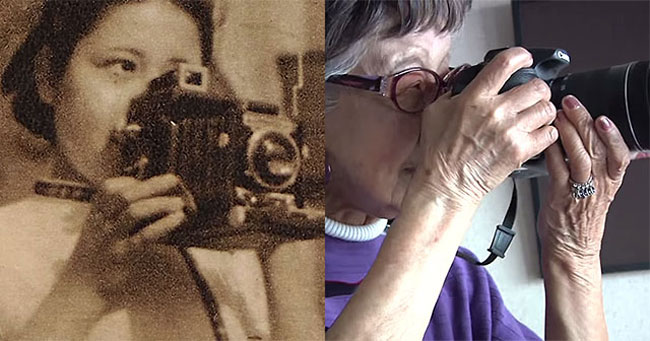
At 101 years old, renowned Japanese photographer Tsuneko Sasamoto continues to express her artistic voice and capture stunning images. Considered to be her country’s first photojournalist at the age of 25, Sasamoto has been documenting history for over 70 years, including pre- and post-war Japan. Her photographs highlighted the country’s dramatic shift from a totalitarian regime to an economic superpower, and the social implications that arose from it.
I saw this film today and it was wonderful. It brought back a lot of memories. Linda has been a favorite of mine since my early childhood.
OK, so I suppose it might be a stretch to connect Linda Ronstadt with the visual anthropology of Japan. She does have a song that mentions Yokohama (Poor Poor Pitiful Me, from the LP "Simple Dreams,"1977) and she did have concerts in Japan (1979, 1984, 1993). So there you go.
And I certainly can recommend a great new documentary. So there you go.