Friday, January 1, 2021

Happy New Year 2021 from「VAoJ」

Let's throw out the old 2020 trash and have a happy, healthy and safe new year!

明けましておめでとうございます。今年もよろしくお願いします!

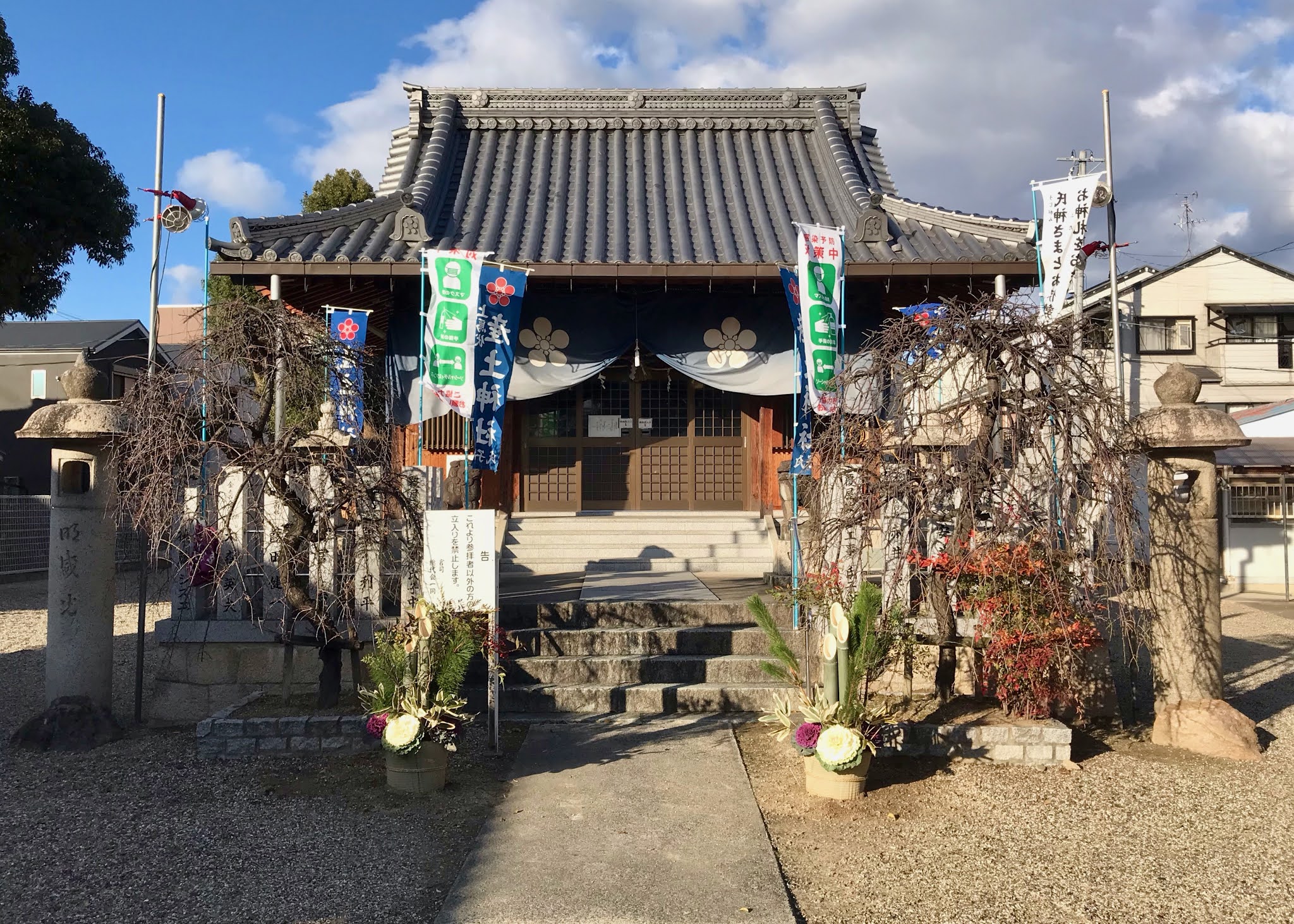
Ringing in the New Year 2021 at our neighborhood shrine - COVID 19 interferes with the liminality of the hatsumode ritual

The liminal phase in a rite of transition usually entails a certain ambiguity - a period where the usual norms of daily life are absent. However this year, COVID 19 seems to have affected the hatsumode ritual (the first shrine visit of the year) itself. On a scouting mission on December 31, 2020, my research assistant and I briefly visited two local shrines where preparations were underway or had finished for the usual shrine visit at midnight.

This is what we saw at the first site. It is not so easy to see the green tape lines on the pathway to the shrine to encourage social distancing. This got me to think what was being done at our own local shrine.

At the second site, there seemed to have been little preparation. No bon fire barrels, no tent for the sipping of the sacred sake. But there were banners promoting the use of masks, hand sanitizer and social distancing (no green tape maker lines however).

Shortly after the midnight hour I visited our neighborhood shrine once again (my research assistant had fallen asleep watching the New Year's Eve special programming on TV).

There were few people present to say their first New Year's prayers.

There were few people standing in line at the shrine in front of me.

And no one was behind me.

No bon fires, no tents, no containers to dispose of old relgious amulets, no sakered sake, and the water to purify oneself was closed off. And the bell at the top of the opening of the shrine was missing along with the rope attached to it that people shake to make the bell ring before they pray. I talked to a couple of shrine elders and they said these changes (decided by a regional shrine association) had to be made because of the corona virus. The shrine was open for quick prayers but not for the usual ritual festivities. It seemed as if most people were staying home anyway.

You can see the difference between this year and last year (click here).

While it was good that people stayed away to avoid crowds and possible virus spread, it was very sad to miss out on the camaraderie and communitas that the hasumode provides for the neighborhood. Here's hoping for normal ritual activities in 2021!

Friday, December 25, 2020

Monday, December 21, 2020

"AI, drones and 4K cameras: New tech boosts security systems in Japan"

Photo and story from The Japan Times, 12/20/2020.

An increasing variety of technologies such as artificial intelligence, drones and high-quality 4K video cameras is being introduced in the field of security amid a serious shortage of personnel in the field.

A virtual “AI guard” developed by major Japanese security firm Secom Co. was tested at Ogikubo Hospital in Tokyo in late October. An animated character displayed on an electric panel at the hospital entrance takes visitors’ temperatures and then welcomes those without fevers into the facility.

The character has been programmed to respond verbally to basic inquiries and can tell visitors where the bathrooms are located and what time their buses will arrive. It is also able to make eye contact with visitors and lean down when approached by children or people in wheelchairs.

A human guard is on standby at a separate location to monitor footage sent by the system’s camera and rush to the scene to respond to any trouble.

The hospital stations two to three employees at the facility’s entrance to conduct mandatory temperature checks and ensure visitors are wearing masks to prevent the spread of the novel coronavirus.

After observing the system in action, the hospital’s administrative director, Hayato Kawamura, said, “We may be able to move at least one employee to take care of other work.”

Another major security firm, Sohgo Security Services Co., known as Alsok, has been considering adopting an AI system to identify potential shoplifters by analyzing suspicious behavior in security camera footage.

The system can also be used to notify security guards of potential health emergencies by alerting them if someone falls over. Guards can then rush to the scene with an automated external defibrillator (AED).

The security firm has also been setting up high-quality 4K cameras at places including Tokyo Skytree to test their ability to monitor the surrounding environment.

It is hoped the high-tech cameras with AI image recognition technology will be able to detect smoke rising from fires in distant areas as well as reckless drivers on the roads.

Meanwhile, a prison in Yamaguchi Prefecture has been utilizing drones equipped with cameras from Secom to patrol the premises, using GPS to fly designated routes.

Alsok is also testing drones that utilize AI cameras to avoid obstacles when flying in indoor areas that aren’t friendly to the use of GPS.

“4K, AI and 5G will become the three sacred treasures of security from now on,” said an official of Alsok, referring to the three ancient treasures of the Japanese imperial regalia. The official said 4K would serve as the eyes, AI as the brains, and 5G as the nerves.


Source: https://www.japantimes.co.jp/news/2020/12/20/national/ai-drones-cameras-security-systems-japan/

Another bad idea...

Friday, December 18, 2020

"Wearing someone else's face: Hyper-realistic masks to go on sale in Japan"

Story and photo from Japan Today, 12/18/2020.

A year into the coronavirus epidemic, a Japanese retailer has come up with a new take on the theme of facial camouflage - a hyper-realistic mask that models a stranger's features in three dimensions.

Shuhei Okawara's masks won't protect you or others against the virus. But they will lend you the exact appearance of an unidentified Japanese adult whose features have been printed onto them.

"Mask shops in Venice probably do not buy or sell faces. But that is something that's likely to happen in fantasy stories," Okawara told Reuters. "I thought it would be fun to actually do that."

The masks will go on sale early next year for 98,000 yen apiece at his Tokyo shop, Kamenya Omote, whose products are popular as accessories for parties and theatrical performance.

Okawara chose his model, whom he paid 40,000 yen, from more than 100 applicants who sent him their photos when he launched the project in October. An artisan then reworked the winning image, created on a 3D printer.

Initial inquiries suggest demand for the masks will be strong, Okawara said.

"As is often the case with the customers of my shop, there are not so many people who buy (face masks) for specific purposes. Most see them as art pieces," Okawara said.

He plans to gradually add new faces, including some from overseas, to the lineup.


Source: https://japantoday.com/category/features/lifestyle/wearing-someone-else%27s-face-hyper-realistic-masks-to-go-on-sale-in-japan

If this story doesn't creep you out enough, check out this video:


Thursday, December 17, 2020

A Really Bad Idea! "Caught on video: Japan emergency callers will be able to send footage to police"

Story and photo from The Japan Times, 12/10/2020.

The National Police Agency will introduce in fiscal 2021 a nationwide system by which callers to the emergency police number 110 can send video of the incidents concerned, such as crimes, accidents and fires, according to informed sources.

People calling to report these incidents will be asked to take videos via their smartphones if needed. The system is expected to help police officers check the situation before arriving at the scenes and take appropriate first steps, the sources said.

A similar system has been used by the police department of Hyogo Prefecture since October.

Under the new system, police officers receiving reports of incidents in the command rooms will ask callers for video of the incidents if deemed necessary. If this is accepted, police will send a URL link for a special website to the callers’ smartphones and ask them to take video from a safe location, the sources said.

When the URL link is opened, the callers’ smartphone cameras will automatically turn on, and videos taken on the phones will be sent to the command rooms. Officers in the command rooms will then give information obtained from the videos to officers dispatched to the sites.

The NPA will also consider whether to introduce a system for forwarding such videos to dispatched officers’ devices, according to the sources.

The agency does not plan to request such video in emergency calls seeking rescue, the sources said.

As the videos may include private information of people, such as those wounded in incidents, the agency wants to “operate the system in a way that does not result in invasion of privacy” in matters such as the storage of the videos, an NPA official said.

The NPA launched a website in August for receiving images and videos of damage from natural disasters, such as typhoons and earthquakes, so that the extent of damage to roads, buildings and other properties and infrastructure can be checked.

Fire departments around the country are also introducing video transmission systems for calls to the emergency number 119 for fires and accidents.

The Tokyo Fire Department launched such a system in the capital’s 23 special wards on a trial basis in September, instructing callers on how to give, for example, cardiopulmonary resuscitation to people affected by the incidents based on the videos.

Some fire departments in Aichi and Hyogo prefectures have fully introduced such systems.

Source: https://www.japantimes.co.jp/news/2020/12/10/national/japan-emergency-video-calls/

Which is worse, encouraging people to violate privacy rights to bust neighbors and strangers alike -or- giving access of your smartphone to the police?