When will these "updates" end? From today's Japan Today:
The Supreme Court has dismissed two suits from 375 teachers and educational professionals requesting a ban on the enforced singing of the “Kimigayo,” Japan’s national anthem, in schools. The court ruled 4-1 that such orders are constitutional.
The issue has long been a contentious one with teachers who refused to stand and sing the “Kimigayo” at school. In many cases, dissenting teachers received reprimands, pay cuts or were suspended.
In announcing the decision Thursday, the court upheld last year’s Tokyo High Court decision that confirmed the constitutionality of enforced singing of the anthem in schools, and refused to ban the act of obliging children and staff to do so, TBS reported.
The court ruled that ordering teachers to sing the “Kimigayo” did not violate their freedom of thought, which was the basis for the plaintiffs’ claim.
Link: http://www.japantoday.com/category/national/view/supreme-court-rules-making-teachers-sing-kimigayo-is-constitutional
Last VAOJ post on this subject: http://visualanthropologyofjapan.blogspot.com/2012/01/stand-in-place-where-you-work-as.html

Friday, February 10, 2012

Thursday, February 9, 2012
Announcement: MA Film and History at SOAS (University of London)
From H-Japan:
This MA programme provides students with the opportunity to acquire expert knowledge of film in historical context as a means of mastering transferable analytical skills and so prepare students for a variety of professional or research careers. The program can be adapted to meet a wide range of interests. Its bi-directional focus on the disciplines of film and history also provides students with a flexible series of modular units from which to choose. The core course examines the representation of history in film, and film in history by placing filmic representations of the societies and diasporas of/from/between Asia and Africa into historical context. Students will critically evaluate a range of issues relating to the reliability of
film as the grounds for making inferences about the national and transnational histories of Asia, Africa and the Near and Middle East with particular attention to the critical evaluation of film as a source for, and product of, the historian's accounts of the past.
Students who enroll for this MA will engage in interdisciplinary analysis of film and history alongside SOAS academic who regularly consult for the film and television industries. Students will also be simultaneous members of the History Department and Film and Media Studies Centres which host regular events including roundtables and panel discussions with leading academics and film makers. Internship opportunities also available to students registered on the MA Programme. MA graduates will obtain a nuanced and specialised understanding of interconnectedness of media and history that will serve a variety of career options in business, media, culture and heritage, academia, and the arts.
For further information regarding admissions and degree structure visit:
http://www.soas.ac.uk/mafilmandhistory/
This MA programme provides students with the opportunity to acquire expert knowledge of film in historical context as a means of mastering transferable analytical skills and so prepare students for a variety of professional or research careers. The program can be adapted to meet a wide range of interests. Its bi-directional focus on the disciplines of film and history also provides students with a flexible series of modular units from which to choose. The core course examines the representation of history in film, and film in history by placing filmic representations of the societies and diasporas of/from/between Asia and Africa into historical context. Students will critically evaluate a range of issues relating to the reliability of
film as the grounds for making inferences about the national and transnational histories of Asia, Africa and the Near and Middle East with particular attention to the critical evaluation of film as a source for, and product of, the historian's accounts of the past.
Students who enroll for this MA will engage in interdisciplinary analysis of film and history alongside SOAS academic who regularly consult for the film and television industries. Students will also be simultaneous members of the History Department and Film and Media Studies Centres which host regular events including roundtables and panel discussions with leading academics and film makers. Internship opportunities also available to students registered on the MA Programme. MA graduates will obtain a nuanced and specialised understanding of interconnectedness of media and history that will serve a variety of career options in business, media, culture and heritage, academia, and the arts.
For further information regarding admissions and degree structure visit:
http://www.soas.ac.uk/mafilmandhistory/
Sunday, February 5, 2012
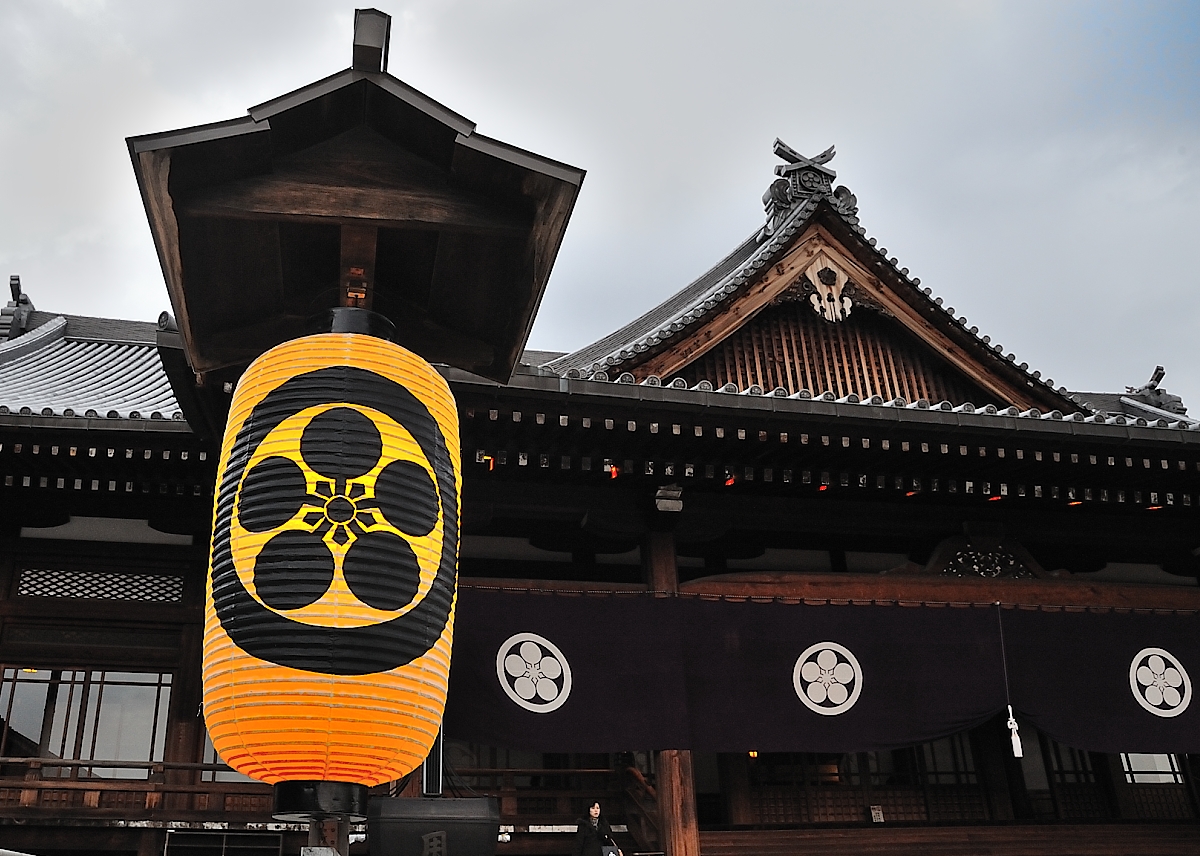
久しぶりに天理へ帰る事が出来た...

Tenri was one of the first places that made me fall in love with Japanese culture. In my early days in Japan I was able to explore Tenri often and deeply. Tenri is the home of Tenrikyo, an indigenous so-called "new religion" in Japan. For the most part Tenrikyo's belief system is independent although one can see cultural influences from Buddhism and Shinto. Tenrikyo believes in a monotheistic "God the Parent" and the practice of "the Joyous Life." Tenrikyo can be described as a pilgrimage religion (all humans were originally born in Tenri so when one visits they are always "coming home"), a faith healing religion (illnesses are a message from God and rituals are done to clear the dust that causes physical problems) and a missionary religion (Tenrikyo has spread out to the rest of the world - where there is a substantial Japanese population abroad you are bound to see Tenrikyo followers there as well).
Despite the "new religion" label, Tenrikyo seems incredibly Japanese culturally and historically. Foreign followers and young people often comment on the Meiji mentality and practices of the church headquarters. And the followers seem to be graying in the same way as Japanese society. I was initially drawn to Tenrikyo's seated service ritual which looks a lot like sign language. I don't get to visit Tenri as often these days, and when I do I always seem to be in a rush. Recently I was able to spend some leisurely time wandering around and taking photographs. Tenri with its amazing architecture, shopping arcade, friendly people and sense of spirituality is a place that must be experienced in person. Photographs cannot do it justice (although I still try...). For the full experience, visit Tenri in the morning of the 26th of each month for its monthly service.



Links:
Tenrikyo in Hawaii: http://visualanthropologyofjapan.blogspot.com/2008/01/globalization-visual-anthropology-photo.html
Tenrikyo Homepage (available in multiple languages): http://www.tenrikyo.or.jp/
Much has been written about Tenrikyo by both scholars outside and inside the faith. A Google Scholar search will give you many resources.
"Limber up for Osaka's full-on 'winter of love'"
From Japan Times, Kansai: Who & What, 2/5/12:
The "Love @ Osaka Project" at Osaka Station City has started, aiming to celebrate Valentine's Day this month and White Day on March 14, the final day of the event.
Part of the event is a "Love Photo" project, seeking photographs of your special ones and snaps of affectionate — though not overly intimate — moments with them. Photos can be submitted via the project's website until Feb. 29 and will be posted on the site. A drawing will be held and the winners will receive prizes such as digital single-lens reflex cameras and travel coupons.
For the event's "Love Message" project, photo sessions will be held at various places in Osaka Station City on Sunday, and then from Feb. 11 to 13 between 9 a.m. and 7 p.m. Participants are invited to write tasteful love-related messages on a heart-shaped board and have their photo taken with it. The photos will be shown on digital signs throughout Osaka Station City, located at JR Osaka Station in Kita Ward, or a panel on the 16th floor of the South Gate Building.
Other events are planned during the "Love @ Osaka Project," including a free concert from 10 a.m. to 10:30 a.m. on March 10 at Atrium Hiroba plaza on the second floor.
For more information, visit osakastationcity.com/love/ (in Japanese).
Link: http://www.japantimes.co.jp/text/nn20120205k1.html
The "Love @ Osaka Project" at Osaka Station City has started, aiming to celebrate Valentine's Day this month and White Day on March 14, the final day of the event.
Part of the event is a "Love Photo" project, seeking photographs of your special ones and snaps of affectionate — though not overly intimate — moments with them. Photos can be submitted via the project's website until Feb. 29 and will be posted on the site. A drawing will be held and the winners will receive prizes such as digital single-lens reflex cameras and travel coupons.
For the event's "Love Message" project, photo sessions will be held at various places in Osaka Station City on Sunday, and then from Feb. 11 to 13 between 9 a.m. and 7 p.m. Participants are invited to write tasteful love-related messages on a heart-shaped board and have their photo taken with it. The photos will be shown on digital signs throughout Osaka Station City, located at JR Osaka Station in Kita Ward, or a panel on the 16th floor of the South Gate Building.
Other events are planned during the "Love @ Osaka Project," including a free concert from 10 a.m. to 10:30 a.m. on March 10 at Atrium Hiroba plaza on the second floor.
For more information, visit osakastationcity.com/love/ (in Japanese).
Link: http://www.japantimes.co.jp/text/nn20120205k1.html
Friday, February 3, 2012
"Court rules on using stars' images"
From The Daily Yomiuri Online, 2/3/12:
The Supreme Court on Thursday handed down the nation's first ruling on publicity rights, saying celebrities' names and photos are protected under publicity rights, but rejecting a compensation demand by the plaintiffs in the case, singing duo Pink Lady.
Presiding Justice Ryuko Sakurai said in the ruling: "Celebrities' names and images can help sales by attracting potential customers. They are protected under publicity rights."
By clarifying the status of publicity rights and providing a guideline on what constitutes a violation, the ruling will likely be seen as a wake-up call on using celebrities' names or images in publications and on the Internet without permission.
Pink Lady had demanded that Kobunsha Co. pay them compensation of 3.72 million yen, saying the use of their photos without their agreement in a magazine published by the company infringed on their publicity rights.
Though the top court admits the existence of publicity rights, the ruling upheld two lower court rulings that also turned down the singers' demand, saying the case did not constitute infringement of their publicity rights.
The two alleged that the Feb. 27, 2007, issue of "Josei Jishin" carried 14 photos of the duo, taken by the company in the past, in an article promoting a diet.
The plaintiffs insisted they were effectively commercial-use pictures, and the publisher aimed to profit by attracting fans of Pink Lady.
Although the court determined that photos are protected, in this case the ruling said, "In some cases, celebrities have to tolerate that their images may be used in certain situations such as news reports, news stories and others' creative products."
The ruling presented the guideline that an infringement of publicity rights occurs if photos themselves are sold or if they are mainly used for attracting customers.
The ruling said the case did not fulfill these conditions and thus the use of the photos did not infringe on the publicity rights of Pink Lady.
Link: http://www.yomiuri.co.jp/dy/national/T120202006478.htm
The Supreme Court on Thursday handed down the nation's first ruling on publicity rights, saying celebrities' names and photos are protected under publicity rights, but rejecting a compensation demand by the plaintiffs in the case, singing duo Pink Lady.
Presiding Justice Ryuko Sakurai said in the ruling: "Celebrities' names and images can help sales by attracting potential customers. They are protected under publicity rights."
By clarifying the status of publicity rights and providing a guideline on what constitutes a violation, the ruling will likely be seen as a wake-up call on using celebrities' names or images in publications and on the Internet without permission.
Pink Lady had demanded that Kobunsha Co. pay them compensation of 3.72 million yen, saying the use of their photos without their agreement in a magazine published by the company infringed on their publicity rights.
Though the top court admits the existence of publicity rights, the ruling upheld two lower court rulings that also turned down the singers' demand, saying the case did not constitute infringement of their publicity rights.
The two alleged that the Feb. 27, 2007, issue of "Josei Jishin" carried 14 photos of the duo, taken by the company in the past, in an article promoting a diet.
The plaintiffs insisted they were effectively commercial-use pictures, and the publisher aimed to profit by attracting fans of Pink Lady.
Although the court determined that photos are protected, in this case the ruling said, "In some cases, celebrities have to tolerate that their images may be used in certain situations such as news reports, news stories and others' creative products."
The ruling presented the guideline that an infringement of publicity rights occurs if photos themselves are sold or if they are mainly used for attracting customers.
The ruling said the case did not fulfill these conditions and thus the use of the photos did not infringe on the publicity rights of Pink Lady.
Link: http://www.yomiuri.co.jp/dy/national/T120202006478.htm
Thursday, February 2, 2012
"3 hearing-impaired men arrested over sign-language extortion"
From The Mainichi Daily News, 2/1/12:
Police have arrested three hearing-impaired men on suspicion of using sign language to extort money from another hearing-impaired person, law enforcers said.
The three suspects, identified as Kenta Yokoi, 33, Takao Tanaka, 30, and Hidetoku Takata, 34, are accused of duping a hearing-impaired woman into giving them 300,000 yen in Dec. 2009.
Yokoi and Tanaka, who have reportedly admitted to the allegations against them, were arrested and indicted on suspicion of fraud, among other charges. Takata was arrested on suspicion of blackmail.
According to investigative sources, the three used sign language to deceive a 25-year-old female company employee from the city of Nishio, Aichi Prefecture, telling her that Tanaka had a heart disease and needed money to cover his hospitalization expenses.
When the woman dismissed their story, police said the three became more aggressive, signing: "Do you want Tanaka to die from his disease?" and "You can't go home (without giving us money)."
Tanaka and Yokoi have also been arrested and indicted for impersonating police and using the cash card of a hearing-impaired woman from the Aichi prefectural city of Toyota to withdraw a total of 350,000 yen from her bank account between Nov. 2011 and Jan. 2012.
Link: http://mdn.mainichi.jp/mdnnews/news/20120201p2a00m0na001000c.html
Police have arrested three hearing-impaired men on suspicion of using sign language to extort money from another hearing-impaired person, law enforcers said.
The three suspects, identified as Kenta Yokoi, 33, Takao Tanaka, 30, and Hidetoku Takata, 34, are accused of duping a hearing-impaired woman into giving them 300,000 yen in Dec. 2009.
Yokoi and Tanaka, who have reportedly admitted to the allegations against them, were arrested and indicted on suspicion of fraud, among other charges. Takata was arrested on suspicion of blackmail.
According to investigative sources, the three used sign language to deceive a 25-year-old female company employee from the city of Nishio, Aichi Prefecture, telling her that Tanaka had a heart disease and needed money to cover his hospitalization expenses.
When the woman dismissed their story, police said the three became more aggressive, signing: "Do you want Tanaka to die from his disease?" and "You can't go home (without giving us money)."
Tanaka and Yokoi have also been arrested and indicted for impersonating police and using the cash card of a hearing-impaired woman from the Aichi prefectural city of Toyota to withdraw a total of 350,000 yen from her bank account between Nov. 2011 and Jan. 2012.
Link: http://mdn.mainichi.jp/mdnnews/news/20120201p2a00m0na001000c.html
Wednesday, February 1, 2012
"Hearing-impaired man picked as citizen judge"
From The Mainichi Daily News, 1/31/12:
A man with impaired hearing has been picked as a citizen judge in a trial of a robbery case that started at the Maebashi District Court on Monday.
It appears to be the first time someone with a hearing impairment has joined a lay judge trial since the system was launched in 2009.
The district court has sought the help of four sign language interpreters for the man, who was picked from 29 lay judge candidates.
The defendant is a man accused of attacking a businessman in Isesaki, Gunma Prefecture, stealing his wallet and injuring him in 2005. The defendant was a minor at the time of the crime.
The law disbars from citizen judge service only those with serious physical or mental handicaps that would make it impossible for them to perform their duties.
When a woman with impaired sight was picked as a citizen judge at the Utsunomiya District Court in 2010, prosecutors and defense lawyers submitted documents in Braille for her.
Link: http://mdn.mainichi.jp/mdnnews/national/news/20120131p2g00m0dm139000c.html
A man with impaired hearing has been picked as a citizen judge in a trial of a robbery case that started at the Maebashi District Court on Monday.
It appears to be the first time someone with a hearing impairment has joined a lay judge trial since the system was launched in 2009.
The district court has sought the help of four sign language interpreters for the man, who was picked from 29 lay judge candidates.
The defendant is a man accused of attacking a businessman in Isesaki, Gunma Prefecture, stealing his wallet and injuring him in 2005. The defendant was a minor at the time of the crime.
The law disbars from citizen judge service only those with serious physical or mental handicaps that would make it impossible for them to perform their duties.
When a woman with impaired sight was picked as a citizen judge at the Utsunomiya District Court in 2010, prosecutors and defense lawyers submitted documents in Braille for her.
Link: http://mdn.mainichi.jp/mdnnews/national/news/20120131p2g00m0dm139000c.html
Tuesday, January 31, 2012
Short Documentary: "Die for Japan: Wartime Propaganda Kamishibai (paper plays; 国策紙芝居)"
Professor Jeffery Dym from Sacramento State recently announced his interesting visual project on H-Japan:
We live in an increasingly visual culture and I believe it is important for us as scholars to become involved in creating and adding scholarly contributions to it and not just as talking heads in a documentary. Thus, I have embarked on a road I call "visual scholarship."
I would like to announce the publishing of an eighteen minute documentary--Die for Japan: Wartime Propaganda Kamishibai (paper plays; 国策紙芝居)--I recently completed. The film examines Japanese propaganda from a unique angle and the film could be used to spark classroom discussion, particularly if paired with an American wartime propaganda film like Know Your Enemy Japan.
Here is the text included with the YouTube version:
While American World War II propaganda often focused on killing the enemy, Japanese propaganda focused more on dying for the nation. This film exams Japanese World War II propaganda as depicted in kamishibai—Japanese paper plays, a form of street entertainment popular in Japan at the time.
YouTube link: http://www.youtube.com/watch?v=lFavUjEYc7Y
Vimeo link: http://vimeo.com/35458335
I think this film is a great example of visual anthropology - using visual methods to explore visual aspects of culture. The film is tightly edited and has lots of good examples to illustrate the various uses of kamishibai. Related to the last VAOJ post, there is some mention of the the strong use of the Japanese flag as a powerful symbol in Japan's wartime propaganda. There are even examples of the use of cuteness in Japan - cute characters fighting battles and cute bunnies signing up for military service. While the film might be historical in nature, it certainly illustrates political and cultural values that continue to the current time.
Friday, January 27, 2012
Stand! In the place where you work (as ordered)...
Stand in the place where you live
Now face north
Think about direction
Wonder why you haven't before
Now stand in the place where you work
Now face west
Think about the place where you live
Wonder why you haven't before
If you are confused, check with the sun
Carry a compass to help you along
Your feet are going to be on the ground
Your head is there to move you around
("Stand" by R.E.M. from the album Green released in 1988)
I doubt R.E.M. was thinking about Japan, the Hinomaru and Kimigayo when they wrote this song. Perhaps it is time for a re-make of the video featuring the Hinomaru flag in the background with Tokyo Govenor Ishihara Shintaro and Osaka Mayor Hashimoto Toru singing and dancing.
VAOJ has long been following the lawsuits of teachers who refused to stand for the national anthem and flag at school ceremonies. There have been a few updates recently.
Top court calls for care in punishing teachers over flag, anthem
(from The Mainichi Daily News,1/17/12)
The Supreme Court on Monday nullified some punishments meted out to current and former Tokyo public school teachers for refusing to stand for the hoisting of the Hinomaru national flag or to sing the "Kimigayo" anthem at school events, saying careful consideration is required.
"In choosing a punishment greater than a reprimand, such as a pay cut or a greater punishment, careful consideration is needed," Presiding Justice Seishi Kanetsuki of the top court's First Petty Bench said in delivering rulings on three lawsuits brought by around 170 plaintiffs seeking nullification of their punishments.
The court annulled the suspension from work of one plaintiff and the pay cut for another, saying such punishments amounted to an abuse of power and were therefore illegal.
However, the court found the suspension from work of one plaintiff and reprimands meted out to the remaining plaintiffs were appropriate.
The decision concerned three suits filed by current and former teachers and other staff members at public schools run by the Tokyo metropolitan government.
Last year, the Supreme Court found constitutional school principals' orders requiring teachers at school events to stand up for the raising of the national flag and to sing "Kimigayo," but said such orders indirectly restrict a person's freedom of belief and conscience.
Monday's ruling called for care when punishing teachers for not following those orders.
The ruling could also have an impact on debate in the Osaka prefectural assembly over a proposal calling for a "three strikes and you're out" rule to dismiss school teachers who repeatedly defy principals' orders to stand up and sing "Kimigayo." The proposal has been advocated by a regional political party, the Osaka Restoration Association, led by Osaka Mayor Toru Hashimoto.
Link to entire story:
http://mdn.mainichi.jp/mdnnews/news/20120117p2g00m0dm038000c.html
Japan Focus has an informative post about this recent development as well (1/22/12).
Japan's Supreme Court Limits National Anthem Punishments for Teachers
Link: http://japanfocus.org/events/view/125
And here's more...
Osaka mayor orders officials to bow to flag
(from The Daily Yomiuri Online, 1/23/12)
Osaka Mayor Toru Hashimoto has instructed high-ranking officials of the city government to always bow to the Hinomaru national flag as they take a seat in the municipal assembly's main conference hall and when replying to questions when the assembly is session, it has been learned.
Hashimoto e-mailed the instruction earlier this month to bureau chiefs who sit on the platform of the conference hall during the assembly's deliberations.
Titled "Paying homage to the national flag at the conference hall," the mayor's e-mail read, "You are asked to bow to the flag when seating yourself on the platform," assembly sources said.
The e-mail also said senior city officials were required to bow their heads to the national flag every time they step on the hall's platform or respond to a question posed during assembly deliberations, they said.
Furthermore, the instructions said officials must bow to the flag again when deliberations are resumed after a recess, according to the sources.
Hashimoto has expressed his intention to present a draft ordinance in the coming assembly session in February that will call for the national flag to always be hoisted at the municipal government's facilities.
Link to story:
http://www.yomiuri.co.jp/dy/national/T120122003982.htm
Mastering Manners
In today's Daily Yomiuri Online (1/27/12) there is a story about manners and the proper way to bow. Here is an interesting quote:
Japanese etiquette was developed during the era of the samurai, when strict relationships between superiors and subordinates were a key part of class-based societies. The tradition has been passed from generation to generation, but some people today may find its practice cumbersome.
"The idea behind Japanese etiquette is to use actions to express your deep feelings for other people," Kondo says. "As long as you acquire the basics, you can act with grace and confidence, while those around you will treat you with respect."
Link to entire story:
http://www.yomiuri.co.jp/dy/features/arts/T120119005653.htm
Manners and etiquette through the use of body movements are for showing respect to people. Such gestures should not be forced upon people to display patriotism or national pride.
Wednesday, January 25, 2012
"Yomiuri ties up with AFP for broader worldwide photo circulation"
From NSK News Bulletin January 2012:
The Yomiuri Shimbun is to begin distributing its news photos on a subscription basis to foreign media via AFP, the French state-owned news agency, starting on Feb. 1.
The Yomiuri’s photos for overseas distribution via AFP include photos not appearing in the Yomiuri’s daily newspaper, various on-the-spot photos of disasters or incidents that have been provided by Yomiuri readers, and an archive of the paper’s past news photos.
The leading Japanese daily signed a distribution contract with AFP on Dec. 9.
The Yomiuri had earlier tied up with the Associated Press, the leading U.S. news agency. That August 2010 tie-up put Yomiuri photos into distribution in many markets overseas. In this latest tie-up, with AFP, the Yomiuri is targeting its Japan photo distribution at Europe, the Middle East and Africa, all of which are distribution strongholds for AFP, Yomiuri officials said.
Link to NSK News Bulletin: http://www.pressnet.or.jp/english/newsb/
Link to AFP - Photos: http://www.afp.com/afpcom/en/taglibrary/know-how/photo
The Yomiuri Shimbun is to begin distributing its news photos on a subscription basis to foreign media via AFP, the French state-owned news agency, starting on Feb. 1.
The Yomiuri’s photos for overseas distribution via AFP include photos not appearing in the Yomiuri’s daily newspaper, various on-the-spot photos of disasters or incidents that have been provided by Yomiuri readers, and an archive of the paper’s past news photos.
The leading Japanese daily signed a distribution contract with AFP on Dec. 9.
The Yomiuri had earlier tied up with the Associated Press, the leading U.S. news agency. That August 2010 tie-up put Yomiuri photos into distribution in many markets overseas. In this latest tie-up, with AFP, the Yomiuri is targeting its Japan photo distribution at Europe, the Middle East and Africa, all of which are distribution strongholds for AFP, Yomiuri officials said.
Link to NSK News Bulletin: http://www.pressnet.or.jp/english/newsb/
Link to AFP - Photos: http://www.afp.com/afpcom/en/taglibrary/know-how/photo
Subscribe to:
Posts (Atom)